

4–6 Months: Skip Baby Kisses, 3 Bodysuits and Phrases for New Parents
A “when to kiss baby” bodysuit is a soft, printed onesie that politely tells visitors to hold off on kisses, usually worn during the newborn period and cold-and-flu season. It works as a visual first line of defense, not a substitute for saying something out loud. Parents lean on it most in the first few months, at hospital and home visits, and any time germ season makes unsolicited affection feel riskier than usual.
TL;DR:
- Most parents start using the bodysuit immediately after bringing the baby home, keeping it on through peak flu season for four to six months.
- Pairing a visible message with a short spoken reminder enhances effectiveness over only using verbal or visual cues alone.
- Select wording and tone based on household preferences, cultural context, and who will see the message to ensure it is respectful and clear.
- Choosing 100% cotton fabric and washing on gentle cycles helps maintain comfort and non-toxic print quality during repeated wears.
- Gifting or using the bodysuit before visitors arrive prevents awkward moments and establishes boundaries politely from the start.
Table of Contents
- Why Do Parents Use Clothing to Set Kissing Boundaries?
- How Do You Choose the Right Wording and Tone?
- When and How Should You Actually Wear It?
- What Are Some Ready-to-Use Phrases and Scripts?
- Featured Bodysuits That Match Your Boundary Style
- A Personal Note on Normalizing the Boundary
- Sources
- FAQ
Why Do Parents Use Clothing to Set Kissing Boundaries?
A onesie that says “please don’t kiss me” does something a verbal reminder can’t: it works even when you’re not in the room, exhausted, or too polite to repeat yourself for the fifth time at a family gathering. Parenting researchers at Michigan State University’s Extension program note that clear, kind boundaries are a core parenting tool for protecting children, and that parents aren’t responsible for managing how other people feel about those limits. That distinction matters when Grandma pouts because she can’t smooch the baby’s cheek.
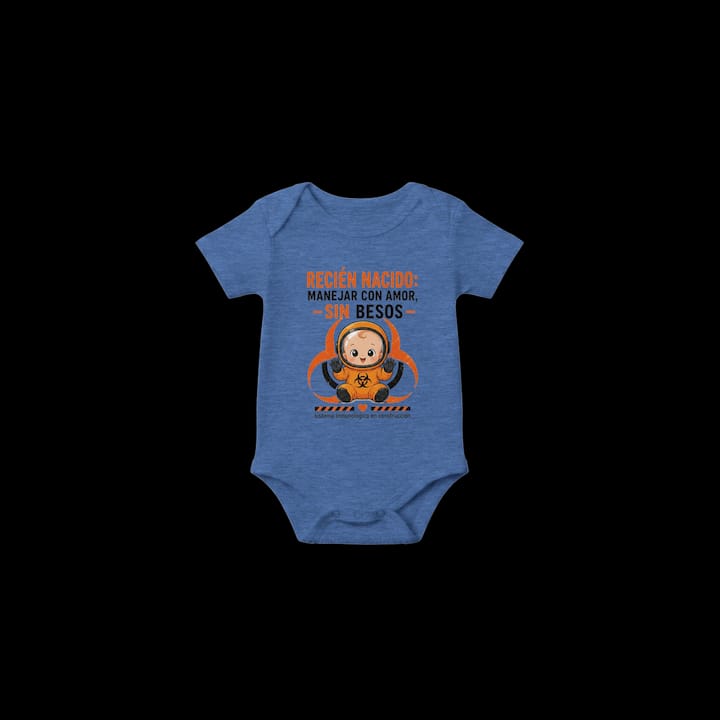
A visible cue does the heavy lifting so you don’t have to. According to guidance from Mindful Return, a sign or piece of clothing reduces how often you need to repeat yourself, especially when it’s paired with a short, friendly verbal line.
Common moments where the bodysuit earns its keep:
- Hospital visits in the first 48 hours, when everyone wants a turn holding the baby
- Holiday gatherings during peak flu and RSV months
- Meeting extended family or friends of friends for the first time
- Daycare drop offs or pediatrician waiting rooms, where germ exposure adds up fast
Pro Tip: Put the bodysuit on before guests arrive, not after someone leans in. A boundary that’s already visible avoids the awkward “actually, can you not” moment entirely.
How Do You Choose the Right Wording and Tone?
Not every family wants the same delivery. Some want a gentle nudge; others want zero ambiguity. Deciding on tone before you buy (or gift) saves you from a bodysuit that doesn’t match how the parents actually talk.
- Pick a tone that fits the household. A soft phrase like “no kisses, please” suits parents who want to keep things light with extended family. A blunter line works better for households that get tired of repeating themselves.
- Ask who will actually read it. A onesie meant for a baby shower gift skews playful. One meant for daily errands and pediatrician visits can afford to be more direct.
- Check that the language is verified, not just translated. Culturally accurate phrasing verified by native speakers avoids the stiff, robotic wording that machine translation tends to produce, and sidesteps phrases that land as rude in one culture and neutral in another.
- Decide how direct you want to be. Baby Chick’s parenting advice on asking people not to touch your baby recommends staying kind but firm, whether the message is spoken or printed on a onesie.
If you’re buying this as a gift, ask the parents (or their closest friend) which tone they’d actually wear in public. A hilarious phrase that embarrasses new parents in front of in-laws isn’t the win you think it is.
When and How Should You Actually Wear It?
Most parents start using the bodysuit the moment the baby comes home and keep it in rotation through the first cold-and-flu season, often four to six months, sometimes longer if a sibling brings home germs from school. It fades out naturally once the baby’s immune system catches up and visitors stop asking to hold a “fragile” newborn.
A few practical notes on getting the most out of it:
- Choose 100% cotton for daily wear. It breathes better under a jacket layered for cold weather visits.
- Skip it as standalone sleepwear if your pediatrician follows safe-sleep guidance that limits loose or printed layers in the crib; wear it during awake, social hours instead.
- Wash on a gentle cycle to protect non-toxic printed ink over repeated wears.
- Pair the shirt with one short spoken line, since Purple Bees Child Care points out that a calm verbal reminder alongside a visible cue lands better than the shirt alone.
- Time gifting around baby showers or the first week home, when new parents most need an easy way to say no without a confrontation.
Pediatric guidance on limiting close contact during flu and RSV season backs up the instinct to keep the shirt in heavy rotation exactly when illness risk peaks.
What Are Some Ready-to-Use Phrases and Scripts?
If you’re ordering a custom bodysuit or just want backup lines for awkward moments, here’s a mix of tones to pick from.
Bodysuit phrase ideas, sorted by tone:
- “No kisses, please” (polite, universal)
- “Please don’t kiss me” (direct, still warm)
- “Kisses on hold until flu season ends” (contextual, seasonal)
- “Hands off, heart full” (playful)
- “Authorized kisses: none” (blunt humor)
- “Kiss free zone” (bold, humorous)
- “Save the kisses for later” (soft deferral)
- “My immune system is still in beta” (nerdy humor)
Spoken lines to back up the shirt:
- “She’s still building up her immune system, so we’re skipping kisses for now.”
- “We’re keeping germs away this season, thanks for understanding.”
- “I know it’s tempting, but we’re doing hands and no kisses right now.”
One useful insight buried in this whole approach: pairing a visible cue with even one short sentence works better than repeating the same explanation over and over, according to the guidance from Baby Chick. The shirt starts the conversation. You only need to finish it once.
If you’re buying across cultures or for a multilingual family, stick to phrases verified by native speakers. A literal translation can read as cold, confusing, or unintentionally rude in another language, which defeats the entire point of a “polite but firm” message.
Featured Bodysuits That Match Your Boundary Style
These bodysuits are made from soft cotton, printed with non-toxic ink, and feature wording checked by native speakers to ensure the message is clear and culturally appropriate.
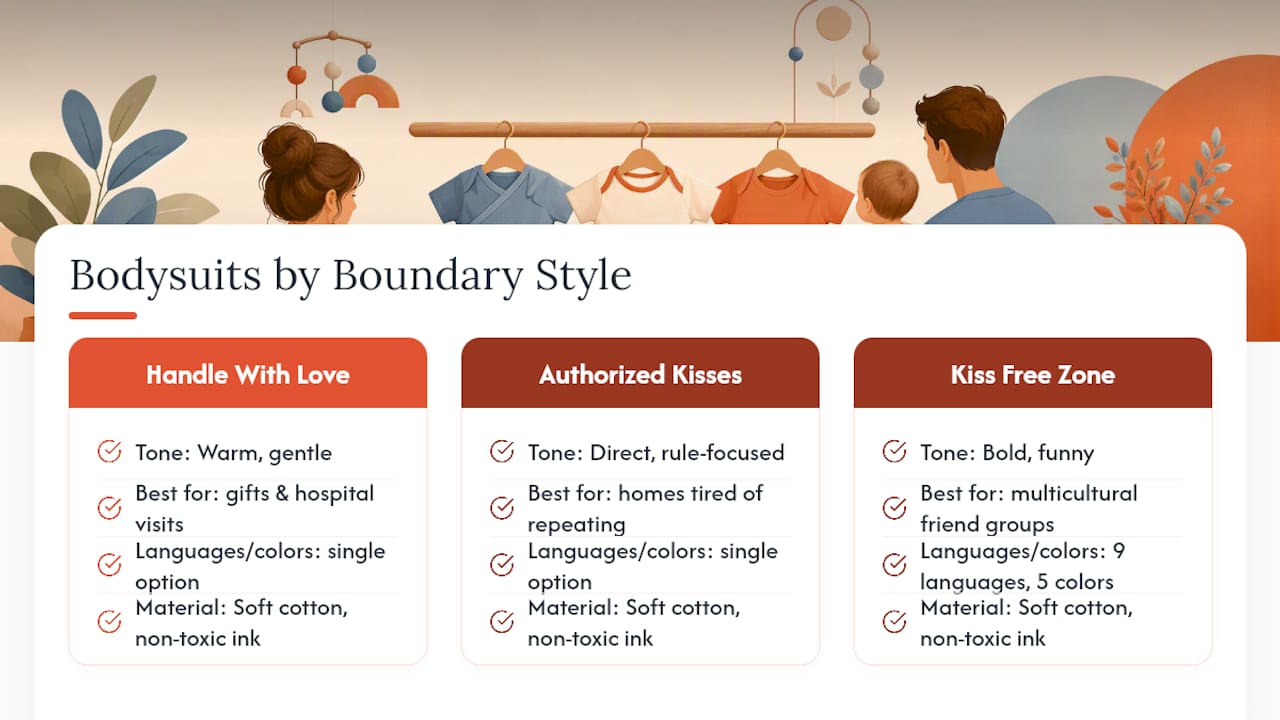
The Newborn Handle With Love No Kissing Baby Bodysuit fits families who want warmth over bluntness, ideal for baby shower gifts or first hospital visits where you’d rather not start a debate.
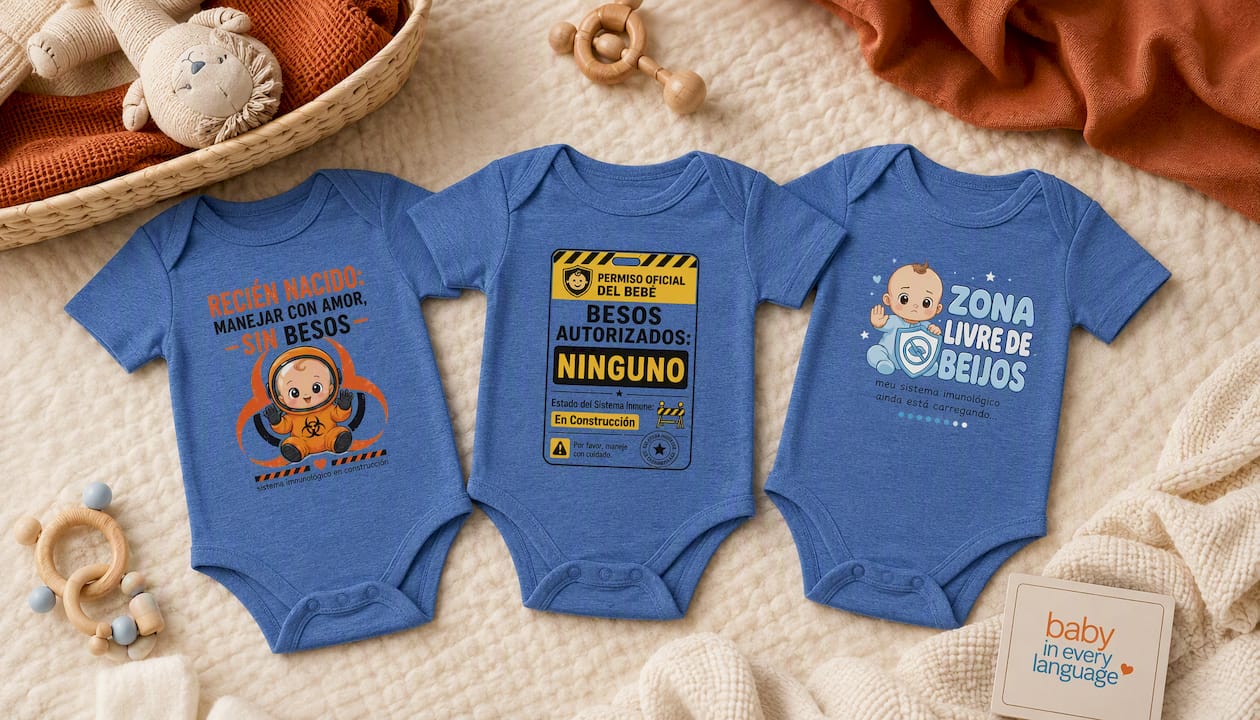
For households done repeating themselves, the Authorized Kisses None Baby Bodysuit skips the softening and states the rule plainly, a good fit for parents who value clarity over charm.
The Kiss Free Zone Baby Bodysuit leans bold and funny, available in nine languages and five colors, and works well as a conversation-starting gift for multicultural families or friend groups who appreciate a laugh with their boundary-setting.
Every phrase across the catalog goes through native-speaker review before it’s printed, and every fabric choice prioritizes baby-safe materials over anything scratchy or synthetic. Pick a size based on your baby’s current weight rather than age, since newborns vary widely in both, and choose the language that matches whoever’s most likely to lean in for a kiss. Browse the full lineup on the product pages and order ahead of your next visit, since printing and shipping take a few days.
A Personal Note on Normalizing the Boundary
Putting a boundary on a onesie feels like a small thing, but it’s doing real work. It tells every visitor, before they even open their mouth, that this baby’s comfort and health come first, no negotiation required. That’s not rude. It’s one of the kindest things a parent can do, because it spares everyone an awkward mid-hug correction. Nobody should feel guilty for protecting a two-month-old from a stranger’s cold.
— Bassem
Sources
For more on wording and timing, see Babyineverylanguage’s guides on declining newborn kisses politely and talking to relatives about kissing rules.
- Boundaries and expectations are important parenting tools
- How to Communicate the Message, “Don’t Touch My Baby!” - Mindful Return
- How to Ask People Not to Touch Your Baby - Baby Chick
- Don’t Kiss My Baby: How to Protect Your Child’s Personal Boundaries - Purple Bees Child Care
FAQ
Is It Okay to Ask People Not to Kiss My Newborn?
Yes. Parenting guidance from Purple Bees Child Care confirms this is a common, socially accepted request when delivered calmly and kindly.
When Should I Start Using a No-Kissing Bodysuit?
Most parents start the day the baby comes home and continue through the first flu and RSV season, since that’s when pediatric guidance recommends extra caution around close contact.
Does the Bodysuit Replace Saying Something Out Loud?
No. It works best paired with one short spoken line, since a visible cue plus a brief verbal reminder is more effective than either alone.
Are the Phrases Available in Other Languages?
Yes. Babyineverylanguage offers phrases verified by native speakers in over 20 languages, so gift buyers can choose wording that reads naturally for the family receiving it.
What Fabric and Ink Are Used on These Bodysuits?
Babyineverylanguage prints on soft, baby-safe cotton using non-toxic inks, so the message is clear without compromising comfort or safety.