

Printers: Don't Skip the Wash Test, Water Based vs Plastisol
For bold, opaque prints and high-volume runs, plastisol is the right call. For retail-soft, breathable prints on cotton, water-based ink (or discharge for dark garments) wins. The real deciding factor after that isn’t the ink itself. It’s whether your shop can hit the correct cure spec, because an undercured print fails no matter which chemistry you picked.
TL;DR:
- Proper curing is crucial for both inks, with plastisol needing around 320–330°F and water-based requiring sufficient dwell time and airflow to avoid cracking or washout.
- Water-based ink offers a softer hand and better breathability but struggles with opacity on dark fabrics, often needing multiple passes or high-solids formulas.
- Plastisol excels in achieving high-opacity, vibrant colors, and offers easier workflow with unlimited pot life and no drying in the screen, ideal for high-volume production.
- Using discharge water-based ink on natural fibers creates vibrant, soft, no-hand prints but requires precise testing due to dye lot variations and limited substrate compatibility.
- The biggest failure risk lies in skipping wash tests and cure verification, not ink chemistry, making process discipline more important than ink choice itself.
Table of Contents
- Water Based Vs Plastisol: A Quick Comparison
- Why Do Water-Based and Plastisol Inks Cure So Differently?
- How Do the Two Inks Feel and Look on a Finished Shirt?
- How Long Do Water-Based and Plastisol Prints Last?
- What Changes in Your Shop Workflow?
- Are Water-Based Inks Actually Better for the Environment?
- How Do You Choose the Right Ink for Your Job?
- What Makes Plastisol Worth Choosing?
- What Are the Real Downsides of Plastisol?
- Why Do Brands Choose Water-Based Ink?
- When Does Water-Based Ink Fall Short?
- What Temperatures and Dryers Do Each Ink Need?
- Which Ink Works Best on Which Garment?
- What Are the Real Production Trade-Offs in the Shop?
- What Are Discharge and Opaque Water-Based Options?
- How Does Babyineverylanguage Choose Ink for Baby Bodysuits?
- Ready to Print Your Bodysuit?
- The Real Decision Point Nobody Talks About
- Sources
Water Based Vs Plastisol: A Quick Comparison
The two ink systems solve different problems, and the gap shows up most clearly when you line them up side by side.
- Hand feel: Water-based sits into the fabric for a soft, almost invisible print; plastisol leaves a raised plastic layer you can feel and sometimes see.
- Opacity on darks: Plastisol dominates here, laying down solid white or color in one or two passes. Standard water-based struggles on black or navy without extra passes.
- Durability: Both hold up well when cured correctly; plastisol resists fading longer, water-based resists cracking better.
- Substrate compatibility: Plastisol works on cotton, poly, and blends. Water-based (and especially discharge) performs best on 100% cotton or high-cotton blends.
- Cure and dryer needs: Plastisol fuses around 320 to 330 degrees Fahrenheit. Water-based needs longer dwell time in a forced-air dryer.
- Production speed: Plastisol runs faster because it never dries in the screen mid-shift.
- Cleanup: Plastisol needs solvent-based screen wash; water-based cleans up with water, but the ink itself can dry into emulsion if you’re not moving fast.
- Cost per color: Comparable ink costs, but water-based often adds labor and dryer time, which affects the real per-piece cost.
The exception to most of these rules is discharge ink and high-solids water-based (HSA), which trade some of that “no-hand” softness for real opacity on dark cotton.
Why Do Water-Based and Plastisol Inks Cure So Differently?
The behavior gap starts at the chemical level. A plastisol is a dispersion of PVC polymer particles suspended in plasticizer. It doesn’t dry in any conventional sense. It cures through fusion, meaning heat melts the PVC particles into a continuous plastic film, typically at 320–330°F. Because there’s no evaporation step, plastisol sits in the screen indefinitely without drying out mid-run.
Water-based ink works the opposite way. It’s water, binder, and pigment, and it cures as the water evaporates and the binder cross-links into the fabric fibers. That’s why it demands a proper heat tunnel with real airflow, not just a hot surface.
- Plastisol: cures by fusion with no evaporation, forgiving in the screen.
- Water-based: cures by evaporation plus cross-linking, needs airflow and sufficient dwell time.
- Discharge: a water-based process that chemically removes the garment’s dye and deposits pigment in its place, so it works reliably only on natural fiber garments.
How Do the Two Inks Feel and Look on a Finished Shirt?
Water-based ink soaks into the yarn structure, so you get what printers call a “no-hand” finish. Run your fingers over it and you barely notice a print exists. Plastisol behaves the opposite way. It cures as a distinct film sitting on top of the fabric, which is exactly why it can achieve effects water-based can’t touch.
- Best with plastisol: puff ink, metallic and shimmer effects, high-density raised prints, and simulated process work with tight color separations.
- Best with water-based or discharge: vintage, faded, “worn-in” looks and any design where breathability matters more than stark opacity.
- The middle ground: opaque water-based and high-solids acrylic (HSA) formulas add pigment load to get closer to plastisol-level coverage while keeping most of the soft hand.
If a client wants a shirt that looks like it’s been through ten washes on day one, water-based gets you there faster than plastisol ever will.
How Long Do Water-Based and Plastisol Prints Last?
Plastisol has a track record for holding color. It resists UV fading well and, when cured properly, survives hundreds of wash cycles without meaningful loss of opacity. The failure mode to watch for is cracking, which happens almost exclusively from undercuring or from stretching a garment before the ink has fully fused.
Water-based ink almost never cracks, because it’s flexible and bonded into the fibers rather than sitting as a separate layer. Its aging pattern looks different: repeated washing can cause fibrillation, a slight fuzzing of the print surface as fibers work loose, and colors mellow into a soft, vintage patina rather than peeling. Discharge prints age particularly well since the color is part of the fabric, not on top of it.
Pro Tip: Always run a wash test, three to five cycles, on a swatch before greenlighting full production. It’s the cheapest insurance you’ll ever buy against a shirt that looks perfect on day one and cracked by day thirty.
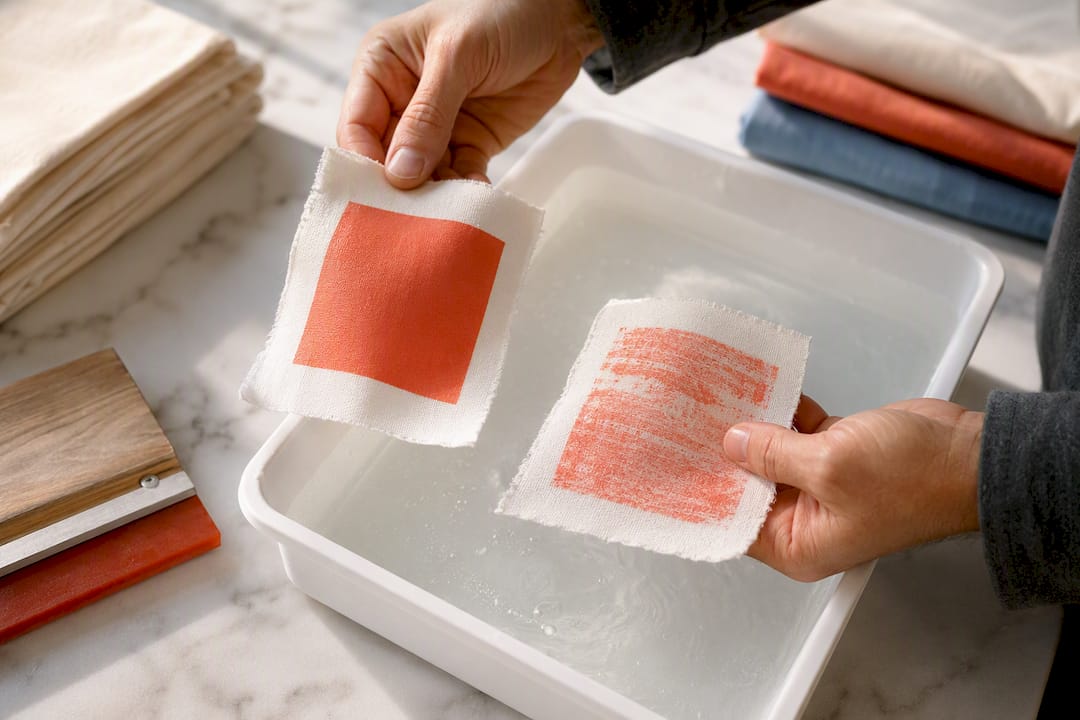
Correct curing temperature isn’t a suggestion for either ink. It’s the single biggest variable separating a print that lasts years from one that fails in a month.
What Changes in Your Shop Workflow?
Switching ink systems changes more than your ink budget. It changes how your whole line moves.
- Screen behavior: Plastisol never dries in the screen, so you can pause a run for lunch and pick it back up. Water-based dries on the mesh within minutes if you stop, which means you need to flood or mist screens constantly during any pause.
- Pot life: Standard plastisol has essentially unlimited shelf life once mixed. Catalyzed water-based formulas have a limited working window once the catalyst goes in, sometimes just a day or two, so you order per job rather than keeping stock.
- Dryer capacity: Plastisol fuses fast under standard belt dryers. Water-based needs a longer tunnel and slower belt speed to hit full dwell time, which can cut your throughput on the same equipment.
- Cleanup: Plastisol needs screen wash and solvent; water-based cleans with water, but you have to move fast before it sets.
- Staffing implications: A shop built around plastisol’s forgiving pace needs retraining before it can run water-based profitably, since the whole rhythm of pulling prints and clearing screens changes.
Plan dryer capacity and staff flow before you commit a big order to a new ink system, not after.
Are Water-Based Inks Actually Better for the Environment?
Water-based ink has a real advantage here. It eliminates PVC and phthalates, which matters directly to apparel brands selling to safety-conscious buyers, including anyone printing on baby clothing. Modern plastisol has largely moved to phthalate-free formulations too, so the older “plastisol is toxic” claim doesn’t hold the way it used to. The remaining environmental trade-off is more about energy and solvents: plastisol needs solvent-based screen cleaning, while water-based needs more dryer energy and, in catalyzed formulas, a co-solvent to help the binder cure.
- Check the technical data sheet (TDS) and safety data sheet (MSDS) before assuming any ink line is automatically “safe.”
- Choose certified low-VOC or phthalate-free lines when marketing to eco-conscious buyers.
- Follow local wastewater regulations. Water-based ink still shouldn’t go straight down a shop drain in bulk.
Pro Tip: If you’re printing anything meant to touch a newborn’s skin, don’t take a supplier’s marketing claim at face value. Ask for the actual TDS and confirm phthalate-free status in writing.
For baby garments specifically, the safest path is a tested, non-toxic ink line paired with full disclosure to the customer about what’s actually printed on the product.
How Do You Choose the Right Ink for Your Job?
Run through this checklist before you commit to a full production run:
- Garment color. Dark garments push you toward plastisol, discharge, or opaque water-based; light garments open up every option.
- Fabric content. 100% cotton unlocks discharge; poly and blends usually rule discharge out entirely.
- Desired hand. Retail-soft feel points to water-based; a bold graphic feel points to plastisol.
- Color accuracy needs. Exact Pantone matching favors plastisol’s mixability.
- Volume. High-volume runs favor plastisol’s forgiving screen behavior.
- Special effects. Puff or metallic locks you into plastisol; vintage fade locks you into water-based or discharge.
- Budget and eco requirements. Weigh dryer time and labor against ink cost, then check certifications if sustainability matters to your buyer.
Three quick scenarios: a light-cotton direct-to-consumer fashion line usually lands on water-based for that retail hand; dark event hoodies for a festival or team order usually call for plastisol or discharge. Performance athletic wear on poly blends almost always needs plastisol, since discharge won’t touch synthetic fibers. Whatever you pick, run a test swatch and verify cure with a wash test before signing off on full production.
What Makes Plastisol Worth Choosing?
Plastisol earns its place in most professional shops for one practical reason: it doesn’t dry in the screen. A printer can stop a run mid-shift, walk away for an hour, and come back to a usable screen. That single trait is why plastisol remains the default choice for high-volume commercial printers, who can’t afford downtime spent reclaiming clogged mesh.
Beyond that forgiveness, plastisol brings a few other real advantages. Color mixing is straightforward and repeatable, so hitting an exact Pantone match across a 500-piece order is realistic. Opacity is where it truly separates itself: one pass of white plastisol on black cotton looks solid, while the same pass in standard water-based often looks gray and translucent. That opacity advantage extends to specialty effects. Puff ink, metallic foils, high-density raised prints, and glow-in-the-dark formulas are almost all plastisol-based, because the ink’s film-forming behavior is what makes those effects physically possible.
Shelf stability rounds out the list. Mixed plastisol can sit in a bucket for months without separating or spoiling, which means a shop can keep a stock of common colors on hand rather than mixing fresh for every job. For a printer running dozens of small orders a week, that flexibility saves real time.
What Are the Real Downsides of Plastisol?
The tradeoff for all that reliability shows up the moment someone actually wears the shirt. Plastisol cures as a plastic film sitting on top of the fabric, and that film has a hand you can feel, sometimes described as “rubbery” or “heavy,” especially on large graphics or multi-color designs where ink layers stack up.
That surface film also blocks airflow. A large plastisol print across the chest of a cotton tee reduces breathability in that exact spot, which matters more on athletic wear or anything meant for warm weather. It’s rarely a dealbreaker on a small logo, but it becomes noticeable on all-over designs or oversized graphics.
The PVC question deserves a fair hearing rather than outdated fear. Standard plastisol is PVC-based, and older formulations did rely on phthalate plasticizers that raised legitimate health concerns. Most reputable ink manufacturers now offer phthalate-free plastisol lines that meet current consumer safety standards. Still, PVC itself remains in the formula, and some brands, especially those marketing on sustainability or selling to safety-conscious buyers like new parents, prefer to avoid it altogether rather than rely on a phthalate-free label alone.
There’s also a durability quirk that catches new printers off guard: plastisol can crack over time, almost always from undercuring or from stretching a garment before the ink fully fuses, not from normal wear on a properly cured print.
Why Do Brands Choose Water-Based Ink?
Soft hand is the headline benefit, and it’s not subtle. A well-cured water-based print becomes part of the fabric rather than sitting on it, so a shirt feels the same whether it’s blank or fully printed. For retail apparel brands competing against blank-tee comfort expectations, that difference is often the whole sales pitch.
Breathability follows directly from that same trait. Because the ink cross-links into the yarn instead of forming a surface film, printed areas don’t trap heat or block airflow the way a heavy plastisol print can. That matters for anything worn close to the skin for long stretches, infant clothing very much included.
The eco angle holds up under scrutiny too. Water-based formulations eliminate the need for PVC and phthalates entirely, which lines up cleanly with rising consumer demand for safer apparel, particularly in baby and children’s products where parents are reading labels more closely than ever. Many modern water-based lines also skip heavy metals, and options like Permaset’s PERMAPRINT Premium show the category has moved well past thin, washed-out early formulas into genuinely vibrant, high-coverage ink.
There’s a visual bonus too: water-based ink produces that faded, lived-in vintage look brands pay extra to fake through distressing techniques. With water-based, it’s just how the ink naturally sits in the fabric from the first wash on.
When Does Water-Based Ink Fall Short?
Opacity on dark garments is the biggest practical limitation, full stop. Standard water-based white on a black shirt tends to look gray and slightly see-through unless you add multiple passes or switch to a high-solids formula, both of which add time and cost.
The screen behavior is the other headache. Because water-based ink cures partly through evaporation, it starts drying the moment it stops moving, including sitting still in the screen between pulls. A production pause of even a few minutes can clog fine mesh, forcing printers to keep screens flooded or misted constantly during a run. That’s a real workflow tax compared to plastisol’s set-it-and-forget-it behavior.
Curing requirements round out the challenge list. Water-based ink needs proper airflow and enough dwell time in a forced-air dryer, not just surface heat. A shop with an underpowered or poorly calibrated dryer can turn out shirts that feel cured but wash out or fade fast because the binder never fully cross-linked. Getting this wrong is the single most common reason printers who try water-based once decide it’s “too finicky” and go back to plastisol, when the actual problem was equipment, not chemistry.
What Temperatures and Dryers Do Each Ink Need?
Plastisol has a clear, well-documented target: fusion typically happens around 320–330°F at the ink itself, not just the dryer’s air temperature. Hitting that number matters more than dwell time, since plastisol cures through a temperature threshold rather than a timed process. A flash cure unit can partially gel plastisol between colors, but full fusion still needs a conveyor dryer or oven that reaches temperature at the ink layer, checked with an infrared thermometer, not guessed from the dial.
Water-based ink cures differently, so the equipment math changes too. It needs genuine forced-air movement plus enough dwell time for water to evaporate and the binder to cross-link, which usually means a slower belt speed through a longer tunnel dryer than a plastisol shop is used to running. Catalyzed water-based formulas add urgency: they cure chemically once mixed, so cure verification through a wash test matters even more than with plastisol.
Either way, guessing at cure is how shops end up with returns. A cheap infrared thermometer and a standing habit of running wash tests on every new ink batch or garment substrate catches problems before they ship.
Which Ink Works Best on Which Garment?
Garment color and fabric content decide most of this before hand feel or budget ever enters the conversation. Dark garments favor plastisol, discharge, or opaque/HSA water-based, since all three can achieve real opacity against a dark background. Light garments open the door to every option, including standard water-based, since opacity isn’t fighting against a competing base color.
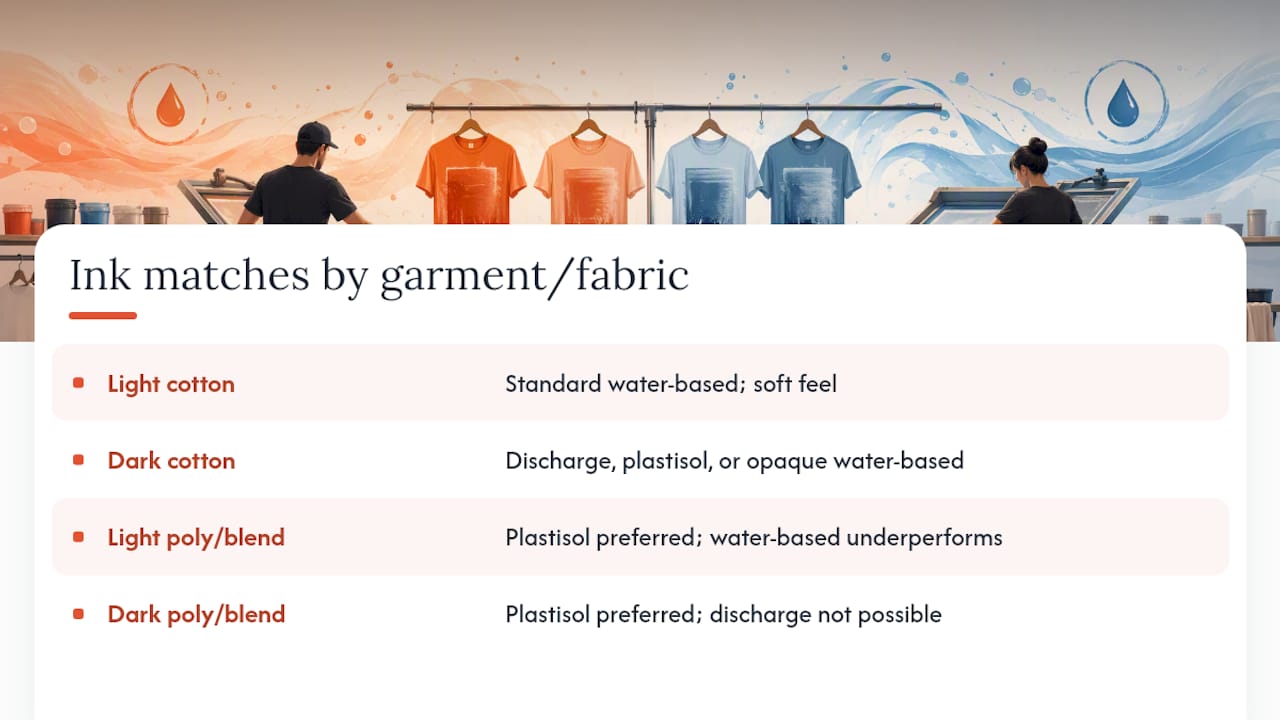
Fabric content narrows things further. Discharge only works on natural fibers, mainly 100% cotton, because the process chemically removes existing dye, and synthetic fibers don’t hold dye the same way. Poly and cotton/poly blends rule discharge out entirely and often push standard water-based to underperform too, since polyester doesn’t absorb water-based ink the way cotton does. Plastisol, by contrast, prints reliably across cotton, poly, and blends alike, which is a big part of why it stays the default for mixed-fabric orders like performance wear or uniforms.
Put simply: light cotton tees for a soft retail feel lean water-based; dark cotton hoodies for event merch lean discharge or plastisol; poly-blend athletic gear leans plastisol almost by default, since the fabric itself limits the alternatives.
What Are the Real Production Trade-Offs in the Shop?
Screen drying is the practical difference that separates these two inks in daily production more than any spec sheet. Plastisol sits in the screen indefinitely, so a shop can run a job, pause it, and resume without touching the screen. Water-based starts drying the moment the squeegee stops moving, which means an operator has to flood or mist the screen during any gap, or risk a clogged mesh mid-run.
Cleanup flips the equation the other way. Plastisol needs solvent-based screen wash, which means proper ventilation, solvent disposal, and a dedicated wash station. Water-based cleans up with plain water, which is easier on a small shop’s infrastructure, provided the ink hasn’t already dried into the mesh.
Throughput ends up being the real cost driver. A plastisol shop can run flash cures between colors and push garments through a standard dryer quickly. A water-based shop needs a longer dryer tunnel or a slower belt to hit proper dwell time, which can cap how many pieces move through the same equipment per hour. For a shop weighing a switch, that throughput difference often matters more than the ink price itself.
What Are Discharge and Opaque Water-Based Options?
Discharge solves the one problem that keeps most water-based shops from touching dark garments at all. Instead of laying color on top of the fabric, discharge chemically removes the garment’s existing dye and deposits pigment in its place. The result is a soft, vibrant, no-hand print on dark cotton that looks and feels nothing like a plastisol print sitting on the surface.
The catch is real: discharge only works reliably on natural fibers, mainly 100% cotton, and results vary by garment dye lot, since some dyes resist discharging better than others. It’s also not a beginner process; getting consistent color requires testing each new batch of blanks.
High-solids acrylic (HSA) and opaque water-based formulas take a different route to the same goal. They add more pigment load to standard water-based ink, closing much of the opacity gap with plastisol while keeping most of the softer hand. They won’t match plastisol’s coverage on true black, but they get close enough for many light-to-medium dark garments without the surface film. For a brand that wants water-based softness on a navy or heather-dark shirt without full discharge, HSA is often the practical middle ground.
How Does Babyineverylanguage Choose Ink for Baby Bodysuits?
Our company focuses on baby bodysuits with printed phrases, influencing all printing decisions. Newborn skin sits against that fabric all day, so soft-hand, baby-safe, non-toxic inks are the default rather than the exception. Phrases undergo verification; ink choice follows, with test prints confirming fabric and finish quality before production.
Ready to Print Your Bodysuit?
Every design in the collection prints on soft, 100% cotton using baby-safe, non-toxic inks, chosen specifically because newborn skin can’t tolerate a heavy, stiff plastisol hand across an entire onesie. That’s the practical upside of the soft-hand approach covered above: a shirt built for an adult can absorb a rigid print; a bodysuit worn by a newborn all day cannot.
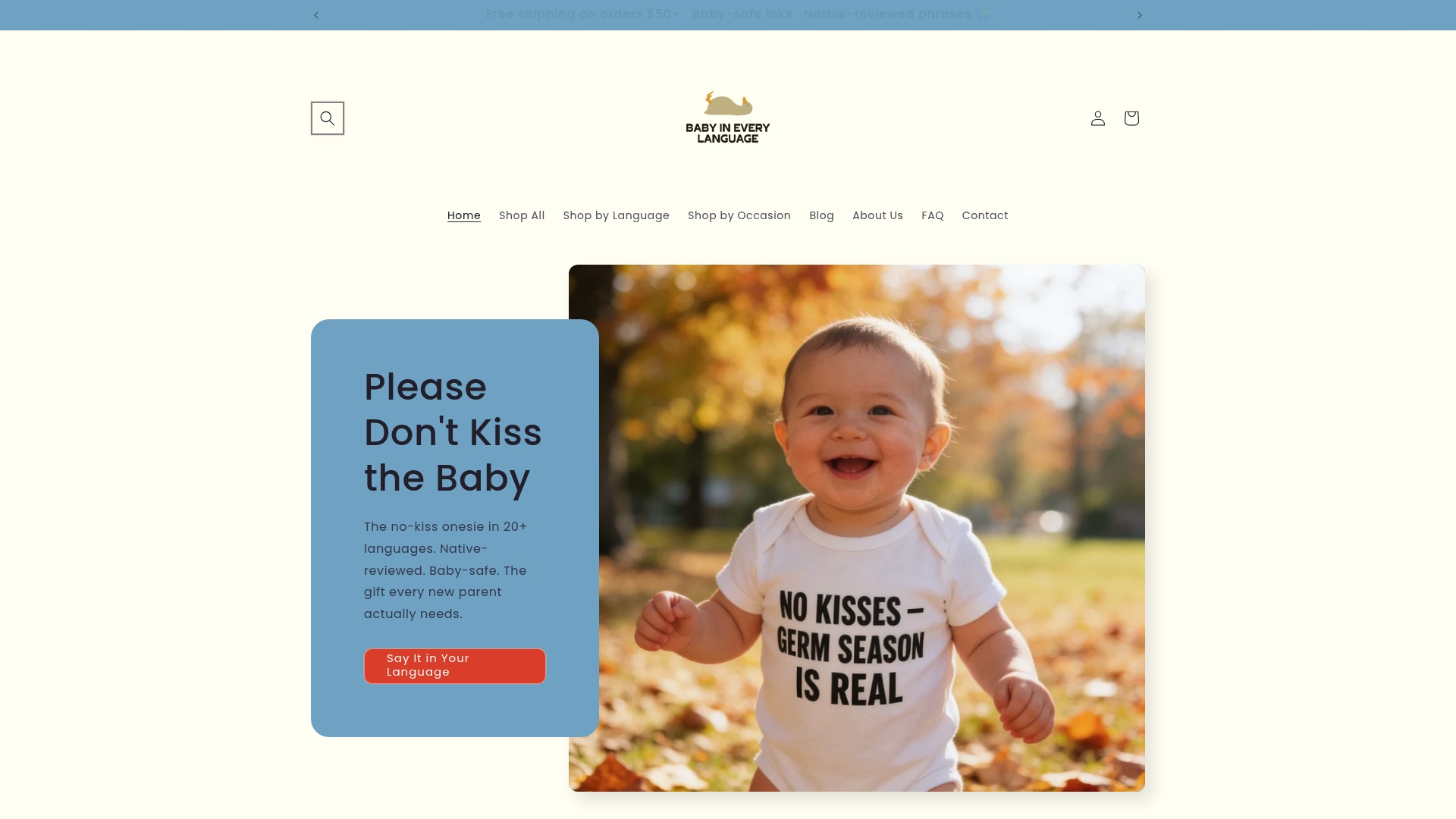
Every phrase, including favorites like the Lips Keep Out Baby Bodysuit, the Kiss Free Zone Baby Bodysuit, and the Keep Calm and Don’t Kiss Me Baby Bodysuit, is verified by a native speaker before it ever reaches a screen. If you want something more direct, the Authorized Kisses None Baby Bodysuit and No Kiss Zone Baby Bodysuit make the same point without a translation. For families who want a gentler nudge, the Newborn Handle With Love No Kissing Baby Bodysuit and Warning New and Fragile Baby Bodysuit say it with a smile instead of a warning label.
Browse the full newborn onesie collection and pick the phrase, and language, that fits your family.
The Real Decision Point Nobody Talks About
Most guides frame this as a chemistry debate: PVC versus water, opacity versus softness. That framing misses the actual failure point in nine out of ten bad prints, which isn’t the ink choice at all. It’s a shop skipping a wash test because the sample looked fine right off the dryer.
An undercured plastisol print looks identical to a properly cured one the day it ships. It cracks three washes later, and by then the brand has already eaten the return and the customer’s trust. An undercured water-based print looks softer and slightly duller, which may be mistaken for the ink’s normal character instead of a sign the binder never fully cross-linked. Both failures trace back to the same root cause: skipping verification because the schedule was tight.
The other underappreciated point is that “eco-friendly” and “baby-safe” aren’t automatically the same claim. Water-based ink’s phthalate-free profile is a genuine advantage, but a shop still needs to check the actual technical data sheet rather than assume every water-based line is created equal. Some catalyzed formulas introduce their own chemical considerations that a casual buyer would never think to ask about. For anyone printing apparel that touches a newborn’s skin for hours at a stretch, that verification step matters more than which ink family wins the general debate.
If there’s one opinion worth taking away from all of this, it’s that the ink matters less than the discipline around it. Pick the right chemistry for the job using the checklist above, then verify the cure every single time. Skip that second step and it doesn’t matter which ink you chose.
— Bassem