

Stop Unwanted Kisses: 3 Safe Bodysuits That Back Newborn Visitor Rules
A boundary-setting bodysuit works because it says what you can’t always say out loud without an argument. It puts “please don’t kiss me” or “handle with care” right on the baby’s chest, in soft 100% cotton with non-toxic, baby-safe inks (link), so nobody’s skin or feelings get hurt. Pair it with basic hand-washing and visit-timing rules, and most visitors get the message before they even reach for the baby.
TL;DR:
- Polite requests are the gentlest tone, but blunt prohibitions are most effective in households with resistant relatives.
- Ensure the bodysuit is made of 100% cotton with non-toxic, heat-set ink, and avoid bulky or irritating embellishments.
- Use the bodysuit as part of a broader plan, including pre-visit messaging, hand sanitizer, and clear boundaries to prevent overstimulation.
- Prioritize hand washing, avoiding face kisses, and rescheduling visits if anyone feels unwell, aligning with pediatric recommendations.
- Tailor your communication approach based on visitor closeness, with humor for friends and directness for distant relatives, to prevent misunderstandings.
Table of Contents
- What Visitors Holding Newborn Rules Actually Look Like on a Bodysuit
- Safety and Materials: What to Check Before You Buy
- How to Use a Boundary Bodysuit Without Starting a Family Feud
- What Doctors Actually Recommend About Newborn Visits
- Do Visitors Need to Be Screened Before They Hold the Baby?
- How Many Visitors Is Too Many, and For How Long?
- Talking to Grandma vs. a Coworker: Adjusting the Message by Visitor Type
- Why Humor and Honesty Both Belong on the Same Onesie
- Shop the Bodysuits Built for This Exact Job
- Where This Guidance Comes From
- Sources
What Visitors Holding Newborn Rules Actually Look Like on a Bodysuit
Boundary bodysuits fall into three tones, and picking the right one matters more than people expect.
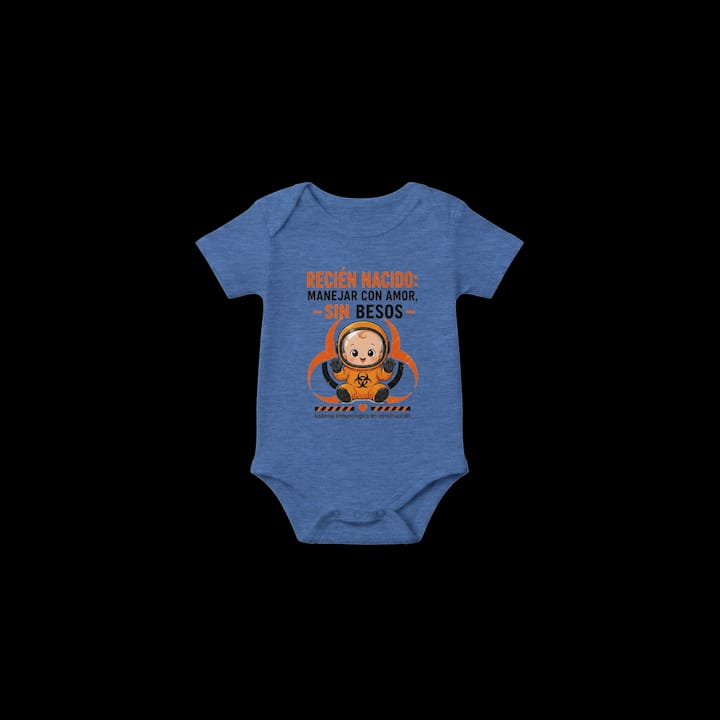
A polite request softens the ask: “Please don’t kiss me” or “No kisses, please” reads as a gentle nudge rather than a rule. A humorous warning does more work with less friction: something like “No smooching allowed” turns an awkward topic into a joke everyone can laugh at, including the aunt who was about to lean in. A blunt prohibition, like a stark “Do not kiss” label, skips the cushioning entirely and works best for households who prefer plain talk over hints.
The tone you pick should match your family. Research on humor in parenting suggests that light, well-placed humor can defuse exactly this kind of tension and make boundary-setting feel less like a confrontation. But humor doesn’t land the same way with every relative. A joke that gets a laugh from a sibling might get a cold shrug from a grandparent who grew up thinking kisses on a baby’s cheek were just love, not a germ risk. In those cases, a direct phrase avoids any chance of the message getting missed.
- Polite request: softest tone, works for most gift-giving occasions
- Humorous warning: best for social visits and casual family dynamics
- Blunt prohibition: clearest option for stubborn or hard-of-hearing relatives
If you’re buying for a bilingual family or gifting to parents abroad, native-speaker-verified phrasing matters. A poorly translated warning can come across as rude or nonsensical, which defeats the entire purpose.
Pro Tip: If you’re not sure how a relative will take the message, buy the humorous version. A laugh gets your point across just as well as a stern warning, without anyone feeling scolded.
Safety and Materials: What to Check Before You Buy
The phrase on the bodysuit only matters if the bodysuit itself is safe for newborn skin. Before you buy, run through a short checklist.
- Fabric: Look for 100% cotton or another verified baby-safe textile. Newborn skin is thinner and more reactive than adult skin, so scratchy synthetic blends are a bad trade for a cute slogan.
- Ink: Confirm the print uses non-toxic, heat-set ink that won’t crack, flake, or transfer onto other clothes in the wash.
- Placement: Avoid bulky appliqués, sequins, or raised graphics anywhere near the collar or face, where they can irritate skin or become a hazard.
- Fit: A snug, correctly sized bodysuit keeps the message visible. One that’s too big will ride up and hide the words exactly when a visitor is reaching for the baby.
- Closures: Snap closures at the crotch and shoulders should be secure but easy for a tired parent to manage one-handed.
Many dedicated sellers build every design around these same standards: baby-safe materials, non-toxic prints, and phrasing checked by native speakers for accuracy across more than 20 languages. That last part matters more than shoppers expect. A phrase that sounds warm and funny in English can read as harsh or just confusing when translated badly, which is exactly the opposite of what a boundary garment is supposed to do.
How to Use a Boundary Bodysuit Without Starting a Family Feud
A bodysuit does more work when it’s part of a plan, not a standalone prop.
- Start early. Many parents put the bodysuit into rotation from the first hospital visits and keep using it through the early weeks, since that’s when unannounced guests are most common and immune risk is highest.
- Keep the message visible. Layer it under an open cardigan or blanket rather than zipping a jacket over it. In cooler weather, a swaddle that leaves the chest panel exposed during greetings does the trick without exposing the baby to a draft.
- Back it up with a group text. A short message to family before visits, something like “we’re keeping cuddles to arm’s length for now,” sets the expectation before anyone walks in the door.
- Station hand sanitizer at the entrance. It’s a visual cue that hygiene is part of the deal, not just the baby’s outfit being cute.
- Have a script ready. A calm line like “she’s not up for kisses yet, but you can hold her hand” gives visitors an alternative instead of just a rejection.
- Know when to escalate. If someone brushes off the bodysuit and leans in anyway, repeat the request once, calmly. If it happens again, let your partner step in and redirect, or end the visit early. You don’t owe anyone an extended explanation.
Pro Tip: Assign one person, usually a partner, as the designated “bad guy” for enforcing rules with pushback-prone relatives. It keeps you from having the same argument twice.
For ready-made phrasing, Babyineverylanguage’s guide to politely declining kisses has scripts for exactly this moment.
What Doctors Actually Recommend About Newborn Visits
The bodysuit’s message isn’t just a preference. It echoes what pediatric guidance already says.
Johns Hopkins Medicine recommends washing hands before holding a newborn and avoiding kisses on the baby’s face, since a newborn’s immune system hasn’t built up defenses against common germs that barely register with adults. The same guidance suggests waiting roughly 2 to 3 months before extended family and friends have close, prolonged contact, when that timeline is realistic for the family.
Medical News Today adds a few more practical points: visitors should postpone a visit entirely if they’re feeling unwell, keep visits short, and ideally schedule them ahead of time rather than dropping by.
- Wash hands before any contact
- Skip kisses on the face
- Reschedule if you’re sick, even mildly
- Keep visits brief and planned
None of this is meant to make visitors feel unwelcome. It’s a shareable, medically grounded reason parents can point to when the bodysuit’s message needs backup: “It’s not personal, it’s just what the doctors recommend for the first couple of months.”
Do Visitors Need to Be Screened Before They Hold the Baby?
Asking a visitor “are you feeling okay?” before they hold a newborn isn’t rude, it’s standard practice. A cold that’s mild for an adult can turn into a serious respiratory illness for a baby whose lungs and immune system are still developing.
A quick, low-pressure screening covers the basics: any cough, sniffle, sore throat, or fever in the last few days should mean a rescheduled visit, not a masked one. The same goes for anyone recently around a sick child, since young kids are notoriously efficient at spreading colds and stomach bugs before symptoms even show. Flu season and RSV season raise the stakes further, since both viruses hit infants harder than older kids or adults.
Parents don’t need to interrogate every guest at the door. A simple heads-up before the visit, something like “we’re asking everyone to reschedule if they’ve had any cold symptoms this week,” sets the expectation without singling anyone out in the moment. Babyineverylanguage’s post on limiting kisses during flu and RSV season breaks down why pediatricians treat this season differently and how to word the ask without sounding alarmist.
The goal isn’t zero visitors. It’s making sure the people who do come are actually well enough to be there.
How Many Visitors Is Too Many, and For How Long?
A newborn’s nervous system is still learning to regulate itself, and a living room full of new faces, voices, and hands can overload that system fast. Overstimulation in newborns often shows up as excessive crying, trouble settling, or a baby who suddenly can’t feed calmly after being passed around for twenty minutes.
Limiting visitors to one or two people at a time, rather than a full house, keeps the noise and handling manageable. Short visits, typically short enough to avoid overstimulation, tend to work better than open-ended afternoons, both for the baby and for a recovering parent. Scheduling visits with gaps between them, instead of stacking three sets of grandparents on the same Saturday, also gives the baby (and the parents) real recovery time.
A practical trick many parents use: treat visiting hours the way a hospital does. Pick a window, communicate it clearly, and stick to it even when someone asks for “just five more minutes.” The bodysuit’s message reinforces this passively. Even when the room is full, the visible phrase keeps reminding people to keep contact brief and gentle rather than passing the baby around like a party favor.
Talking to Grandma vs. a Coworker: Adjusting the Message by Visitor Type
Not every visitor needs the same conversation, and treating them all identically usually backfires.
Immediate family, especially grandparents, often need the most direct communication because they feel entitled to closeness they’ve been picturing for months. Framing the ask around the baby’s needs rather than the visitor’s behavior tends to land better: “the pediatrician wants us limiting contact for now” invites less pushback than “please don’t kiss her.” Giving a clear reason tied to recovery, sleep, or feeding schedules makes the ask easier to accept, since it’s about the family’s needs rather than a personal rejection.
Close friends usually take the hint fastest, especially if the bodysuit’s phrase is funny. A humorous “no smooching allowed” onesie does the talking so the parent doesn’t have to repeat the rule out loud every time someone new walks in.
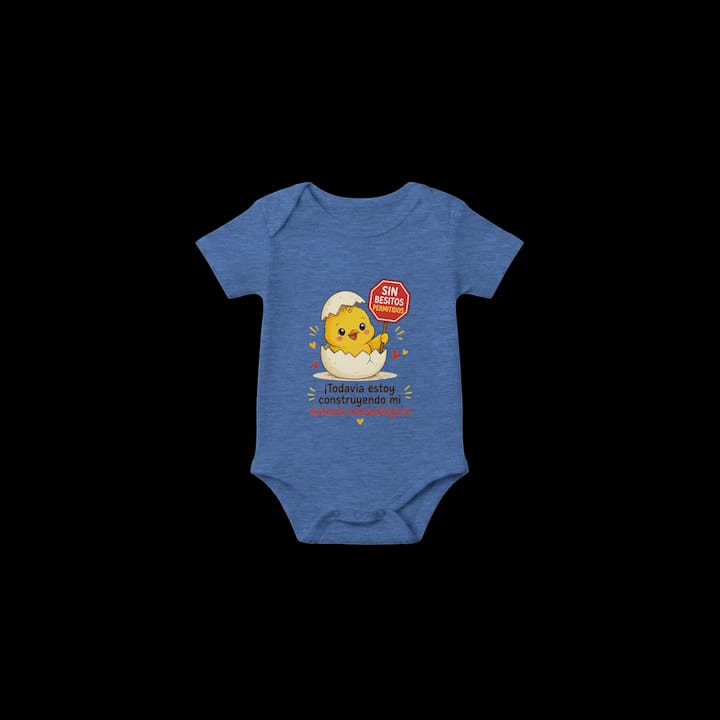
Acquaintances and distant relatives benefit from the bluntest option. They don’t share the same emotional history as grandparents, so a direct phrase avoids ambiguity without the risk of hurting deep feelings. A short, polite line at the door, plus the bodysuit as backup, usually covers it. A single family spokesperson, often the partner not currently holding the baby, can help keep the message consistent and takes the pressure off the parent who’d rather just enjoy the visit.
Why Humor and Honesty Both Belong on the Same Onesie
The instinct to keep boundary-setting light isn’t about avoiding hard conversations. It’s about recognizing that a newborn’s first weeks are exhausting enough without adding a family argument to the mix.
What gets underestimated is how much a visible, wearable message does the emotional labor that a parent would otherwise have to repeat out loud, over and over, to every single person who walks through the door. A onesie that says it for you isn’t a shortcut. It’s a genuinely useful tool that reduces the number of times a sleep-deprived parent has to have the same tense conversation before lunch.
Cultural accuracy matters just as much as the joke itself. A phrase that works in English can misfire badly in translation, so every design gets checked by a native speaker before it goes to print, alongside baby-safe materials and non-toxic inks that keep the focus on the message, not on skin irritation.
— Bassem
Shop the Bodysuits Built for This Exact Job
If you’re ready to put a message on the baby instead of repeating it to every guest, three designs cover most situations. The Newborn Handle With Love No Kissing Baby Bodysuit leads with a gentle, protective tone that works well for grandparents and sensitive family dynamics. The Warning New And Fragile Baby Bodysuit leans into a playful “handle with care” warning that reads as funny rather than harsh. The No Smooching Allowed Baby Bodysuit is the most direct of the three, ideal for households who’d rather skip the subtlety altogether.

Every design is printed on soft cotton with non-toxic ink and available in more than 20 languages, each checked by a native speaker so the joke or the warning lands exactly as intended, whether it’s for your own baby or a gift for someone else’s. This brand isn’t just selling a onesie, it’s selling the conversation you don’t have to have out loud anymore.
Browse the full newborn onesie collection to compare phrasing and languages side by side, then pick the one that matches your family’s tone and check out before your next round of visitors shows up.
Where This Guidance Comes From
The hygiene and timing guidance referenced throughout this piece comes from Johns Hopkins Medicine’s guidance on newborn visitors and Medical News Today’s rules for visiting a newborn, both of which cover hand-washing, kissing, and illness screening in more detail than a single onesie ever could. The humor research cited earlier comes from a peer-reviewed look at humor’s role in parenting. For scripts and deeper reading on declining kisses politely, see Babyineverylanguage’s post on why you shouldn’t let people kiss your newborn.
Sources
- New parents and newborns: are visitors ok? | Johns Hopkins Medicine
- Rules for visiting a newborn | Medical News Today
- Humor in parenting: Does it have a role? - PMC