

Newborn Visitor Etiquette: Multilingual Bodysuit That Stops Kisses
Boundary-setting bodysuits are a light-hearted, effective way to handle visitor etiquette newborn parents dread bringing up out loud. A shirt that says the awkward part for you cuts down on repeated arguments at the door. The Newborn Handle With Love No Kissing Baby Bodysuit is the version most parents reach for first. The sections below cover how to pick one, use it well, and keep it safe for your baby’s skin.
TL;DR:
- The bodysuit is most effective during the first six to eight weeks, especially when infection risk and visitor contact are highest.
- Choosing the right wording involves keeping it short, friendly, and verified by native speakers to avoid sounding preachy or rude.
- Supplement the shirt with pre-visit messages about hand-washing and illness screening for better overall boundary enforcement.
- Use certified baby-safe materials, like 100% cotton and water-based non-toxic ink, and ensure proper fit and laundering to maintain safety and longevity.
- The multilingual phrases are checked by native speakers to ensure natural tone and social appropriateness across different languages.
Table of Contents
- Why Do Wearable Boundary Cues Work for Newborn Visitors?
- How Do You Choose the Right Phrasing and Design?
- How Do You Build a Full Visitor Plan Around the Bodysuit?
- What Should You Check for Safety, Materials, and Care?
- Why We Make Multilingual, Verified Boundary Bodysuits
- Get the Handle With Love, No Kissing Bodysuit
- Sources
- FAQ
Why Do Wearable Boundary Cues Work for Newborn Visitors?
A onesie that states the rule outright does something a hundred polite reminders can’t: it removes you from the conversation entirely. Instead of being the parent who has to say “please don’t kiss the baby” for the fifth time at a family gathering, the shirt says it for you. Pediatric guidance already supports the underlying rule. Baystate Health’s newborn visiting guidelines recommend limiting kissing and close facial contact during the early weeks, since infants under two months have thin immune defenses against viruses that barely register in adults.
The bodysuit doesn’t replace that advice. It reinforces it without you having to repeat yourself at every visit.
That matters more than it sounds like it should, because enforcing a boundary over and over is exhausting in a way that has nothing to do with the boundary itself. A visible message does the reminding for you.
Where this actually plays out:
- A grandparent leans in for a cheek kiss at the door; the shirt catches their eye before their lips do.
- A coworker stops by the office to meet the baby on a lunch break, and the message heads off any awkward small talk about germs.
- A crowded holiday gathering where you can’t personally monitor every hand reaching for the baby.
The shirt is a filter, not a lecture. That’s the whole point.
How Do You Choose the Right Phrasing and Design?
The words on the bodysuit matter more than most parents expect. A phrase that reads as playful to one person can land as cold or preachy to another, and a phrase translated word for word into a second language can come out sounding stiff or even rude. Clothing carries social meaning: research on parental consumption of baby apparel notes that parents often use what a baby wears as a stand-in for their own values and decisions, which is exactly why the wording on a boundary bodysuit needs to feel like you, not like a generic warning label.
Here’s how to pick phrasing that actually works:
- Keep it short. “Handle With Love, No Kissing Please” reads faster than a paragraph explaining germ theory, and speed is the whole advantage.
- Stay friendly, not clinical. “No Kisses, Just Cuddles” lands softer than “Do Not Touch.”
- Check the translation with a native speaker. A direct English-to-Spanish or English-to-Mandarin translation can misfire on tone even when the grammar is technically correct, which is why native-speaker-verified phrasing matters for multilingual gift orders.
- Match the print to the room it’ll be read in. High-contrast lettering on a light background reads across a living room; pastel-on-pastel doesn’t.
- Size it to fit, not to hang loose. A properly fitted bodysuit keeps the message flat and legible instead of bunched up under a swaddle blanket.
Pro Tip: If you’re buying this as a gift rather than for your own baby, pair it with a short note like “Thought this might make the first few weeks a little easier” so it reads as helpful, not passive-aggressive.
For guidance on wording the request out loud too, these scripts for declining kisses politely pair well with whatever the shirt says.
How Do You Build a Full Visitor Plan Around the Bodysuit?
The shirt works best as one piece of a plan, not a standalone fix. Medical News Today’s guidance on newborn visiting rules points out that a visible cue combined with advance communication prevents far more misunderstandings than either one alone.
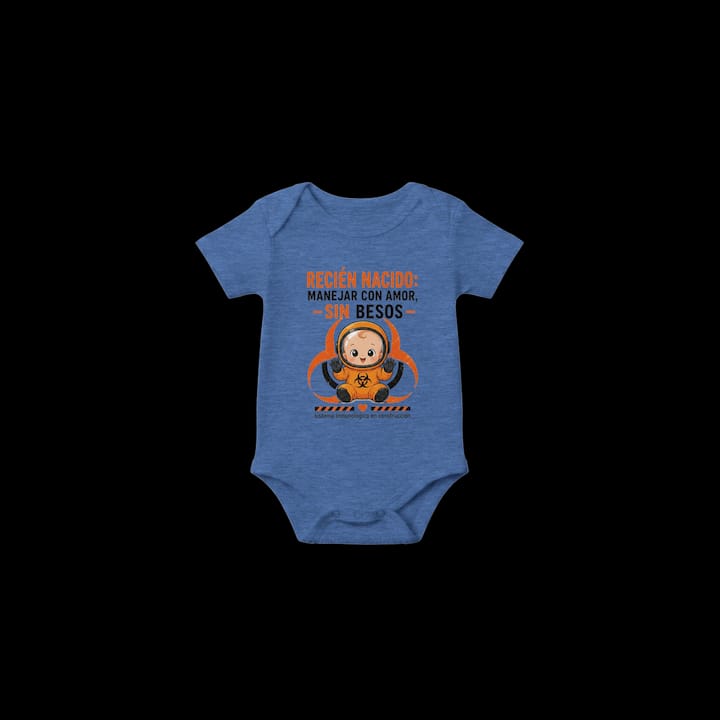
Timing: Put the bodysuit into rotation during the first six to eight weeks, when infection risk is highest and vaccination status among visitors matters most. Some parents retire it once the baby has had their first round of shots; others keep it in the closet for flu season reunions and big family events year over year.
Advance messages: A text sent before anyone arrives does real work. Something like: “So excited for you to meet the baby! Quick ask: hands washed before holding, and no kisses on the face for now. Also let us know if anyone’s been under the weather this week.” Sharp HealthCare’s visitor guidance backs both the hand-washing ask and the illness screening as standard newborn precautions.
Day-of tactics:
- Greet guests at the door, point to the shirt, and let it break the ice before anyone reaches for the baby.
- Keep hand sanitizer visible near the entry.
- Set a soft time limit on visits. AdventHealth recommends keeping newborn visits relatively short so nobody, baby included, gets overstimulated.
If someone still reaches in for a kiss:
Say it once, smile, and move on. The shirt already did the hard part.
What Should You Check for Safety, Materials, and Care?
“Baby-safe materials” isn’t just a marketing phrase. It means fabric soft enough not to irritate newborn skin and printed with non-toxic inks that won’t leach chemicals during the hours a baby spends wearing it or the hours it spends being chewed on later. Cotton bodysuits printed with water-based, non-toxic ink are the standard to look for, since newborn skin absorbs more of whatever touches it than adult skin does.
A few things worth checking before you buy:
- Fabric composition. 100% cotton breathes better and irritates less than synthetic blends.
- Ink type. Non-toxic, skin-safe printing should be stated plainly on the product page, not buried in fine print.
- Snap closures, not loose ties. Anything that could work loose around a baby’s neck or fingers is a hazard regardless of how cute the design is.
- True-to-size fit. Oversized bodysuits bunch up and hide the print, and loose fabric near a baby’s face is its own small risk.
For laundering, wash in cold or warm water with a mild, fragrance-free detergent, skip the fabric softener (it dulls prints faster than people expect), and either air dry or tumble dry on low. That routine keeps the lettering crisp through dozens of washes instead of fading into an unreadable smear by month two. Full sizing charts and material specifics are listed on the product page for the bodysuit itself.
Why We Make Multilingual, Verified Boundary Bodysuits
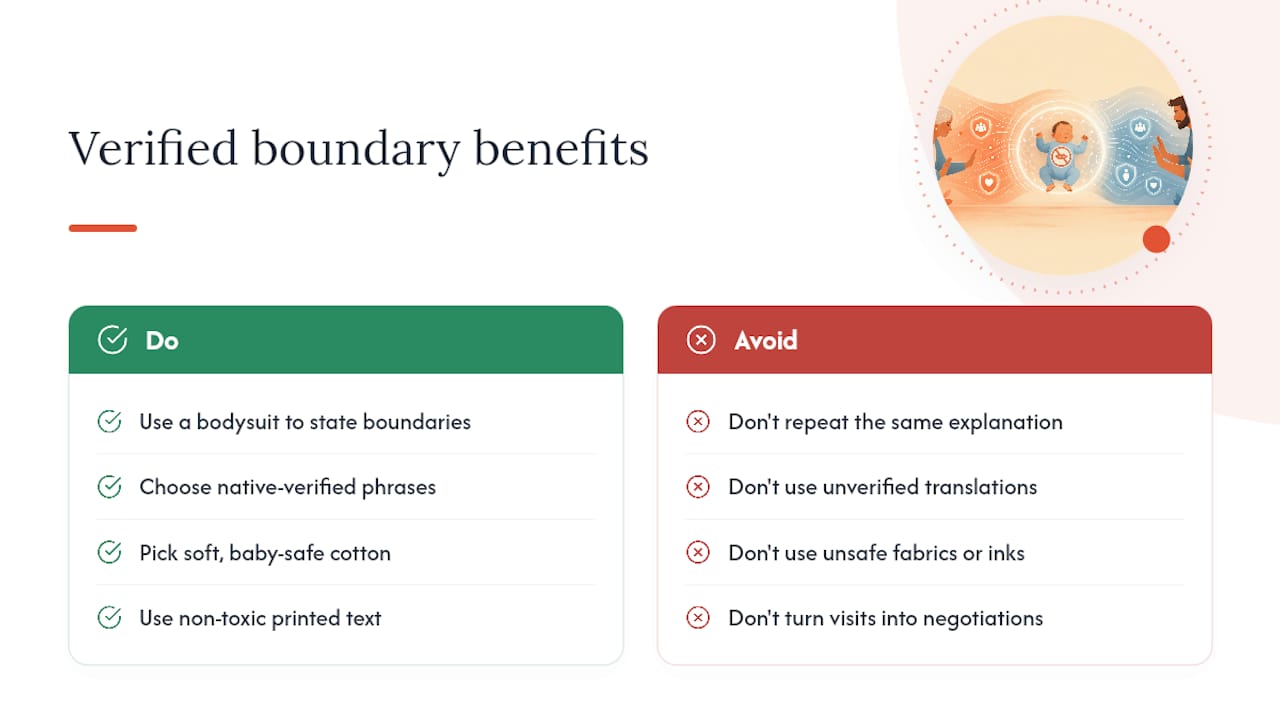
We built Babyineverylanguage around one frustration every new parent recognizes: having to explain the same boundary to the same relatives, over and over, at every single visit. A shirt that says it for you changes that dynamic entirely.
Every phrase printed is checked by a native speaker before shipping to ensure social appropriateness. Using soft, baby-safe cotton and non-toxic printing, the goal is to help parents protect their baby’s space without turning visits into a negotiation.
— Bassem
Get the Handle With Love, No Kissing Bodysuit
The Newborn Handle With Love No Kissing Baby Bodysuit is Babyineverylanguage’s answer to the awkward “please don’t kiss the baby” conversation: it says it for you, in over 20 languages, verified by native speakers so the phrasing lands right no matter who’s reading it.
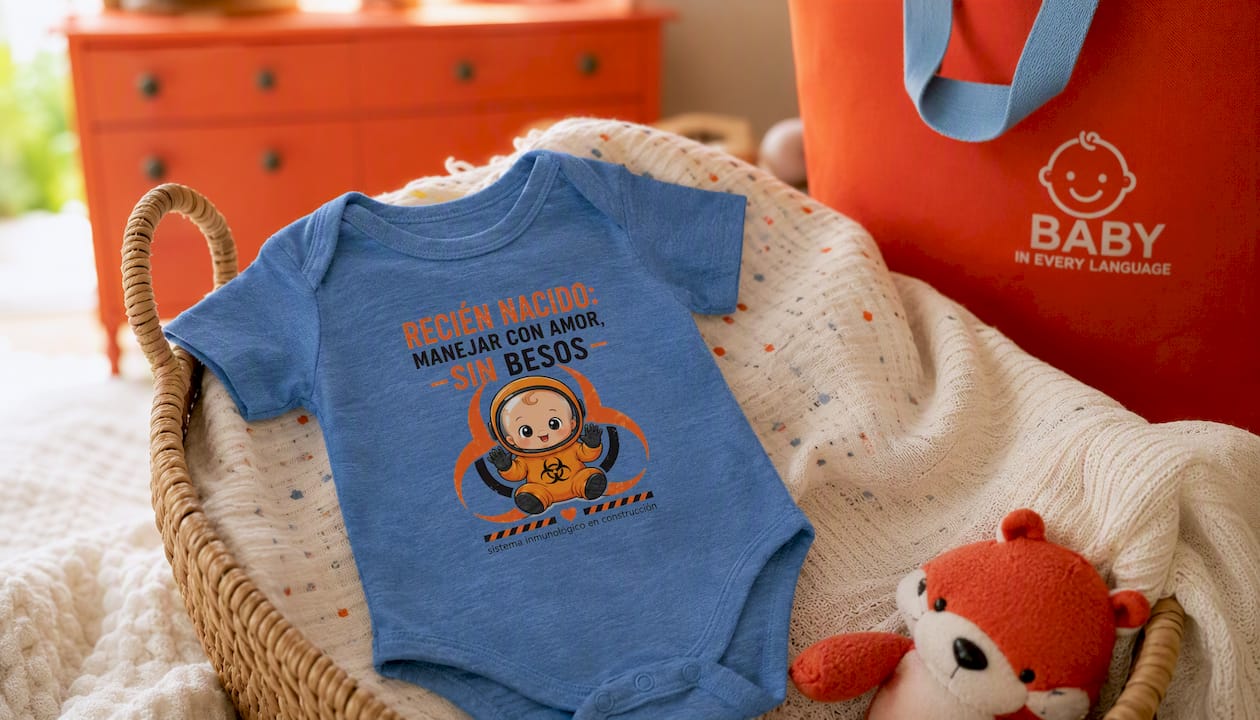
It’s cut from soft cotton, printed with non-toxic ink, and sized to keep the message flat and legible instead of lost in loose fabric. Multiple color options make it easy to match a nursery theme or just pick whatever feels right for the season. Pair it with a short advance text to visitors and a calm one-line script for the door, and you’ve got a full plan instead of just a shirt.
If you’re shopping for a friend rather than your own baby, this doubles as a genuinely funny, genuinely useful baby shower or hospital gift that new parents actually use. It also fits neatly into early newborn photo sessions, where families are already thinking about who’s allowed to hold the baby and for how long, a detail some newborn photography guides also touch on when planning session logistics. Check sizes and colors on the product page and place your order today.
Sources
- Guidelines for visiting a newborn — Baystate Health
- Rules for visiting a newborn — Medical News Today
FAQ
What Is a Boundary-Setting Newborn Bodysuit?
It’s a baby bodysuit printed with a phrase like “No Kissing Please” that visually communicates a physical-boundary rule so parents don’t have to repeat it out loud at every visit.
Are These Bodysuits Actually Safe for Newborn Skin?
Look for 100% cotton fabric and non-toxic, water-based printing, both of which reduce the chance of skin irritation on a newborn’s especially sensitive skin.
Should I Still Ask Visitors Things Verbally, or Is the Shirt Enough?
The shirt works best paired with a short advance message asking about hand-washing and recent illness. Combining a visible cue with upfront communication prevents more misunderstandings than either approach alone.
How Long Should My Baby Wear a No-Kissing Bodysuit?
Most parents use it through the first six to eight weeks, when infection risk is highest, and some bring it back out for flu season or large family gatherings later on.
Do the Multilingual Versions Actually Sound Natural in Other Languages?
Babyineverylanguage has every phrase checked by a native speaker before printing, specifically to avoid the stiff or awkward wording that comes from a literal translation.