

One Sentence Scripts That Let New Parents Politely Say No to Visitors
You are allowed to say no to visitors while you heal, and you don’t owe anyone a paragraph of justification. Here’s the one-line version you can send right now: “We’re keeping visits to family only for the next few weeks so we can rest and bond with the baby. We’ll let you know when we’re ready for company!” Add “please hold off on kisses too” if you want to head off that question before it starts.
TL;DR:
- Most parents should limit visits for at least the first two weeks after birth to allow full recovery and bonding, especially during high transmission seasons for illness.
- Using short, consistent scripts and visual signals like door signs or wearable bodysuits can effectively communicate boundaries without confrontation.
- It’s acceptable to set hygiene rules such as hand washing and avoiding kisses, and to hold off on visitors until they are explicitly invited or until the baby is at least two weeks old.
- Designated spokespersons or printed notices help manage inquiries and reduce emotional labor, with the option to escalate only when boundaries are ignored.
- Most medical guidance recommends postponing non-essential visits until after two weeks, with strict hygiene protocols when visits do begin.
Table of Contents
- How Do You Say Polite No Visitors Without the Guilt?
- Tactical Ways to Limit Visits Without Confrontation
- What to Say When Family Pushes Back
- When Can You Start Allowing Visitors?
- Why We Believe in Simple, Visual Boundary Signals
- A Lighthearted Way to Back Up Your No-Kissing Rule
- Sources
- FAQ
How Do You Say Polite No Visitors Without the Guilt?
The trick isn’t finding the perfect words. It’s picking a short script and reusing it for everyone who asks, whether that’s your mother-in-law or your neighbor from three doors down. Advice columnists like the one at Dear Abby make the same point again and again: you don’t need to justify your need for space, and a firm, polite line usually shuts down the back and forth before it starts.
Here are templates sorted by who’s asking:
- Close family: “We love you and can’t wait for you to meet the baby, but we’re doing family only for now. We’ll text you when we’re ready.”
- In-laws pushing for a visit: “We know you’re excited! Recovery has been rougher than expected, so we’re limiting visitors this week. Can we set up a video call instead?”
- Casual friends or coworkers: “Thanks so much for thinking of us. We’re keeping things quiet at home for a bit, but I’ll send pictures soon.”
- Someone who shows up unannounced: “This isn’t a great time, sorry. We’re not taking visitors this week, but let’s plan something once we’re settled.”
For phone calls, keep it just as brief. Try: “Hey, thanks for calling, we’re not up for visits yet, but I wanted to hear your voice. Can I call you back once we’re in a groove?” A voicemail greeting can do the heavy lifting too: “Hi, thanks for calling. We just had the baby and aren’t taking visitors right now. Text us and we’ll follow up when we’re ready.”
An out-of-office style text works well for repeat callers: “Baby’s here! We’re resting and bonding as a family for the next couple weeks, so we’re not scheduling visits yet. We’ll reach out when we’re ready for company.”
For a group announcement, a short social post covers everyone at once: “We’re overjoyed to introduce [baby’s name]! We’re taking some quiet time as a family right now, so we’re holding off on visitors and kisses for a bit. Thank you for understanding and for all the love.” A group text can be even shorter: “Baby’s here and healthy! No visitors for now, we’ll update everyone soon.”
If you want to mention hygiene without sounding clinical, fold it into the same sentence rather than tacking it on separately: “We’re asking everyone to hold off on kisses and to wash hands before holding the baby once visits start.” One line, no lecture.
Tactical Ways to Limit Visits Without Confrontation
Scripts handle the people who ask. Signs and systems handle the people who don’t.
A door sign is the single lowest effort tool you have. Tape one to the front door, the hospital room door, or both. Keep it short: “Sleeping family inside. No visitors right now, please. Text instead of knocking.” Or lighter: “New baby + exhausted parents = no visitors, please. We’ll wave from the window when we’re ready.” Signs remove the moment where you have to say anything at all, which matters when you’re running on two hours of sleep. Placing a printed sign or notice at the door is a small habit that experienced parents come back to again and again, precisely because it does the talking for you.
An out-of-office text or email reply works the same way for phone tag. Turn it on the day you get home and leave it up for the first couple weeks: “Thanks for reaching out. We’re taking time to rest and bond with our new baby, so we may be slow to respond. We’ll be in touch once we’re ready for visits.”
Scheduling visiting windows once you’re ready keeps things predictable. Pick a short visiting window on a weekend, require a text RSVP, and keep visits brief.
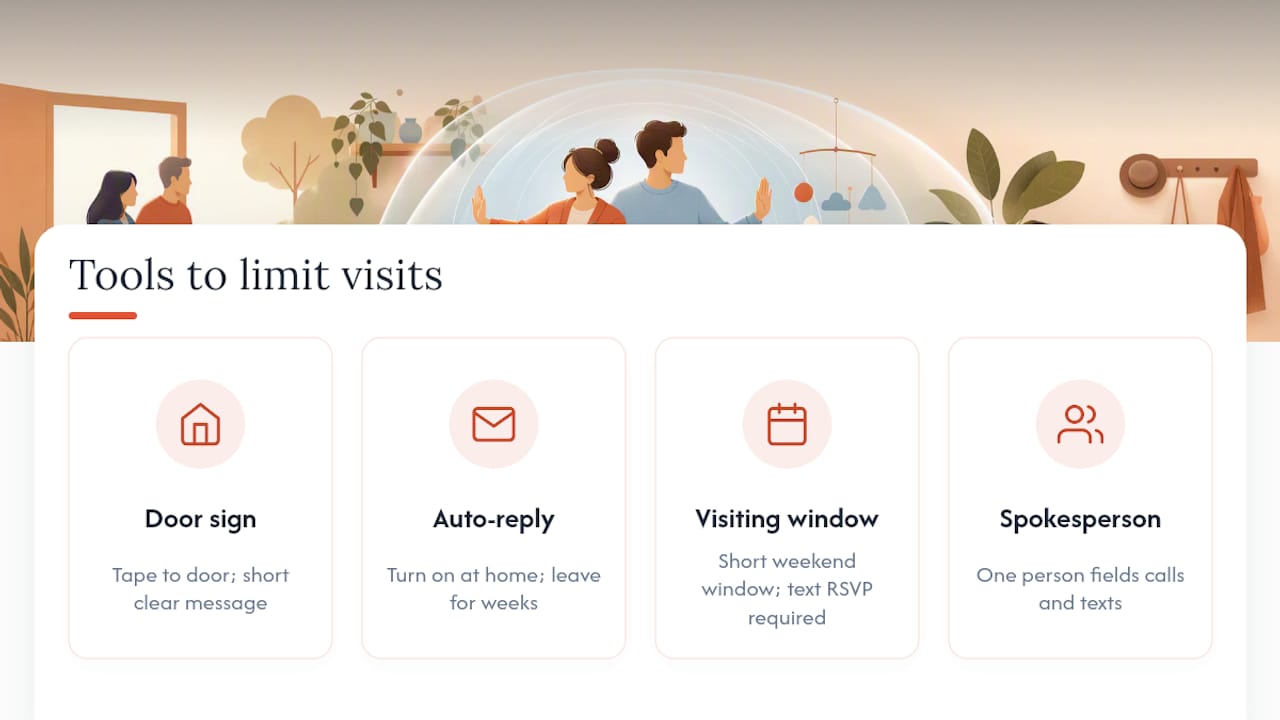
A designated spokesperson, often a partner, sibling, or close friend, fields calls and texts so you don’t have to repeat yourself all day. That person can say “they’re resting, I’ll pass along the message” as many times as it takes.
Pro Tip: Give your spokesperson permission to be the “bad guy.” Tell them explicitly: “You can blame me for the no visitors rule.” It takes the social pressure off them and off you.
What to Say When Family Pushes Back
Some people will accept the first script. Others will ask again, show up anyway, or try to guilt you into an exception. Keep your response short instead of explaining more, since a longer justification tends to invite more debate, not less. Miss Manners recommends the same approach for uninvited guests generally: a brief, clear line and an offer to reconnect later, rather than an argument in the moment.
Reusable one-liners for repeat pressure:
- “I know this is hard, and I promise it’s not about you. The rule is the same for everyone.”
- “We’re not changing the plan, but we’d love a video call this week.”
- “I hear you, and the answer is still no for now.”
If someone pushes to stay overnight as a houseguest, it’s fine to decline the stay itself while offering something smaller. One advice column suggests naming a nearby hotel or proposing a short meetup instead of an open-ended stay, which avoids an awkward yes while still offering connection.
Redirect the energy toward something useful instead of a social visit: ask for a dropped-off meal, a grocery run, or a load of laundry. A short porch visit, ten minutes, no diaper bag required, often satisfies someone who just wants to see the baby’s face.
Escalate only when a one-liner gets ignored twice. At that point, loop in your partner or spokesperson to repeat the boundary, and if a person keeps showing up uninvited, it’s reasonable to stop answering the door until they’ve had time to cool off. Partners should agree on the script in advance so one of you isn’t caving while the other holds the line. Consistency, more than wording, is what actually makes a boundary stick.
When Can You Start Allowing Visitors?
Most guidance points to the same protective window. Here’s a simple timeline:
- First 24 to 72 hours: No visitors outside immediate household. Midwifery resources describe this as an “early bubble” meant to protect rest, recovery, and bonding before the demands of hosting kick in.
- First 1 to 2 weeks: Limited, scheduled visits only, short duration, RSVP required.
- After 2 weeks: Open things up gradually as energy returns, still keeping visits brief.
House rules to require once visitors are allowed include washing hands before holding the baby, no kissing the baby’s face or hands, keeping visits brief, RSVPing instead of dropping by, and rescheduling if anyone feels even slightly under the weather.
If you had a C-section, expect complications, or you’re in the middle of a high-transmission season for RSV or flu, stretch these windows further and hold the line on hygiene rules more strictly. Pediatric guidance on limiting close contact during flu and RSV season backs up exactly why that extra caution matters for newborns.
To announce a rule change, keep it as simple as the original policy: “Update: we’re ready for short visits starting this weekend. Please text first and keep it under 30 minutes.”
Why We Believe in Simple, Visual Boundary Signals
Long explanations rarely change anyone’s mind, but a clear, short signal almost always does. That’s the thinking behind these designs: a phrase that says exactly what you mean, without you having to say it out loud repeatedly to different relatives.
We built our bodysuits around a simple idea, borrowed from the same logic that makes a door sign work. A message printed on your baby’s clothing does the same job as a spoken boundary, minus the awkward conversation and minus the emotional labor of repeating yourself while you’re running on no sleep. It’s not confrontational. It’s not preachy. It’s just clear, and it’s right there every time someone reaches for the baby.
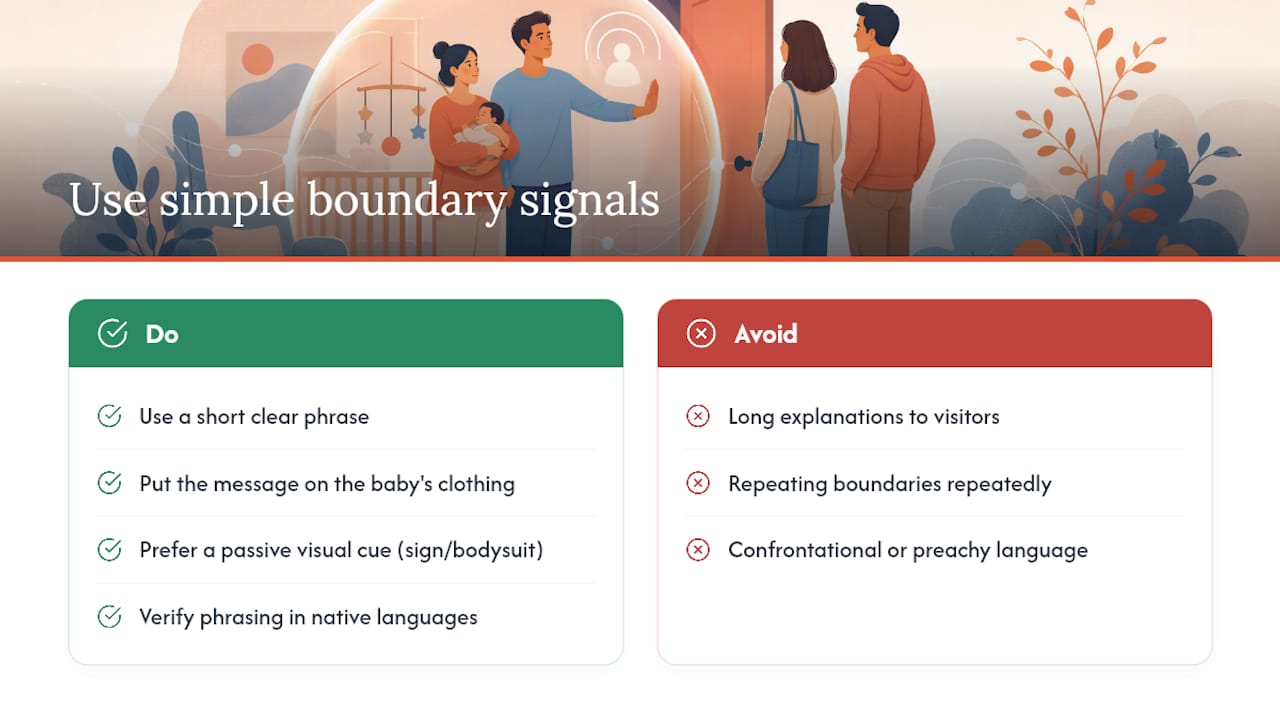
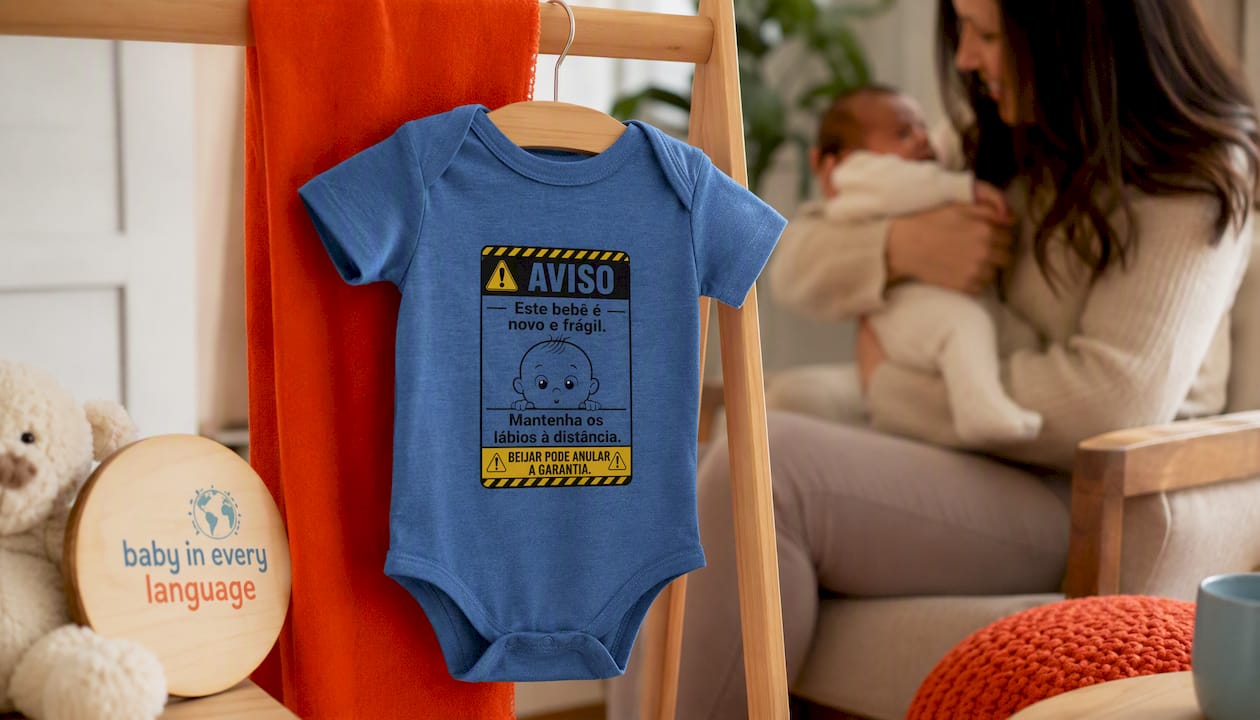
We verify every phrase with native speakers across more than 20 languages, because a boundary that reads as rude in translation defeats the purpose entirely. A gentle warning should feel gentle in every language it’s printed in, not just the one you wrote it in originally.
Passive cues, whether that’s a sign, a spokesperson, or a bodysuit, exist for the same reason: they let exhausted parents protect their baby’s space without a single confrontation.
— Bassem
A Lighthearted Way to Back Up Your No-Kissing Rule
If you’ve ever fumbled through explaining “please don’t kiss the baby” mid-hug, you know how much easier it would be if the message were already sitting right there on your baby’s chest. That’s exactly the gap the Warning New And Fragile Baby Bodysuit fills.
Parents typically use it two ways: as a prop for hospital and newborn photos, where it doubles as an announcement and a boundary in one shot, or as a daily at-home layer during the first few weeks when a steady stream of well-meaning visitors keeps reaching for kisses. Either way, the shirt says what you’re too tired to repeat out loud.
These bodysuits are made from soft, baby-safe cotton and printed with non-toxic inks to ensure comfort and safety. They come in multiple languages, with phrases reviewed for tone and accuracy, and in a range of newborn sizes. If you’re building a small hospital bag or a shower gift for a friend who’s about to navigate the same visitor questions, add one in and let the shirt do the talking. Browse sizes and languages on the product page and pick the one that matches your household’s sense of humor.
Sources
For more on timing and tone, Fort Worth Midwifery covers the early bubble concept in depth, Mother & Baby walks through pre-announcing your policy, and both Dear Abby and Miss Manners offer decades of tested phrasing for saying no without burning a bridge.
- Dear Abby: How do I politely tell people I don’t like having anyone visit me in my home?
- Postpartum visitor boundaries: Protecting rest, recovery, and your fourth trimester – Fort Worth Midwifery
FAQ
How Do You Politely Say “No Visitors”?
Use a short, direct line like “We’re keeping visits to close family for now, but we’ll let you know when we’re ready for company.” Skip the long explanation. It invites more questions than it answers.
How Do You Tell People Not to Visit Without Sounding Rude?
Pair a firm statement with a small gesture of connection, like offering a video call or promising an update soon. That combination reads as respectful, not cold.
How Do You Tell People You Don’t Want Visitors Long-Term?
Repeat the same short script every time rather than escalating your wording. Consistency, not intensity, is what makes people stop asking.
Is It Rude to Say No Visitors After Having a Baby?
No. Midwifery guidance on protecting an early recovery window supports limiting visitors for the first few weeks, and most people expect new parents to need that space.
What’s a Classy Way to Decline a Guest Who Won’t Take the Hint?
Stay brief and offer an alternative: “We’re not up for visits right now, but let’s grab coffee once things settle.” A polite redirect works better than repeating “no” without an offer.