

Onesie vs Bodysuit: 4 Features New Parents Should Check
A onesie and a bodysuit are the same garment. Onesies® started as a Gerber trademark, but American parents now use the word just the way they use “kleenex” for tissue: generically, not legally. What actually varies between garments on the shelf isn’t the name, it’s the neckline, the closures, and whether it covers your baby’s legs.
TL;DR:
- Choosing between a bodysuit and a onesie depends on the desired leg coverage, neckline style, closure type, and sleeve length for different situations.
- A footed sleepsuit with a two-way zip is ideal for overnight sleep, offering quick diaper changes and temperature regulation without loose bedding.
- For daytime, a short-sleeve bodysuit serves as a versatile base layer that simplifies diaper changes and outfit coordination.
- Fabrics should prioritize organic cotton with GOTS or OEKO-TEX certification, and construction features like flat seams and nickel-free snaps enhance durability and safety.
- Expect to need multiple bodysuits in newborn size, with size up and purchasing batches tailored to growth spurts to avoid frequent urgent shopping trips.
Table of Contents
- Bodysuit vs onesie: what’s actually different in design
- Onesie or bodysuit: which one for sleep, day, or outings?
- What materials and construction details actually matter?
- How many onesies do you actually need?
- What sets Babyineverylanguage’s bodysuits apart on the checklist above
- Why a boundary-setting bodysuit earns a place in the wardrobe
- Bodysuits that say what you’re too polite to say out loud
- Where these guidelines come from
- Sources
Bodysuit vs onesie: what’s actually different in design
The confusion makes sense, because “bodysuit” and “onesie” describe the exact same base garment: a one-piece top with snaps at the crotch, built to keep the fabric from riding up over a diaper. That closure at the bottom is the defining feature. Without it, you’ve got a regular shirt; with it, you’ve got an infant bodysuit in the technical sense.
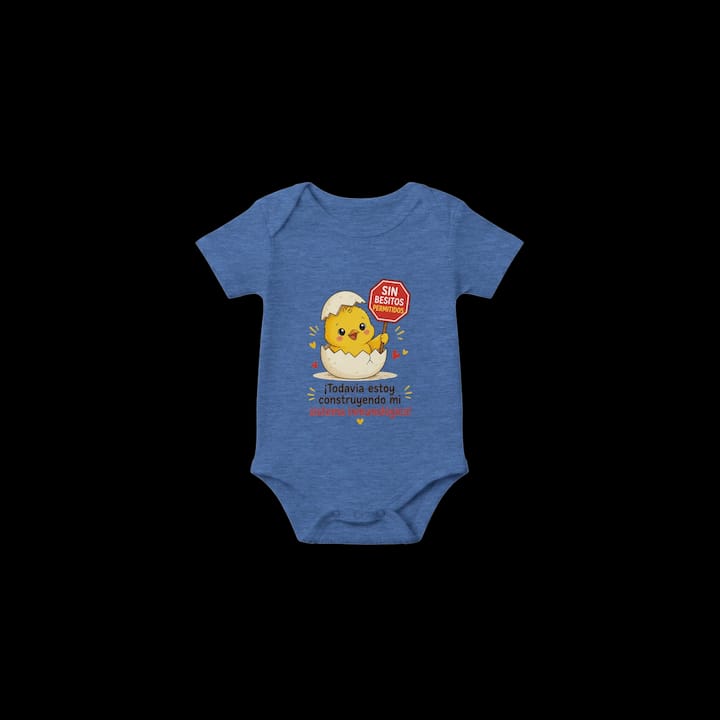
“Bodysuit” is the generic, catalog-friendly term you’ll see on tags from most manufacturers. “Onesie” is the word people actually say out loud, and it stuck so hard that it’s practically replaced the original term in casual conversation, even though Gerber owns the trademark. Neither word tells you much about fit or function, which is why relying on the name alone leads parents astray at the store.
Here’s where the real differences show up:
- Leg coverage. A classic bodysuit stops at the hip or upper thigh, leaving legs bare. A footed version (often just called a onesie or a “sleeper” depending on the region) covers the legs and feet in one piece.
- Neckline style. An envelope neckline has overlapping fabric panels that stretch wide enough to pull over your baby’s head without wrestling. A lap neckline overlaps at the shoulder and snaps down the side, which some parents find gentler for newborns with sensitive skin around the neck and umbilical stump.
- Closure type. Snaps dominate bodysuits because they’re fast and durable through hundreds of washes. Zip closures show up more on sleep garments, since a single zip pull beats fumbling with a row of snaps at 3 a.m.
- Sleeve length. Short sleeve, long sleeve, and sleeveless (sometimes called a “vest” in UK usage) all fall under the same bodysuit umbrella.
Beyond onesies and bodysuits, three related garments trip parents up regularly. A romper is a one-piece outfit with sleeves and shorts or pants attached, worn as a complete outfit rather than a layering piece, usually without the crotch snap that defines a true bodysuit. A jumpsuit is essentially a longer romper, with full-length legs but still no crotch access panel. A sleepsuit (also called a footie or footed pajama) is built specifically for sleep: it covers the whole body, including feet, and almost always uses a zip instead of snaps for faster middle-of-the-night changes.
The practical takeaway: don’t shop by name. Shop by the four features above, because a “onesie” from one brand and a “bodysuit” from another can be functionally identical, or completely different garments wearing the same label.
Onesie or bodysuit: which one for sleep, day, or outings?
Neither garment is universally “better.” Each one solves a different problem, and the right choice depends on the time of day, the season, and how fast you need to move.
- For overnight sleep, reach for a footed sleepsuit with a two-way zip. The two-way zip design opens from the bottom, so you can handle a diaper change without pulling the whole garment over your baby’s head and disturbing a sleeping (or half-asleep) infant. Full coverage also matters for temperature regulation once your baby graduates out of a swaddle, since the American Academy of Pediatrics recommends against loose blankets in the crib. A snug, breathable sleepsuit gives you warmth without adding loose bedding to the sleep space.
- For daytime, a short-sleeve bodysuit is your workhorse layer. It’s the base layer under a romper, pants, or a cardigan, which means you buy fewer specialty outfits and mix and match instead. Bodysuits also handle diaper changes fast, since you’re only dealing with the bottom snaps rather than an entire outfit.
- For outings, prioritize speed over style. A blowout at a restaurant or a diaper leak in the car seat is not the moment to discover your baby’s outfit requires removing three layers. Pack a bodysuit as the base layer specifically because it’s the fastest thing to change on its own, without needing a full wardrobe swap.
- For temperature swings, layer rather than switch garments entirely. A short-sleeve bodysuit under a romper works for mild weather; add a long-sleeve bodysuit and a light jacket when it’s colder, and drop back to just the bodysuit indoors.
If you’re deciding in the moment, run through this quick mental checklist: How fast do I need to change this later? How much skin coverage does the temperature call for? Is my baby sleeping soon, or staying awake and active? Those three questions settle most onesie vs bodysuit debates faster than reading a label ever will.
What materials and construction details actually matter?
Fabric choice affects comfort more than most parents expect, and it’s worth checking before checkout rather than after a rash shows up. Organic cotton certified under GOTS (Global Organic Textile Standard) and fabrics carrying OEKO-TEX certification go a step further, since both standards limit the chemical residues and dyes that can end up against a newborn’s skin.
Beyond fabric, construction details separate a garment that survives a year of daily wear from one that falls apart after ten washes:
- Envelope shoulders or a wide lap neckline, so you’re not stretching fabric over your baby’s head or ears.
- Multiple crotch snaps (three is common, but more gives you flexibility during growth spurts and easier diaper access).
- Nickel-free snaps, which matter for babies with metal sensitivities and reduce the risk of skin irritation from prolonged contact.
- Flat seams, so nothing rubs against delicate skin at the shoulders or sides.
- Expandable or envelope necklines built wide enough to handle a blowout without a full outfit change.
These features consistently rank as the details that matter most in practice, according to a practical newborn buying guide, and they hold up better than marketing language on a hangtag.
Pro Tip: Wash new bodysuits once before the first wear, even organic cotton ones. It softens the fabric, removes manufacturing residue, and gives you an early read on shrinkage before you’re relying on that size for a specific week of growth.
Cotton tends to shrink modestly on the first wash and then stabilize, while polyester blends resist shrinking but trap more heat and moisture against the skin, which is part of why cotton wins out for infant layers despite polyester’s durability edge. Wash in cool or warm water, skip fabric softener (it coats fibers and can reduce breathability), and air-dry or use low heat to protect the snaps and elastic.
How many onesies do you actually need?
Newborns go through outfit changes at a pace that surprises most first-time parents. Between diaper blowouts, spit-up, and drool, a single bodysuit rarely makes it through a full day unscathed.
- Plan for several bodysuits in newborn size to accommodate frequent changes. That number accounts for the reality of frequent changes without leaving you doing laundry every single day.
- Size up rather than down for newborns. Babies grow out of newborn sizing within weeks in many cases, so having a few 0 to 3 month bodysuits already in the rotation saves you a frantic shopping trip.
- Check the brand’s size chart, not just the label. Sizing varies enough between brands that “newborn” from one company can fit like “0 to 3 months” from another.
- For outings, pack 2 to 3 spare outfits minimum, plus a layer appropriate for whatever the weather is doing that day.
Buying in batches of different sizes ahead of time, rather than one large batch in a single size, keeps you covered as growth spurts hit unpredictably. It also means you’re not stuck with fourteen unworn newborn-size bodysuits because your baby skipped straight to the next size up.
What sets Babyineverylanguage’s bodysuits apart on the checklist above
Every buying criterion covered so far, fabric, snaps, seams, safe printing, applies directly to how some bodysuits are built. Each design is made from baby-safe materials and printed with non-toxic inks, so the humor on the front doesn’t come at the cost of what’s touching your baby’s skin.
Some bodysuits feature phrases in more than 20 languages, sometimes verified by native speakers for accuracy and natural phrasing rather than relying on machine translation. For families navigating multiple languages at home, or gift-givers shopping for relatives overseas, that verification step is the difference between a phrase that lands as intended and one that reads as awkward or unintentionally rude.
None of that replaces the construction basics from earlier: snap placement, seam quality, and fabric choice still decide whether a bodysuit holds up through daily wear.
Why a boundary-setting bodysuit earns a place in the wardrobe
A onesie with a polite, firm message does one specific job well: it gives you a low-effort way to signal a physical boundary to a well-meaning relative or stranger, without having to say the words yourself in an awkward moment.
It’s not a substitute for actually speaking up, and it’s not a safe-sleep feature. It’s a small social tool stitched onto a garment you already needed to buy.
— Bassem
Bodysuits that say what you’re too polite to say out loud
Some bodysuit product lines focus on addressing the gap in baby wardrobes by offering garments that convey polite messages to discourage unwanted kisses, using baby-safe materials and non-toxic printing.
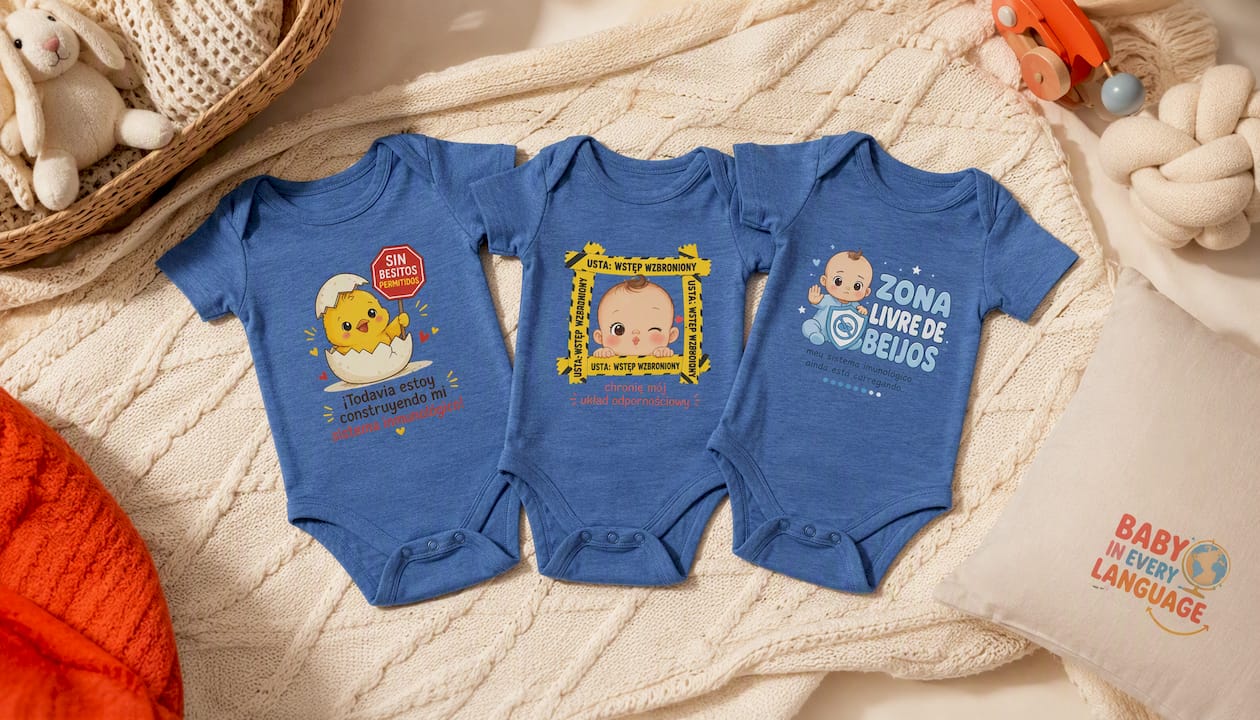
The No Smooching Allowed Baby Bodysuit delivers the message with a light touch, printed on soft cotton built for daily wear and frequent washing. If you want a slightly different phrasing for the same purpose, the Lips Keep Out Baby Bodysuit carries the same construction standards with its own tone. The Kiss Free Zone Baby Bodysuit rounds out the capsule with a third phrasing option, so you can pick whichever style fits your family’s sense of humor. Browse the full newborn onesie collection to compare sizing and styles side by side, and check availability before your next outing where extra cheek-pinching relatives might show up.
Where these guidelines come from
The Wikipedia entry on infant bodysuits covers the garment’s history and the Onesies® trademark in more detail than most parenting sites bother to explain. The American Academy of Pediatrics is the authority to follow on safe-sleep clothing choices. For hands-on buying advice, including the sizing and snap-count details covered above, Clothing Digest’s newborn guide is worth a bookmark.
Sources
- Infant bodysuit — Wikipedia
- Complete Newborn Onesies & Bodysuits Guide: Essential Styles And Features For Your Baby’s Comfort | Clothing Digest
- American Academy of Pediatrics updates safe sleep recommendations — AAP