

Laundry Ready Newborn Wardrobe Checklist: 6–8 Onesies, 4–6 Sleepers
A newborn wardrobe checklist really only needs six categories: 6 to 8 onesies, 4 to 6 sleepers, 6 to 8 pairs of socks, 2 to 3 swaddles or 1 to 2 sleep sacks, 3 to 6 burp cloths, and 1 to 2 hats. Buy mostly in 0 to 3M sizing with a small number of newborn pieces as backup. Stick with sleep sacks over loose blankets, and skip bulky coats in the car seat.
TL;DR:
- Buying mostly 0-3 month clothing with a small newborn-sized buffer prevents excess wardrobe waste from rapid outgrowing or skipping sizes.
- Prioritize soft, breathable fabrics like cotton certified under OEKO-TEX or GOTS, and wash all new clothes before first wear to ensure safety and comfort.
- Use sleep sacks instead of loose blankets for sleep safety, and dress baby in thin layers during car rides to prevent harness loosening in crashes.
- Keep a variety of 6 to 8 onesies, 4 to 6 sleepers, 6 to 8 pairs of socks, and 6+ burp cloths for practical, everyday use.
- Select simple, easy-on designs with flexible necklines, envelope shoulders, and safe materials to minimize fuss and maximize safety for newborns.
Table of Contents
- What Should Be on Your Newborn Wardrobe Checklist?
- Newborn Size or 0-3M: Which Should You Buy?
- What Fabrics and Safety Rules Matter Most?
- Quick Printable Newborn Wardrobe Checklist
- Why Materials and Design Choices Aren’t an Afterthought
- What New Parents Actually Wear vs. What They Buy
- A Newborn Wardrobe That’s Soft, Safe, and Says Something
- Sources
What Should Be on Your Newborn Wardrobe Checklist?
Every item on this list earns its spot because it solves a real problem: leaking diapers, spit-up, temperature swings, or 3 a.m. changes when you’re too tired to fight with buttons.
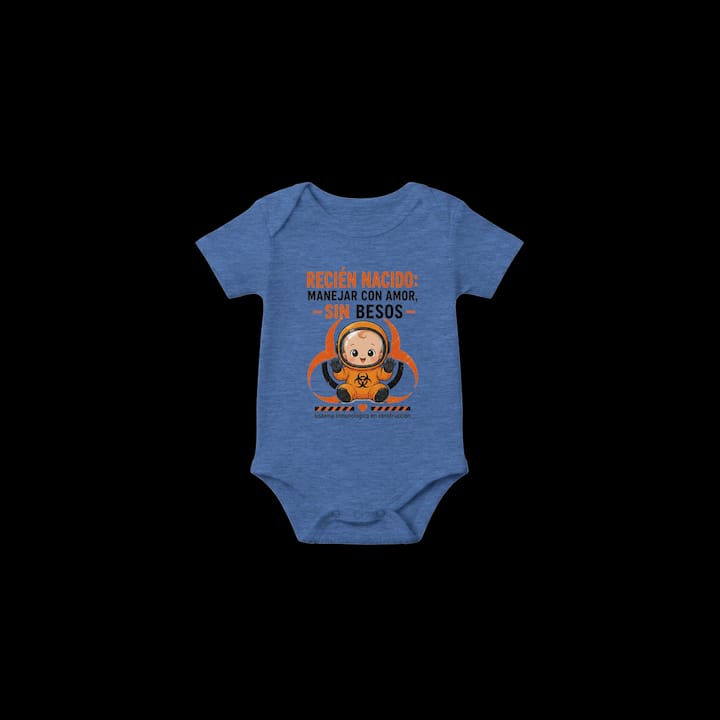
Onesies or bodysuits: A modest number is sufficient. Look for envelope shoulders or side-snap closures for the first few weeks. That flexible neckline matters more than it sounds. Newborns hate having anything pulled over their face, and a stiff crew neck turns every diaper change into a wrestling match.
Sleepers or footie pajamas: A handful are useful. Zip-front designs beat snaps for overnight changes, hands down. Fumbling with ten tiny snaps at 3 a.m. while your baby screams is a rite of passage nobody enjoys.
Pants or leggings: A few pairs are helpful. Footed styles cut down on the sock problem entirely, which brings us to the next item.
Socks or booties: Several pairs are necessary because they tend to fall off and get lost frequently. Buy more than you think you need, or lean on footed sleepers to sidestep the issue.
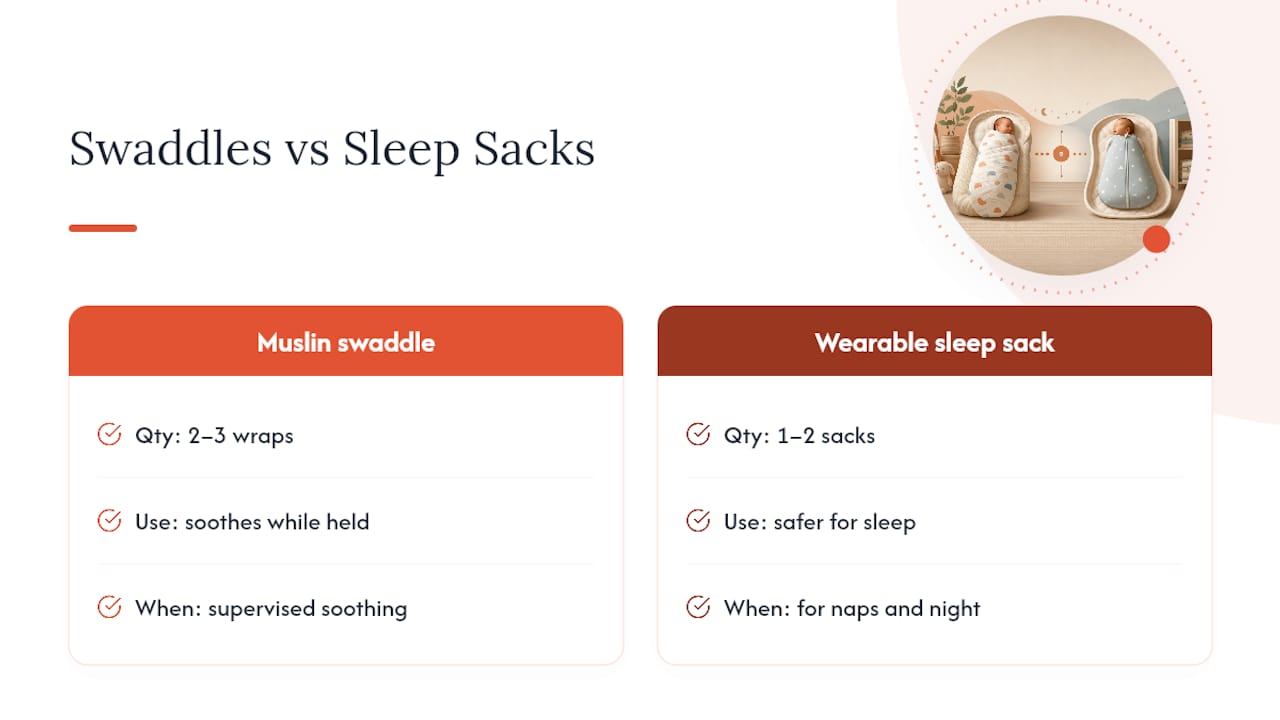
Swaddle blankets: 2 to 3 muslin wraps for supervised soothing sessions, plus 1 to 2 wearable sleep sacks for actual sleep time. These serve different jobs, according to guidance from The Bump: swaddles calm a fussy baby while you’re holding or watching them, while sleep sacks are the safer choice once baby is down for a nap or the night.
Burp cloths: 6 or more. You will never own too many of these.
Hats: 1 to 2 for the first weeks, mainly for warmth right after birth.
Scratch mittens: 1 to 2 pairs, useful for the first couple of weeks before those tiny nails get trimmed for the first time.
Special outfits: 1 to 3, optional, reserved for photos or family visits. Skip shoes entirely. Newborns don’t walk, and shoes on a non-walking baby are pure decoration.
One practical adjustment: consider increasing quantities if you plan to do laundry less frequently than every 2 to 3 days, or if your baby soils clothes more often.
Newborn Size or 0-3M: Which Should You Buy?
Newborn sizing can be outgrown quickly, as many babies born at average weight move on from newborn sizes within a few weeks. Buying a full wardrobe in NB size may result in many unworn clothes due to fast outgrowth.
The smarter play: buy mostly 0–3 month pieces before birth, with a small number of newborn-size items as a buffer in case your baby is smaller. Hold off on 3–6 month sizing until after birth, once you know your baby’s size. Babysential’s newborn checklist makes the same case: babies frequently outgrow or entirely skip the NB size, so a light buffer beats a full stockpile.
When you’re picking pieces, prioritize:
- Envelope shoulders that stretch over the head without a fight
- Side-snap or zip-front closures instead of button rows
- Soft, roomy necklines rather than tight or stiff collars
- Fabric that gives a little, not stiff cotton blends that resist movement
What Fabrics and Safety Rules Matter Most?
Stick with breathable, natural fabrics for anything touching newborn skin. 100% cotton is generally recommended as it breathes well, softens with washing, and does not trap heat like polyester-rich blends. Fabric certified under OEKO-TEX Standard 100 or GOTS can provide extra assurance about chemical safety for sensitive skin, if your budget allows.
A few care habits worth building into your routine:
- Wash every new piece before the first wear, even if the tag looks clean
- Use a fragrance-free, dye-free detergent to avoid skin irritation
- Wash blowouts in warm water promptly rather than letting stains set
- Plan on washing every 2 to 3 days if you’re running a 6 to 8 onesie rotation
Sleep safety is not a place to improvise. The American Academy of Pediatrics recommends against loose blankets in the crib, pointing to wearable sleep sacks as the safer way to keep a baby warm overnight. A simple rule of thumb pediatric sources repeat often: dress your baby in one more layer than you’d wear yourself, and skip the extra blanket.
Car travel comes with its own overlooked risk. NHTSA warns that bulky coats and snowsuits can compress in a crash, which loosens the harness fit exactly when you need it tightest. Dress baby in thin layers for the ride, then add a blanket over the harness once it’s buckled, rather than under it.
Pro Tip: Check your baby’s neck rather than hands or feet to assess temperature comfort. Cold hands are normal, but a sweaty neck indicates the baby may be too warm.
Quick Printable Newborn Wardrobe Checklist
- Onesies: 6 to 8
- Sleepers: 4 to 6
- Socks: 6 to 8 pairs
- Swaddles or sleep sacks: 2 to 3 / 1 to 2
- Burp cloths: 6+
- Hats and mittens: 1 to 2 each
For the hospital bag, pack a small newborn-size buffer alongside your 0-3M pieces, plus diapers sized for both.
Why Materials and Design Choices Aren’t an Afterthought
The same priorities that shape a good checklist, soft fabric, easy-on design, no fuss for tired parents, are important for baby bodysuits. Every piece should use baby-safe materials and non-toxic inks, with phrasing checked by native speakers across multiple languages. That combination of comfort and clear, good-humored messaging matches what pediatric sources consistently point to: newborn clothing should be gentle on skin and effortless to put on, not fussy or decorative for its own sake.
What New Parents Actually Wear vs. What They Buy
Most families end up living in the same handful of items week after week: a rotating stack of onesies, a couple of favorite sleepers, and whatever sleep sack survived the last wash cycle. The fancy outfits, the ones bought for the nursery photos, tend to sit folded in a drawer until someone remembers them for a single visit from grandparents.
That’s not a failure of planning. It’s just how newborn life works. Buy the practical starter set first, then top up later based on what you actually reach for at 2 a.m., not what looked cute on a hanger.
— Bassem
A Newborn Wardrobe That’s Soft, Safe, and Says Something
Some baby clothing brands offer bodysuits that double as practical, everyday pieces and conversation starters, often built from soft, baby-safe materials with non-toxic inks so the humor never comes at the expense of comfort.
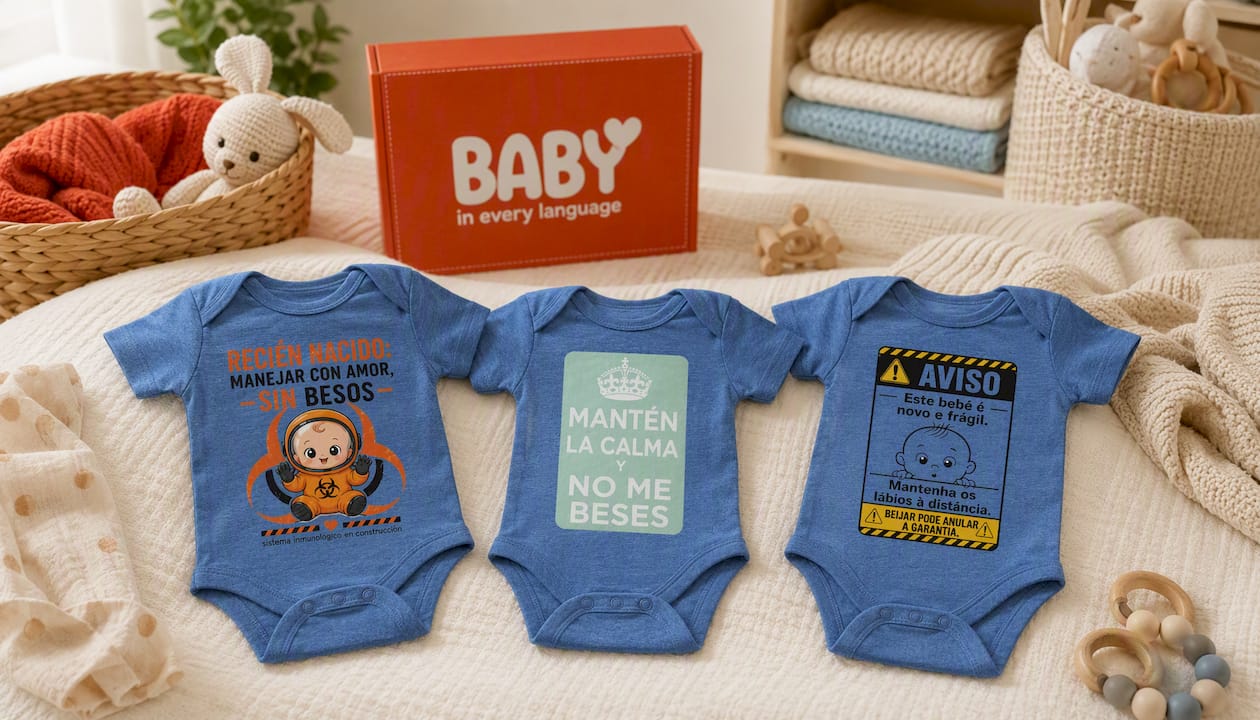
If your checklist calls for a few onesies with real personality, the Handle With Love No Kissing Baby Bodysuit delivers a clear, funny message in the exact easy-on style pediatric guides recommend, verified in over 20 languages for accuracy. The Keep Calm and Don’t Kiss Me Baby Bodysuit and the Warning New and Fragile Baby Bodysuit round out a starter set that works as well for baby showers as it does for your own newborn’s drawer. Browse the full newborn essentials collection and add a piece that fits both your checklist and your sense of humor.
Sources
For safe-sleep rules, car-seat clothing guidance, and sizing strategy, rely on the AAP, NHTSA, and BabyCenter’s essentials checklist.
- AAP safe-sleep guidance
- NHTSA car-seat clothing guidance
- Newborn Clothing Essentials: Complete Checklist for 2026 | Babysential