

For New Parents: Native Verified Bodysuits Set Newborn Visitor Rules
“Newborn visitor rules” are the boundary phrases new parents print on their baby’s clothes instead of saying out loud twelve times a day. A bodysuit that says “please don’t kiss me” or “handle with love, no kissing” does the talking so you don’t have to. The recommended approach: pick a native-verified, baby-safe bodysuit in a language and tone that fits your family, and let the outfit set the rule before anyone leans in for a smooch.
TL;DR:
- Native-verified phrases ensure the message sounds warm and appropriate in each visitor’s native language, preventing miscommunication or offense.
- Choosing 100% cotton and non-toxic inks guarantees that the bodysuit is safe and comfortable for delicate newborn skin.
- The design tone should match household preferences, with softer phrases for sensitive relatives and direct language for households favoring clarity.
- Pairing the bodysuit with a brief spoken script and pre-visit communication reduces repeated confrontations and manages visitor expectations smoothly.
- Considering cultural customs and language preferences helps tailor the message to diverse family scenarios, avoiding unintentional insensitivity.
Table of Contents
- What Do Newborn Visitor Rules Actually Mean?
- Why Shoppers Choose Boundary-Setting Bodysuits
- How to Choose the Right Bodysuit: A Shopper’s Checklist
- Product Examples and Multilingual Options
- Scripts and Etiquette for Using the Bodysuit
- Common Hospital and Home Visitation Protocols
- Cultural Variations in Newborn Visitor Customs
- Why New Parents Set Boundaries in the First Place
- Communicating Visitor Rules to Friends and Family
- Handling Pushback and Family Conflict
- A Parent’s First Family Visit, Told Honestly
- Shop Native-Verified Bodysuits for Your Next Family Visit
- Sources
- FAQ
What Do Newborn Visitor Rules Actually Mean?
Newborn visitor rules, in the context shoppers are searching for, are not hospital protocols about handwashing or flu shots. They’re wearable messages: short, printed phrases on a baby bodysuit that tell grandma, the neighbor, and your college roommate exactly what kind of physical contact is and isn’t welcome.
That distinction matters because a mistranslated or oddly-worded phrase can undercut the whole point. A boundary is supposed to defuse tension, not create it, which is why native-speaker verification is central to how Baby In Every Language builds each design. A phrase that sounds warm and funny in English can read as cold or even rude when translated word for word into Spanish, Tagalog, or Hebrew without a native speaker checking tone.
Material safety matters just as much as wording. When you’re shopping, look for:
- 100% cotton construction that breathes against newborn skin
- Non-toxic, baby-safe inks that won’t irritate sensitive skin
- Snap closures sized for infants, not adapted from toddler patterns
- Envelope necklines that avoid tugging over a newborn’s head
A bodysuit that fails on comfort undermines the message printed on it, no matter how funny the phrase is.
Why Shoppers Choose Boundary-Setting Bodysuits
Nobody wants to repeat the same request to fifteen different relatives at a first birthday party, let alone in the exhausting first weeks after birth. A bodysuit says it once, silently, all day long.
Nonverbal cues like a printed message work especially well paired with brief spoken scripts, according to reporting on the rise of “do not touch” baby gear, which has tracked a growing market of onesies and signage aimed at reducing germ exposure during cold and flu season. Shoppers gravitate toward this approach for a few clear reasons:
- It cuts down on repeated, awkward confrontations with the same well-meaning relative
- It helps manage big, boisterous extended families where everyone wants a turn holding the baby
- It signals health-conscious caution without a lecture, which matters most during flu and RSV season
- It doubles as a gift that makes new parents laugh instead of wince
Healthline’s guidance on newborn visits backs the underlying instinct here: being explicit about not allowing kisses, paired with basic hygiene requests, tends to lower parental anxiety rather than raise conflict, according to its recommendations for new parents.
How to Choose the Right Bodysuit: A Shopper’s Checklist
Picking the right design isn’t just about humor. It’s about matching the phrase, language, and fit to the actual household the baby is coming home to.
- Check language accuracy first. Ask whether the phrase was verified by a native speaker, not just machine-translated. A design that lists “over 20 languages” should also confirm who checked each one for natural phrasing.
- Confirm the fabric and printing claims. Look for 100% cotton and non-toxic inks specifically. Vague claims like “premium material” without specifics are a red flag.
- Match the tone to the household. A blunt “no kissing” phrase suits a direct family. A softer “handle with love” phrasing suits a more sensitive gift recipient or a grandparent you don’t want to embarrass.
- Get the fit right. Newborn sizing, snap-style closures at the crotch, and an envelope neckline all matter more in month one than they will by month four.
- Review shipping and return policies before buying, especially if you’re ordering a specific language variant as a gift and need it to arrive before a shower or hospital visit.
Pro Tip: If you’re buying for someone else’s baby, ask the parents which language matters most for their visitors, not which language you’d pick for yourself. A bodysuit in Korean for monolingual English-speaking grandparents misses the entire point.
Product Examples and Multilingual Options
Three designs cover most of the tone spectrum shoppers are looking for. The Newborn Handle With Love No Kissing Baby Bodysuit leads with gentle phrasing, good for households where you want the message to land softly on an older relative. The No Smooching Allowed Baby Bodysuit takes a playful, slightly cheekier tone that works well as a multicultural gift for friends who’ll appreciate the joke. The Warning New And Fragile Baby Bodysuit skips the humor for something more direct, closer to hazard-label language, which suits households that want zero ambiguity.
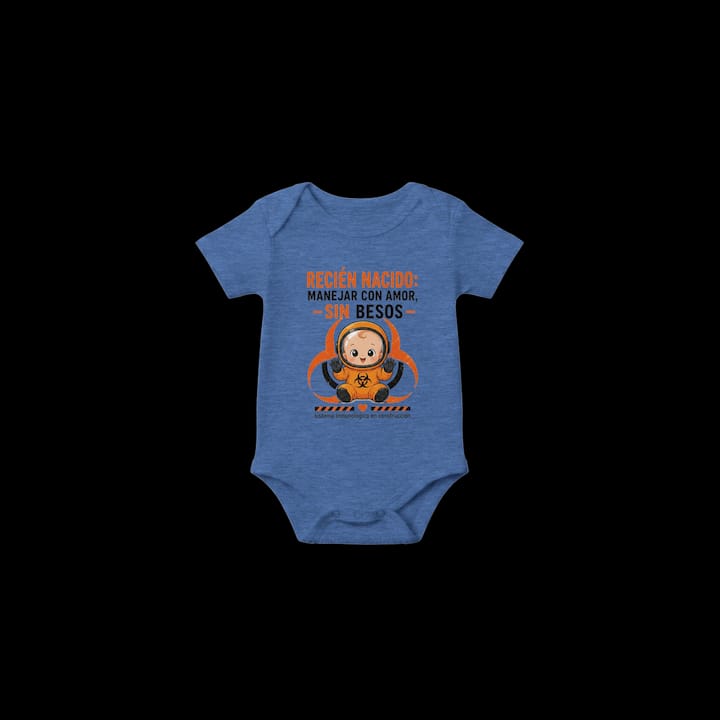
Each design is available across more than 20 languages, with every phrase checked by a native speaker for natural wording rather than a literal translation. That verification step is the whole reason these bodysuits work as intended: a phrase that reads naturally in Portuguese to a Brazilian grandmother lands very differently than one that reads like it came out of a translation app.
Picking a language isn’t always about the baby’s own household language. Consider:
- Grandparents who speak a heritage language even if the parents mostly speak English at home
- Bilingual extended family where one branch needs the message in a second language
- Friends attending a shower who’ll get more of the joke in their own native phrasing
If most of your visitors speak two different languages, some shoppers order two sizes in two languages rather than betting on one bodysuit doing all the work.
Scripts and Etiquette for Using the Bodysuit
The bodysuit does a lot of the work, but a few words alongside it make the boundary land without friction. Parenting sites that cover newborn boundaries recommend agreeing on the plan with your partner and preparing a short script before visitors arrive, according to advice on setting baby boundaries.
- When guests arrive: “She’s got her ‘no kissing’ onesie on today. Feel free to hold her, just skip the smooches.”
- When someone leans in anyway: “I know, she’s irresistible. Let’s keep kisses off the face for now.”
- When you need a graceful exit: “I think she’s ready for a nap, so we’ll wrap up here.”
A step-by-step script for declining kisses can help you rehearse the exact wording before the first visit, so it doesn’t come out stiff in the moment.
Wear the bodysuit for any visit longer than a quick photo op. Gift it ahead of a baby shower so new parents can set the tone before day one. If someone still ignores the message, pairing it with babywearing or simply naming a firm end time for the visit tends to work better than repeating yourself, a strategy the BBC’s guidance on newborn visits also recommends.
Common Hospital and Home Visitation Protocols
Hospitals typically limit newborn visitors to immediate family for the first day or two, and many maternity wards ask visitors to skip the visit entirely if they have any cold or flu symptoms. Once you’re home, the “rules” shift from institutional policy to whatever the parents decide, and that’s exactly the gap a bodysuit is built to fill.
Most families settle into an informal structure: a short list of people welcome in the first week, a request that visits stay under an hour, and a standing rule about not holding the baby right after arriving from a flight or a crowded event. None of that gets written down anywhere. It gets communicated through tone of voice, a text message before the visit, and increasingly, through a onesie that states the rule before anyone has to say it out loud.
Home visits carry more social pressure than hospital ones precisely because there’s no staff enforcing anything. A nurse can ask a visitor to leave; a new mother usually can’t, at least not without feeling like the bad guy. That’s the practical reason a printed boundary works better at home than it ever needs to in a hospital room, where the rules are already institutional and largely self-enforcing.
Cultural Variations in Newborn Visitor Customs
Visitor expectations around a new baby vary enormously by culture, and that variation is exactly why a one-size-fits-all English phrase doesn’t travel well. In some cultures, a steady stream of visitors in the first days is considered an honor and a form of community support. In others, the early weeks are treated as a closed, protected window reserved strictly for immediate family.
Kissing customs split just as widely. A cheek kiss on a baby is unremarkable in some households and considered a genuine health risk or even a minor taboo in others, particularly around religious postpartum traditions that treat the newborn period as a time of deliberate seclusion.
This is precisely where a native-verified bodysuit earns its keep over a generic printed onesie. A phrase translated without cultural context can accidentally insult a tradition it was never meant to touch. A phrase verified by an actual native speaker, by contrast, can be worded to fit the custom rather than fight it, softer where a culture expects softness, firmer where directness is the norm. That’s a meaningfully different design problem than just swapping words across languages, and it’s the reason multilingual verification isn’t a marketing footnote. It’s the actual mechanism that makes the boundary land the way it’s meant to.
Why New Parents Set Boundaries in the First Place
Setting a visitor rule is rarely about the visitors at all. It’s about a new parent trying to protect a fragile sense of control during a period when almost nothing feels controllable, sleep, feeding, hormones, recovery from birth. A clear boundary, even a joke printed on a onesie, hands some of that control back.
There’s also a quieter emotional layer: guilt. Many new parents feel obligated to say yes to every visit and every request to hold the baby, even when they’re exhausted, because saying no feels like disappointing someone who’s excited for them. A bodysuit sidesteps that guilt by making the rule the baby’s, not the parent’s. Nobody feels rejected by an outfit the way they might feel rejected by a direct request.
Postpartum anxiety about germs and illness plays a real role too, especially for parents who’ve read about how fragile a newborn’s immune system is in the first months. That anxiety isn’t irrational, and a visible reminder on the baby’s clothing gives an anxious parent a low-effort way to manage it without a confrontation every time the doorbell rings.
Communicating Visitor Rules to Friends and Family
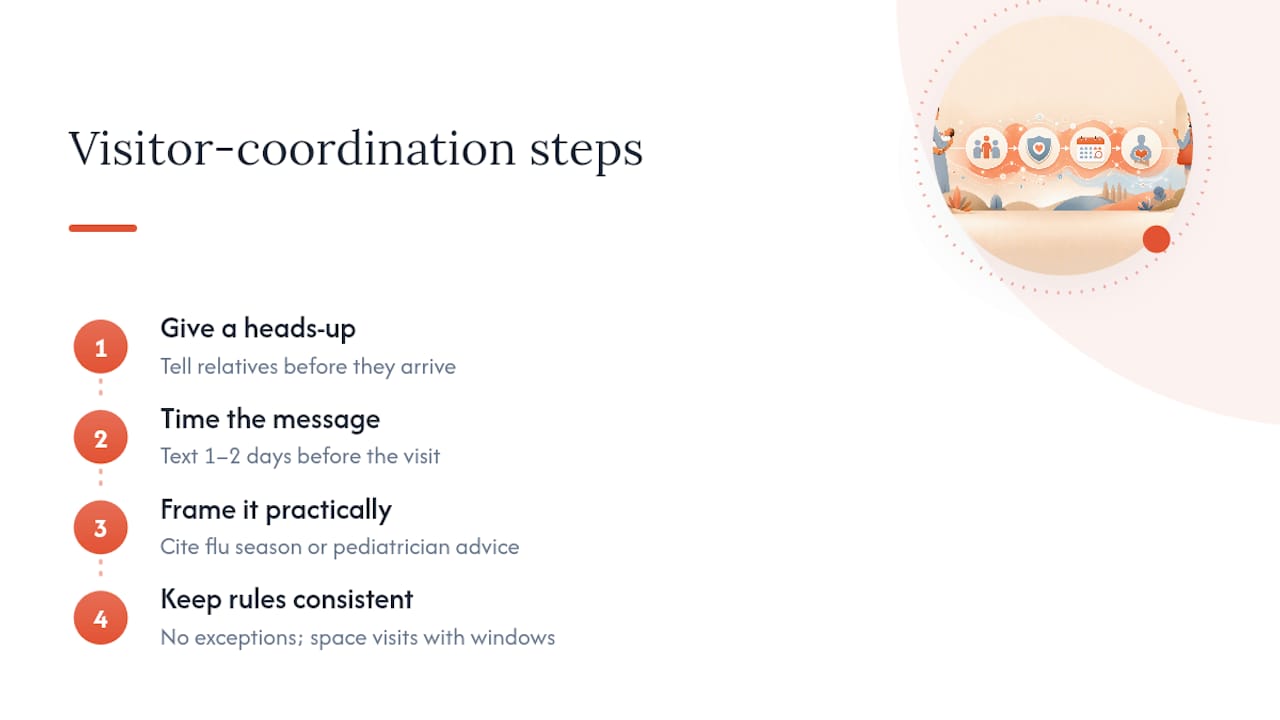
The bodysuit works best as reinforcement, not a substitute for a heads-up conversation. Telling a close relative “we’re asking people to skip kisses for now” before they show up avoids the sting of feeling caught off guard on your doorstep.
Timing the message matters. A text sent a day or two before a visit lands better than a rule announced in the moment, and it gives relatives time to adjust their expectations without feeling singled out. Framing helps too: tying the rule to something practical, like flu season or a pediatrician’s advice, tends to land more gently than framing it as a personal preference.
Consistency across visitors matters just as much as the wording itself. If one grandparent gets an exception, the rule stops feeling like a rule and starts feeling like a negotiation everyone else can also push on. If you’re coordinating multiple visits during a busy stretch, spacing them out with clear time windows, a practice covered in general advice on planning family visits, reduces the pressure to enforce boundaries with several people at once.
Handling Pushback and Family Conflict
Some relatives will take the rule personally no matter how gently it’s delivered. A grandparent who’s waited months to meet the baby may hear “no kissing” as “you don’t trust me,” even when illness prevention was the entire point.
The most common friction points are predictable: an older relative who insists “it never hurt anyone before,” a sibling who shows up with a cold and downplays it, or an aunt who reads the bodysuit as a joke and kisses the baby anyway assuming you didn’t really mean it. Each of these benefits from a slightly different response. For the “it never hurt anyone” argument, redirecting to your pediatrician’s advice rather than defending your own judgment tends to de-escalate faster. For a visitor with obvious symptoms, rescheduling the visit outright beats trying to manage the risk in person.
For the visitor who treats the bodysuit as a suggestion rather than a rule, a direct but calm restatement works better than letting it slide, since one exception tends to invite more. The goal isn’t winning an argument. It’s protecting a short, exhausting window of time without spending what little energy you have relitigating the same conversation with every new arrival.
A Parent’s First Family Visit, Told Honestly
Before my sister-in-law’s first visit, I dreaded the moment she’d reach for the baby’s face the way she does with every kid in the family. Instead, she read the “no kissing” bodysuit, laughed out loud, and said, “okay, noted,” before I said a single word.
That’s the whole value right there. No awkward conversation, no tension, no guilt. The outfit did the job a script would have done clumsily. Boundaries during those first weeks aren’t about being difficult. They’re a small act of self-preservation for parents running on almost no sleep, and sometimes the easiest boundary is the one stitched into the clothes.
— Bassem
Shop Native-Verified Bodysuits for Your Next Family Visit
Skip the awkward group text explaining your visitor policy. A native-verified bodysuit from Babyineverylanguage says it for you, in the language your visitors actually speak, printed in baby-safe, non-toxic ink on 100% cotton.
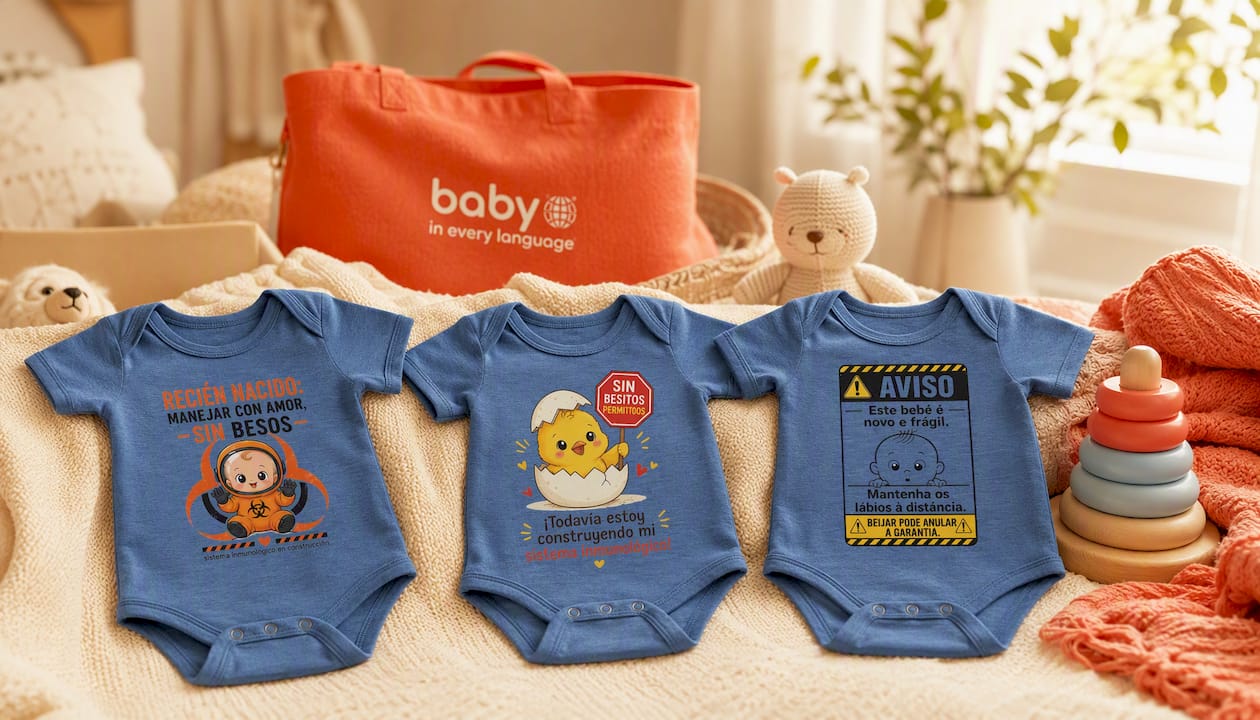
Three designs cover most household tones. The Newborn Handle With Love No Kissing Baby Bodysuit is best for a gentle, polite message that won’t embarrass an older relative. The No Smooching Allowed Baby Bodysuit fits families and friends who want playful but firm, and it makes a strong shower gift. The Warning New And Fragile Baby Bodysuit suits households that would rather skip the joke and state the boundary plainly.
Pick the language your visitors actually need, add it to your cart, and have the boundary set before the first knock on the door.
Sources
- Parents
- Advice on visits and boundaries — BBC Tiny Happy People
- Please don’t kiss my baby — Healthline
- ‘Do not touch’ signs, onesies & shoes are the newest way to keep babies healthy — Three Little Tots
FAQ
How many languages are the bodysuits available in?
Babyineverylanguage offers boundary-setting bodysuits in more than 20 languages, with each phrase checked by a native speaker for natural wording.
Are the bodysuits safe for newborn skin?
Yes. Designs use 100% cotton fabric and non-toxic inks specifically chosen to be gentle on sensitive newborn skin.
Will a “no kissing” bodysuit actually stop people from kissing the baby?
It won’t guarantee compliance from every visitor, but paired with a short spoken reminder, it substantially cuts down on repeated confrontations, according to reporting on visitor-boundary baby gear.
How do I pick the right tone for my family?
Choose a gentler phrase like “handle with love” for sensitive relatives, and a firmer option like “no smooching allowed” or the blunt “fragile” warning for households that prefer directness.
Can I return or exchange a bodysuit if I pick the wrong language?
Check the specific product page for current shipping and return details before ordering, especially for language-specific or personalized variants.