

New Parents: Bodysuits in 20+ Languages That Stop Kisses on Newborns
Yes. A bodysuit that says “Please don’t kiss me” in plain, culturally accurate language gives parents a low-conflict way to stop unwanted kissing and handling without an awkward confrontation at the door. It’s a communication tool, not medical protection. Native-verified, multilingual designs make the message read naturally in over 20 languages, so a grandparent, a coworker, or a stranger at the grocery store gets the point instantly. Scroll down for the designs worth buying and how to use them.
TL;DR:
- A visible boundary bodysuit reduces unwanted kisses and handling without confrontation, especially during peak visit times and cold season.
- Wording should match the visitor’s relationship, be short, high-contrast, and verified by native speakers to prevent misunderstandings.
- Pre-arranging visitors through a message or script before arrival helps set expectations and minimizes awkward refusals.
- A well-made, non-toxic cotton bodysuit in the right size and language ensures comfort, durability, and clarity for repeated use.
- Proper wording verification in native languages prevents accidental offense and maintains warmth or humor appropriate to the situation.
Table of Contents
- Why a Boundary Bodysuit Helps With Newborn Immune System Visitors
- How to Choose Wording, Tone, and Language
- How to Use the Bodysuit During Real Visits
- What to Look for in a Safe, Well-Made Bodysuit
- Is a Boundary Bodysuit Really Worth It?
- Babyineverylanguage’s Bodysuit Lineup for Handling Visitors
- Why Culturally Accurate Wording Actually Matters
- Sources
Why a Boundary Bodysuit Helps With Newborn Immune System Visitors
A printed message does the arguing so parents don’t have to. Instead of repeating “please don’t kiss the baby” to every aunt, neighbor, and delivery driver who leans in, the shirt says it once, silently, all day. That single shift changes the whole dynamic of a visit. Research on setting newborn boundaries backs this up: visible, rehearsed cues reduce confrontation and make visitors far more likely to comply, because nobody wants to be the person who ignores a printed warning on a two-week-old.
Bodysuits earn their keep in a few specific situations:
- The first six weeks home, when visitors show up nonstop and energy for polite refusals runs out fast.
- Big gatherings like holidays or a first family reunion, where you can’t personally greet and redirect every guest.
- Cold and flu season, when well-meaning relatives want to get close despite runny noses.
- Recurring visitors who mean well but keep “forgetting” the rule after being told once verbally.
The mechanism is simple: a visible cue paired with a short spoken script increases compliance more than either one alone. Think of it as a seatbelt reminder chime. The sound alone doesn’t buckle you in, but it makes skipping the step feel more deliberate, and most people just do it.
Pro Tip: Put the bodysuit on before guests arrive, not when someone reaches for the baby. A message that’s already visible reads as a house rule. One that appears mid-reach reads as a personal rejection.
How to Choose Wording, Tone, and Language
Match the phrase to the room. A direct message like “Please don’t kiss me” works best for close relatives who need a clear, unambiguous ask. A polite version like “No kisses please” softens the same request for acquaintances or coworkers stopping by briefly. A humorous option like “kiss-free zone” defuses tension at a big party where dozens of guests will read the shirt in passing and a joke lands better than a rule.
Pick the wording that fits your actual visitor list, then check the practical details:
- Verify the phrase. Any language beyond English should come from a source that confirms native-speaker accuracy, since a literal translation can land as stiff, rude, or just confusing to a native speaker.
- Keep the text short. Four to six words reads instantly from across a room; a full sentence forces people to walk closer to read it, which defeats the point.
- Check contrast and size. Dark text on a light bodysuit (or vice versa) reads faster than a pastel-on-pastel print that looks cute in photos but disappears at arm’s length.
- Account for script direction. Non-Latin alphabets need extra room and a larger font to avoid awkward line breaks that hurt readability.
- Pick placement carefully. A single line centered on the chest reads faster than a multi-line block squeezed into a small space.
Babyineverylanguage verifies every phrase with native speakers across its language catalog, including its English designs and Mandarin options, so gift-givers buying outside their own language aren’t guessing at accuracy.
Pro Tip: If a grandparent or in-law speaks a language you don’t, do not rely on a translation app for the phrase. A mistranslated boundary message can come across as an insult instead of a request, which is the opposite of the goal.
How to Use the Bodysuit During Real Visits
The shirt works better with a little setup before anyone walks through the door. Send a short group text to the family chat a day or two ahead: “Baby’s got a new outfit that says it all. If you see the sign, please just admire from a little distance.” That single message does more work than any confrontation in the moment, according to guidance on politely setting boundaries with visitors.
Three short arrival scripts to keep ready:
- “She’s got her ‘no kisses’ onesie on today, so cheek kisses are on pause for now.”
- “We’re keeping germs away from the little guy this month, hence the shirt.”
- “Feel free to hold him, just no smooches while he’s this tiny.”
If someone reads the shirt and still goes in for a kiss, stay calm rather than escalating. A quick step back, a light “ah, remember the shirt,” and a redirect to something else, like handing them a bottle to feed the baby, usually resolves it without tension.
For visits where a shirt alone won’t cut it, layer on backup tools:
- A short note taped near the front door repeating the request in writing.
- A one-line visitor checklist texted ahead (wash hands, skip the kiss, keep visits short if anyone’s under the weather).
- A designated point person, often a partner or grandparent, who handles enforcement so the new parent doesn’t have to say no directly to every guest.
Delegating that job to one person, according to advice on setting boundaries with visitors, takes real pressure off exhausted new parents who don’t have the bandwidth for a dozen small confrontations a day.
What to Look for in a Safe, Well-Made Bodysuit
Not every novelty onesie is built for a newborn’s skin or for repeated washing. A few checks before buying save you a return later.
- Fabric: Look for 100% cotton or a similarly soft, breathable blend with flat seams that won’t irritate delicate skin.
- Ink: Confirm the print uses non-toxic, baby-safe ink, since infants chew on everything within reach eventually.
- Snaps: Metal or plastic snaps should sit flat and close securely without pinching.
- Fit: A bodysuit that’s too tight stretches the text and distorts readability; one that’s too loose bunches the message into folds nobody can read.
- Care: Wash inside-out on a cold, gentle cycle and skip the dryer’s high heat to keep the print crisp longer.
Babyineverylanguage’s newborn collection is built from baby-safe materials with non-toxic inks across its catalog, and phrases are checked by native speakers before they ever reach a print run. If a size or language doesn’t work out, most orders can be exchanged before the item ships since each piece is printed to order.
Is a Boundary Bodysuit Really Worth It?
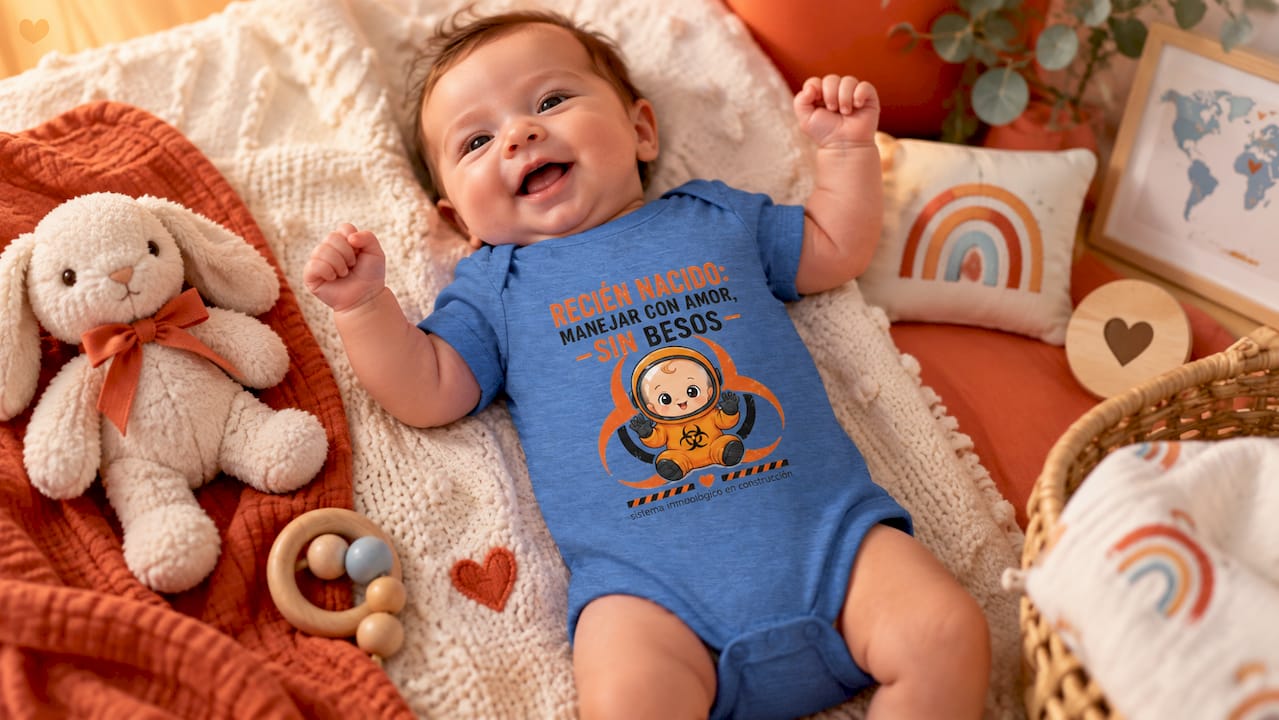
For managing hands and mouths at the door, yes. A well-chosen bodysuit is one of the most practical tools available for a problem that has no perfect fix: people who mean well but don’t always listen. It won’t stop every determined aunt, and it’s not a substitute for actually speaking up when needed. But paired with a short script and a clear tone, it does most of the work quietly, all day, without a single awkward conversation at every doorbell ring.
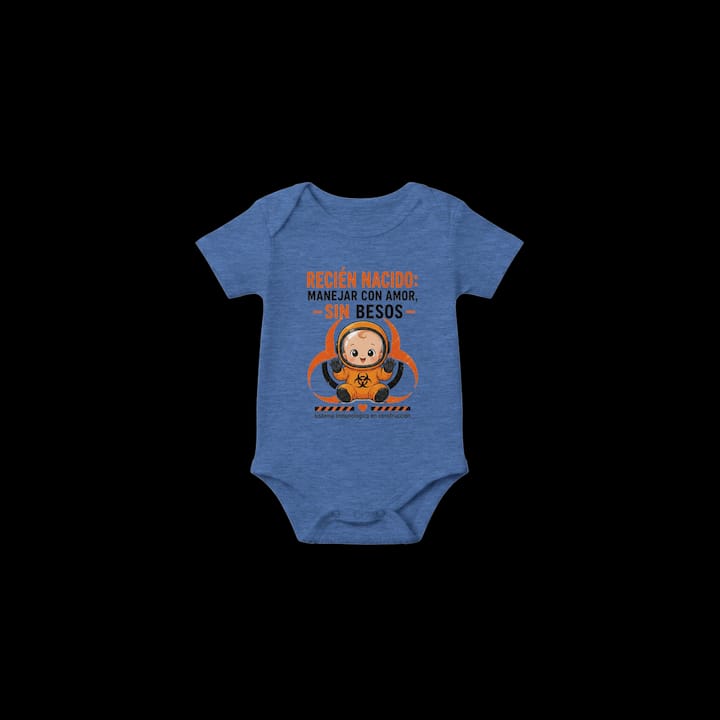
The bigger picture matters here too. Many families lean on this kind of message specifically during cold and flu season, since close contact and kissing can spread respiratory illness to a newborn more easily than to an older child or adult. A bodysuit doesn’t block a virus. What it does is make the household’s actual rule visible and hard to misread, which turns a health precaution into something a visitor can respect on sight rather than something a tired parent has to explain from scratch every single time the doorbell rings.
Babyineverylanguage’s Bodysuit Lineup for Handling Visitors
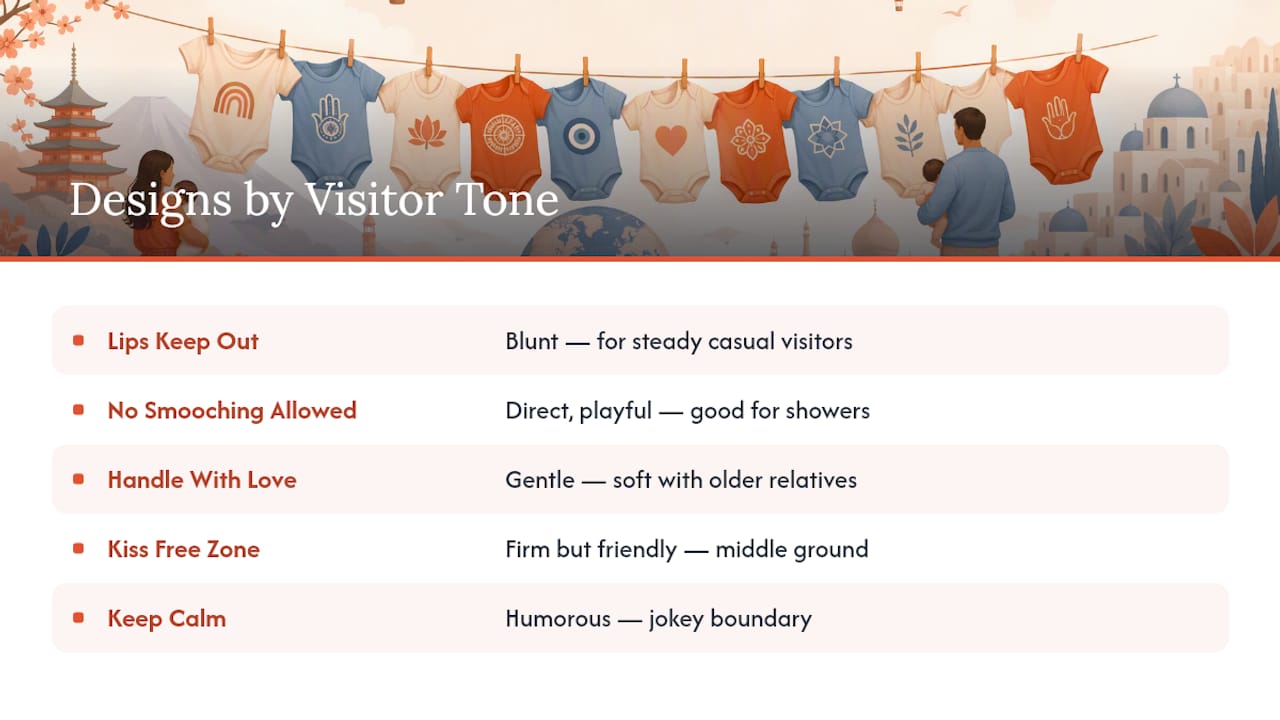
Each design in the catalog leans on a different tone, so the right pick depends on who’s actually coming through the door. The Lips Keep Out Baby Bodysuit is blunt and hard to miss, good for households expecting a steady stream of casual visitors who need the message spelled out fast. The No Smooching Allowed Baby Bodysuit keeps the same directness with a lighter, funnier phrase that plays well at a shower or a first family photo.
For visitors who respond better to a gentler nudge, the Newborn Handle With Love No Kissing Baby Bodysuit and the Warning New And Fragile Baby Bodysuit frame the same boundary around protectiveness rather than refusal, which tends to land softer with older relatives. The Kiss Free Zone Baby Bodysuit and No Kiss Zone Baby Bodysuit split the difference: firm wording, friendly delivery. If your crowd appreciates a joke, the Keep Calm And Dont Kiss Me Baby Bodysuit and Authorized Kisses None Baby Bodysuit both lean into humor without losing the point.
Every design is available across the full onesie collection in more than 20 languages, and you can build a custom bodysuit if you want a specific phrase, language pairing, or wording tweak verified by a native speaker before it prints. For sizing, go one size up from newborn if the baby is close to a growth spurt, since the message stays readable longer on a shirt that isn’t stretched tight within a few weeks. Shopping for a shower or a first visit gift instead of your own baby? The baby shower gift collection groups the best gift-ready designs together, which saves the back-and-forth between a dozen product pages.
Why Culturally Accurate Wording Actually Matters
A boundary message only works if it reads the way it’s supposed to. This is where a lot of novelty baby apparel quietly fails: a phrase gets run through a translation tool, printed, and shipped, and it reads stiff, or worse, insulting, to an actual native speaker. That’s the opposite of the goal. A grandmother who receives a shirt with a garbled version of her own language isn’t going to laugh it off. She’s going to wonder why nobody bothered to get it right.
Native-speaker verification isn’t a nice extra. It’s the difference between a shirt that lands as clever and one that lands as careless. When a phrase is checked by someone who actually speaks the language day to day, the wording keeps its warmth, its humor, or its directness exactly where the parent intended it. That matters more in a multicultural family than almost anywhere else, because the wrong tone in the wrong language can read as an accusation rather than a request.
None of this replaces talking to people directly when it counts. A bodysuit is a conversation starter and a quiet reminder, not a stand-in for the harder conversations some visitors will always need. Used together, a well-worded shirt and a short spoken script cover almost every situation a new parent will actually face at the door.
— Bassem
Sources
- New Baby Boundaries: How To Set, Tips, and Strategies
- Please don’t kiss the baby and ways to keep your immune system strong