

Wash Every Other Day? New Parents Need 7–10 Newborn Bodysuits
Start with a moderate number of bodysuits for the newborn to 0 to 3 month stage. The exact number depends almost entirely on how often you plan to do laundry, since spit-up, diaper leaks, and the occasional blowout mean most babies go through multiple outfit changes a day.
TL;DR:
- Parents should base the number of bodysuits on laundry frequency, with a typical range of 5 to 14 for the 0 to 3 month period, depending on how often they wash.
- Buying mostly 0 to 3 month sizes and only 1 to 3 newborn pieces saves money and prevents overstocking on sizes babies might outgrow within weeks.
- The most useful bodysuit styles include short sleeve, long sleeve, and kimono or side-snap designs, adjusted seasonally and for the first healing weeks.
- Frequent outfit changes are mainly caused by spit-up, diaper leaks, and temperature fluctuations, making extra spares and diapering adjustments essential.
- Good laundry habits with gentle detergent, stain treatment, and proper fabric choice can extend the lifespan of bodysuits, reducing the total number needed.
Table of Contents
- How Many Bodysuits Does a Newborn Need Based on Your Laundry Schedule?
- Newborn Size or 0 to 3 Months: Where Should You Put Your Money?
- What Types of Bodysuits Should You Actually Stock Up On?
- Why Do Newborns Go Through Bodysuits So Fast?
- How Do You Care for Bodysuits So You Need Fewer of Them?
- What Should Go on Your Registry or Packing List?
- Why Babyineverylanguage Bodysuits Fit This Advice
- What the Laundry Math Actually Tells New Parents
- Registry-Ready Bodysuits Worth Adding to Your List
- Sources
How Many Bodysuits Does a Newborn Need Based on Your Laundry Schedule?
Laundry frequency changes this number more than anything else. Once you know how often you’ll actually run a wash cycle, the math writes itself.
Here’s the formula worth saving to your phone: estimated changes per day × days between laundry loads + a buffer of 2 to 3. That buffer covers the days a baby has an off stomach or you’re too exhausted to do laundry on schedule.
Applied to real routines, it looks like this:
- Daily laundry: 2 to 3 changes × 1 day + buffer = about 5 to 6 bodysuits.
- Every other day: 2 to 3 changes × 2 days + buffer = about 7 to 10 bodysuits, the range most parents settle on when they wash every other day.
- Twice a week: 2 to 3 changes × 3 to 4 days + buffer = about 10 to 14 bodysuits.
- Weekly: 2 to 3 changes × 7 days + buffer = a larger number of bodysuits, which is a lot of drawer space for a garment your baby outgrows in weeks.
Heavy spit-up, cloth diapering, daycare drop-off, or twins each push you toward the higher end of whatever bracket you land in. Daycare in particular adds at least one spare outfit to the count, since most centers require a backup left in your baby’s bag at all times.
Pro Tip: If you’re not sure how often you’ll realistically get to laundry in the first few weeks, plan for every other day rather than daily. New parents almost always do less laundry than they intend to.
Newborn Size or 0 to 3 Months: Where Should You Put Your Money?
This is where a lot of registries go wrong. Newborn size (NB) fits a narrow weight window, and plenty of babies are born big enough to skip it entirely or outgrow it within two to four weeks.
The smarter buying strategy splits your budget unevenly:
- Newborn (NB): a small number of bodysuits, just enough to get through the hospital stay and the first week or two.
- 0 to 3 months: a larger portion of bodysuits, your actual workhorse size that will carry most of the daily wear.
- Skip NB entirely if: your baby is projected above 8 pounds at birth, you’re past your due date already, or you’re buying secondhand and want to avoid a size that barely gets worn.
Registry guides commonly land on about seven bodysuits as a baseline figure, which tracks closely with the every-other-day laundry math above. The takeaway: resist the urge to stock up heavily on newborn size just because it looks impossibly small and cute in the store. That money is better spent one size up.
What Types of Bodysuits Should You Actually Stock Up On?
Not every bodysuit style earns its place in the drawer. Three types cover almost every situation a newborn wardrobe needs.
Short sleeve bodysuits are your default for warm weather and indoor wear when the house is heated. Long sleeve versions layer well under sleepers or sweaters once temperatures drop. Kimono or side-snap styles open flat instead of pulling over the head, which makes them the easiest option for the first week or two while the umbilical cord is still healing.
A season-adjusted mix works better than buying one style exclusively:
- Warm months: roughly 70% short sleeve, 30% long sleeve for cooler nights or air-conditioned rooms.
- Cold months: flip that ratio, leaning long sleeve with short sleeve reserved for layering under a sleeper.
- First 1 to 2 weeks, any season: 2 to 3 kimono-style pieces, since fumbling a screaming newborn’s arms through a snug neckline at 3 a.m. gets old fast.
Once the cord area heals, most parents phase kimono styles out in favor of standard snap-front bodysuits for the rest of the 0 to 3 month stretch.
Why Do Newborns Go Through Bodysuits So Fast?
Three culprits drive almost every unplanned outfit change: spit-up after feeds, diaper leaks that escape the waistband, and full-on blowouts that travel up the back. Temperature swings add a fourth, since an overheated or chilly baby often needs a layer added or stripped mid-day.
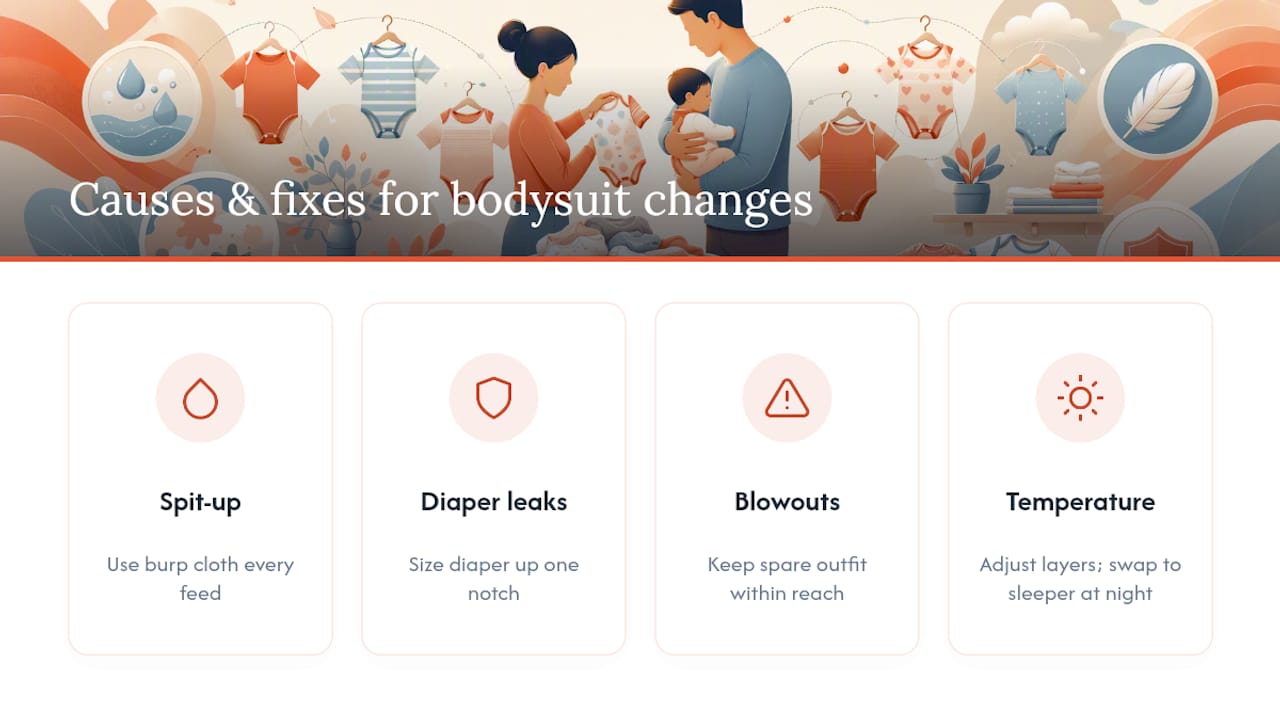
A few adjustments cut down on the damage. Keep a burp cloth positioned over your shoulder or the bodysuit itself during every feed, not just the ones where you remember. Size diapers up a notch if leaks happen more than once a day. Keep one spare outfit within arm’s reach at all times, not in a drawer down the hall.
Pro Tip: Swap bodysuits for a footed sleeper at night. Sleepers cover more skin, handle leaks better, and mean you’re not burning through daytime bodysuits during the one stretch where nobody’s watching what your baby is wearing.
How Do You Care for Bodysuits So You Need Fewer of Them?
Good laundry habits stretch your existing stock further than buying more ever will.
- Use a fragrance-free, baby-safe detergent and treat spit-up or formula stains before they set, ideally by rinsing under cold water within the hour.
- Keep a rotation of about a week’s worth in active use, with the rest stored so you’re never digging through a mismatched pile at 2 a.m.
- Choose 100% cotton over blends when possible. Cotton holds up better through repeated hot washes and doesn’t pill the way cheaper synthetic fabric does after a few months.
- Wash new bodysuits before first wear to remove manufacturing residue and soften the fabric against sensitive newborn skin.
None of this changes your baseline count dramatically, but it does mean the bodysuits you own last through the full 0 to 3 month window instead of looking worn out by week six.
What Should Go on Your Registry or Packing List?
A registry built around exact numbers is far more useful to gift givers than a vague “some onesies” entry. Here’s a starter list to copy directly:
- Short sleeve bodysuits: 5 to 7, mostly in 0 to 3 month sizing.
- Long sleeve bodysuits: 3 to 5, adjusted for season.
- Kimono or side-snap bodysuits: 2 to 3, sized newborn or 0 to 3 months.
- Sleepers or footies: 4 to 6 for nighttime coverage.
- Hats: 2 to 3, plus socks or booties: 4 to 6 pairs, since they vanish in the wash.
- Newborn size overall: cap it at 1 to 3 pieces total across all styles.
Why Babyineverylanguage Bodysuits Fit This Advice
Every recommendation above assumes the bodysuits themselves hold up to frequent washing and won’t irritate newborn skin during weeks of near-constant wear.
Multilingual phrases, verified by native speakers across a variety of languages, allow gift-givers to hand over bodysuits that read naturally to the families receiving them. Cultural accuracy in such apparel is often lacking in mass-market baby clothing, where translated phrases may sound stiff or slightly off.
The kimono-style options in the catalog also align directly with the cord-healing guidance above, giving parents an easy-open design for the exact window when it matters most.
What the Laundry Math Actually Tells New Parents
The obsession with hitting a precise bodysuit count misses the real lesson here: the number was never the point, the laundry schedule was. Most guides hand you a flat figure like “seven onesies” without asking whether you’re washing daily or once a week, and that gap is exactly where new parents overspend or run short.
What conventional wisdom gets wrong is treating newborn size as a default starting point instead of an optional one. Plenty of babies never wear it, and the money saved by capping newborn purchases at one to three pieces is better spent on a deeper 0 to 3 month stock or on functional extras like kimono styles for the cord-healing stretch.
If you take one thing from this, let it be the formula, not the range. Changes per day times days between laundry, plus a buffer, will always beat a generic number pulled from a checklist that knows nothing about your washing machine or your baby’s spit-up habits.
— Bassem
Registry-Ready Bodysuits Worth Adding to Your List
There are bodysuits available that can fill the 0 to 3 month size gap and also serve as genuinely funny gifts, rather than just plain onesies.
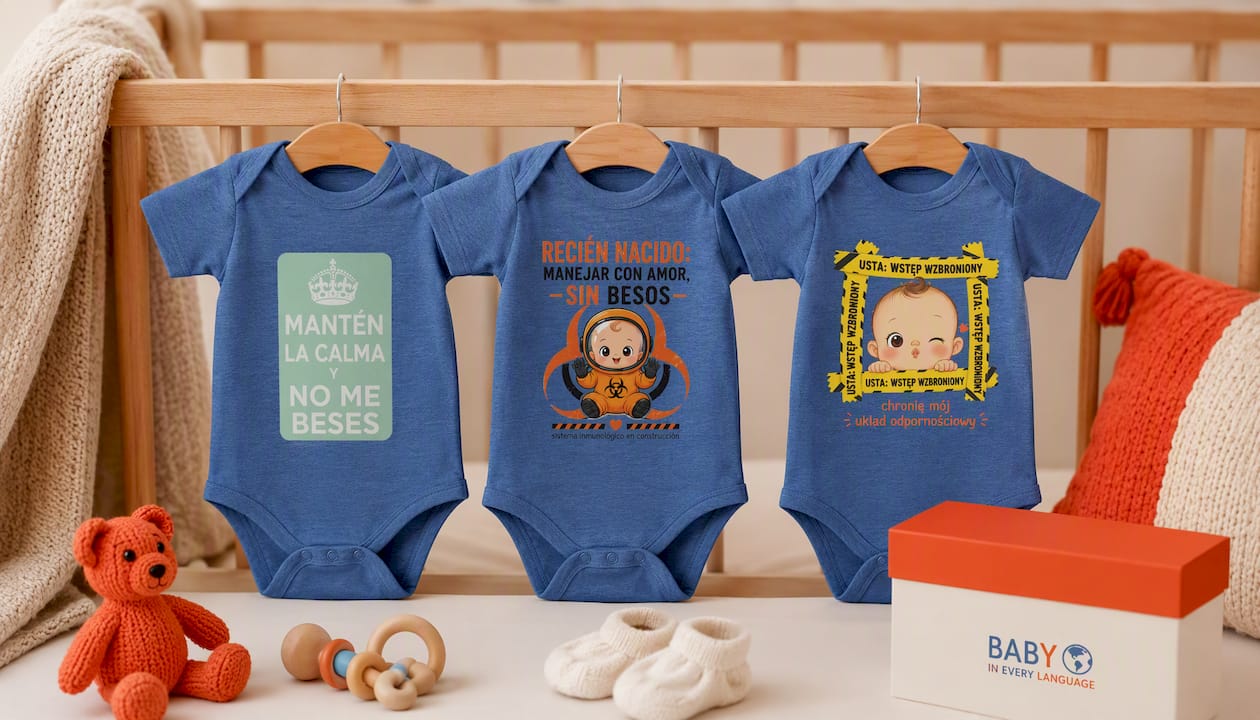
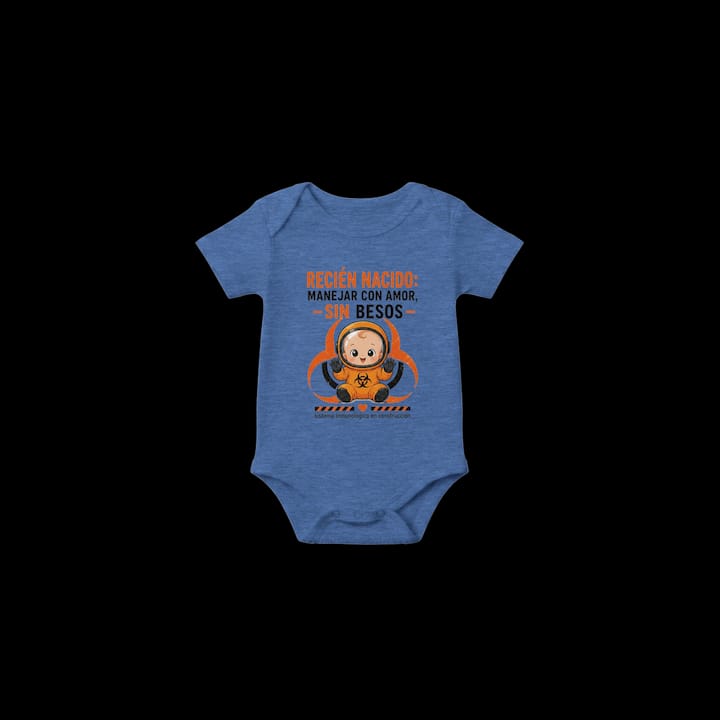
For the checklist above, three designs cover the situations parents ask about most. The Keep Calm And Dont Kiss Me Baby Bodysuit works well as a registry staple, since it reads clearly no matter who’s holding the baby. The Newborn Handle With Love No Kissing Baby Bodysuit is sized for that small newborn window, making it a smart pick for the hospital bag or the first week home. The Lips Keep Out Baby Bodysuit leans into the humor angle harder, which makes it a favorite as a shower gift that gets an actual laugh when it’s unwrapped.
Buy one or two of each in newborn size if you want them for early photos, but put your real quantity into 0 to 3 months, in line with the counts covered earlier. Each order ships printed on demand, so build in a little lead time if you’re aiming for a baby shower date or a due date deadline.
Sources
- How Many Newborn Onesies Do I Need? - Treehouse
- How Many Onesies Does a Newborn Need? Exact Numbers by Size (2026) | Baby Joys Blog
- How Many Newborn Baby Clothes Do I Need (and in What Sizes)? | Babylist