

Print Ready Finnish Phrase for “Don't Touch the Baby” Bodysuit
The phrase you want is “Älä koske vauvaan” — Finnish for “Don’t touch the baby,” verified as natural, grammatically correct wording rather than a stiff word-for-word translation. If you want a hygiene reminder too, pair it with “Pese kätesi” (“Wash your hands”), a short line that fits neatly on a second line of a bodysuit. Both are concise enough for infant apparel and read as polite but firm to a Finnish speaker, not awkward or rude.
TL;DR:
- The phrase “Älä koske vauvaan” is the grammatically correct and standard Finnish command for “Don’t touch the baby” in public settings.
- Pairing it with “Pese kätesi” on a second line emphasizes handwashing and aligns with Finnish etiquette advice for strangers handling infants.
- The phrase’s correct pronunciation is roughly “AH-lah KOHS-keh VOW-vah-ahn,” with proper case endings crucial for grammatical correctness.
- Shorter or simplified versions risk grammatical errors, as Finnish relies on case endings rather than additional words to convey meaning.
- Native-speaker verification ensures the phrase’s appropriateness for various tones and contexts, from firm to gentle, without misinterpretation.
Table of Contents
- Finnish Baby Care Tips: Which Phrase Fits Your Situation?
- How Do You Pronounce “Älä Koske Vauvaan”?
- Why a Direct Phrase Works in Finnish Culture
- Printing and Safety Tips for a Finnish Baby Bodysuit
- Why We Verify Every Phrase Before It Goes on a Bodysuit
- Where to Get a Verified Finnish Bodysuit
- Sources
- FAQ
Finnish Baby Care Tips: Which Phrase Fits Your Situation?
Not every family wants the same tone. Some want a blunt line that stops a stranger’s hand before it lands on the baby. Others want something a shade gentler for a family gathering where the “threat” is really just an overeager aunt.
“Älä koske vauvaan.” is the firm option. It is short, it is a direct command form, and it reads the same way a “Do not touch” sign at a petting zoo reads to a Finnish speaker, which is exactly the register you want in a crowded grocery store or on public transit. Finnish speakers use this same imperative structure for signage, so it doesn’t come across as harsh. It comes across as clear.
If firm feels like too much for a baby shower gift or a close-family photo, you can soften the delivery with context rather than swapping the wording entirely. Finnish doesn’t have a widely used “cute” alternative that keeps the same clarity. A watered-down version risks becoming grammatically odd, so most parents who want a lighter touch pair the same core phrase with a smaller font or a playful bodysuit design rather than rewriting the sentence.
Layout matters more than people expect on a garment this small:
- Two-line layout works best when adding the hygiene reminder: “Älä koske vauvaan.” on line one, “Pese kätesi.” on line two.
- Single-line layout suits the phrase alone, centered on the chest, in a font large enough to read from a few feet away.
- Keep total character count low. Finnish words run longer than their English equivalents, so cramming extra text shrinks legibility fast.
- Sentence case reads as more natural Finnish than all caps, which can feel like shouting even in print.
Adding “Pese kätesi” makes sense any time strangers might hold the baby, not just look at them. It echoes advice from Finnish newborn etiquette guidance, which recommends that anyone who does hold a baby wash their hands first.
How Do You Pronounce “Älä Koske Vauvaan”?
Sound it out roughly as “AH-lah KOHS-keh VOW-vah-ahn.” Finnish is pronounced almost exactly as it’s spelled, with every letter getting its own sound, so once you learn the syllable breaks, the pronunciation stays consistent no matter where the word shows up.
The literal translation runs closer to “Don’t touch into the baby” than a clean “Don’t touch the baby.” That’s not a translation quirk. Finnish uses case endings instead of prepositions, so “vauvaan” (into the baby) carries grammatical information that English handles with the word “the.” This is why you can’t just swap in a different noun and expect the sentence to hold up.
A few grammar notes worth knowing before you customize anything:
- The verb koskea (to touch) changes form depending on tense, mood, and the case of the object it touches, and dictionary entries on koskea’s verb forms show how easily those forms shift meaning.
- Swapping “vauvaan” for a different case ending, like “vauvaa,” changes the phrase’s grammatical logic and can sound off to a native speaker even if a literal translator accepts it.
- A common mistake: dropping the case ending entirely (“Älä koske vauva”) which reads as broken Finnish, not casual Finnish.
- Reference material on Finnish touch-related signage confirms this exact “Älä koske ___” structure is the standard pattern for “do not touch” instructions, whether the subject is a baby or a petting-zoo pony.
Stick to the verified phrase exactly as written. Small changes that look harmless in English can turn into real grammar errors in Finnish.
Why a Direct Phrase Works in Finnish Culture
Finnish communication culture tends to favor plain, direct statements over indirect hints, especially around personal space. A short, unambiguous sentence on a bodysuit isn’t read as cold. It’s read as efficient, which fits general cultural expectations around boundaries and touch. Commentary from Kiintymysvanhemmuus ry on bodily autonomy makes a similar point about infants specifically: clear boundary language, stated early, supports a baby’s right to their own space rather than leaving it to chance or awkward improvisation.
That’s the real function of the printed phrase. It does the talking so you don’t have to. A stranger reaching toward a stroller reads the bodysuit before their hand gets anywhere near the baby, and the interaction ends before it starts. No confrontation, no lecture, no repeated explanation to every well-meaning relative at every outing.
You still get to choose the temperature. Public settings like buses, waiting rooms, or busy family events call for the firm version, full stop. Private, small gatherings where you already trust everyone in the room might not need the phrase at all, or you might dial the presentation down with a softer bodysuit design while keeping the same accurate wording underneath. What doesn’t change is the core phrase itself. Consistency there is what keeps the message unambiguous no matter the setting.
Printing and Safety Tips for a Finnish Baby Bodysuit
Infant skin is thin and reactive, so the fabric and ink matter as much as the wording. Choose 100% cotton or a soft cotton blend, and check that the print sits away from seams that could rub against delicate skin during wear or sleep.
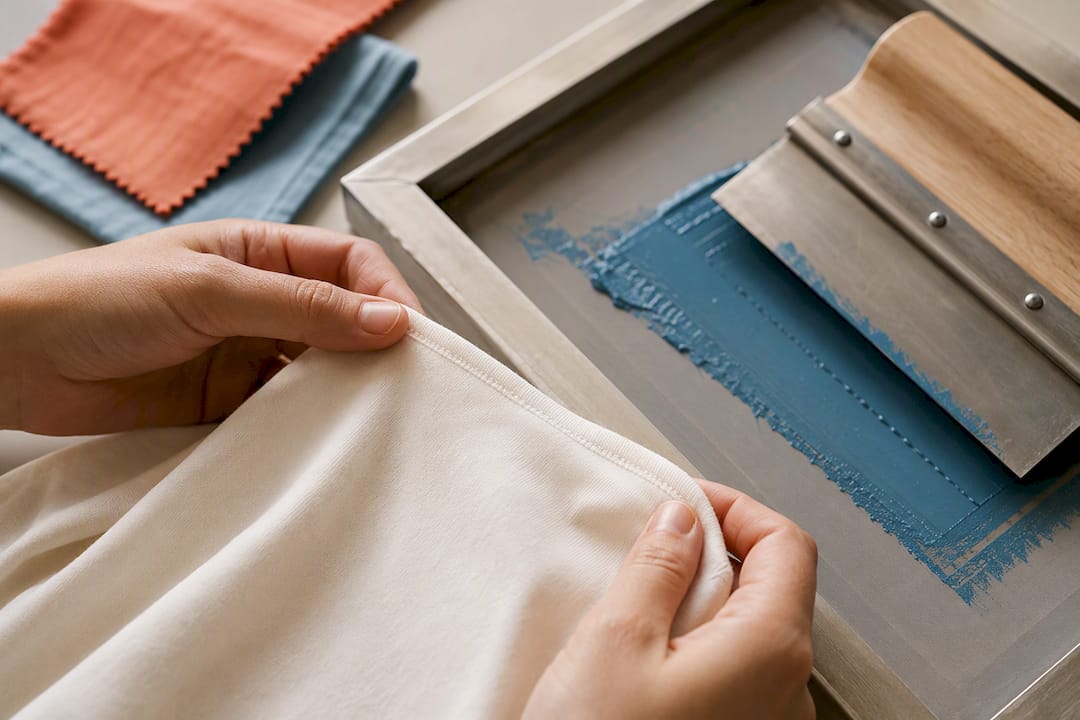
Ink matters just as much as fabric. Non-toxic, water-based inks are the standard for baby-safe apparel, and it’s worth confirming with your printer or seller that the specific ink used meets that standard before you order, since documentation protects you if a question about safety ever comes up.
A few more practical rules to lock in before you print:
- Keep the design to two lines maximum. Infant bodysuits don’t have room for more without shrinking text past readability.
- Center the phrase on the chest, where it’s visible without the parent needing to angle the baby toward anyone.
- Wash printed garments inside out in cold water to protect the print and avoid rough detergents that can irritate newborn skin.
- Preview the exact text at real-world size in your chosen font before ordering, since Finnish words can run longer than expected in a narrow layout.
Pro Tip: Print a test line of “Älä koske vauvaan.” at actual bodysuit width before finalizing your order. What looks fine in a design preview sometimes shrinks the font smaller than you’d want once it’s centered on real fabric.
Why We Verify Every Phrase Before It Goes on a Bodysuit
A phrase that looks right in a translation app can still sound wrong, or worse, mean something slightly different, to a native speaker. That gap is exactly why native-speaker verification matters more than a quick dictionary lookup. A single case ending in the wrong place can shift “don’t touch the baby” into something clumsy or unintentionally strange, and nobody wants that printed on their kid’s clothes.
At Babyineverylanguage, every phrase goes through a native-speaker check before it reaches a product page, and every bodysuit uses non-toxic inks on soft, 100% cotton fabric. If you need a specific tone, softer, firmer, or family-specific, we can talk through custom phrasing rather than forcing one version to fit every situation.
— Bassem
Where to Get a Verified Finnish Bodysuit
This service offers an alternative to guessing at translation apps: every phrase on the bodysuits comes pre-checked by a native speaker, so customers can order once and skip the second-guessing entirely.
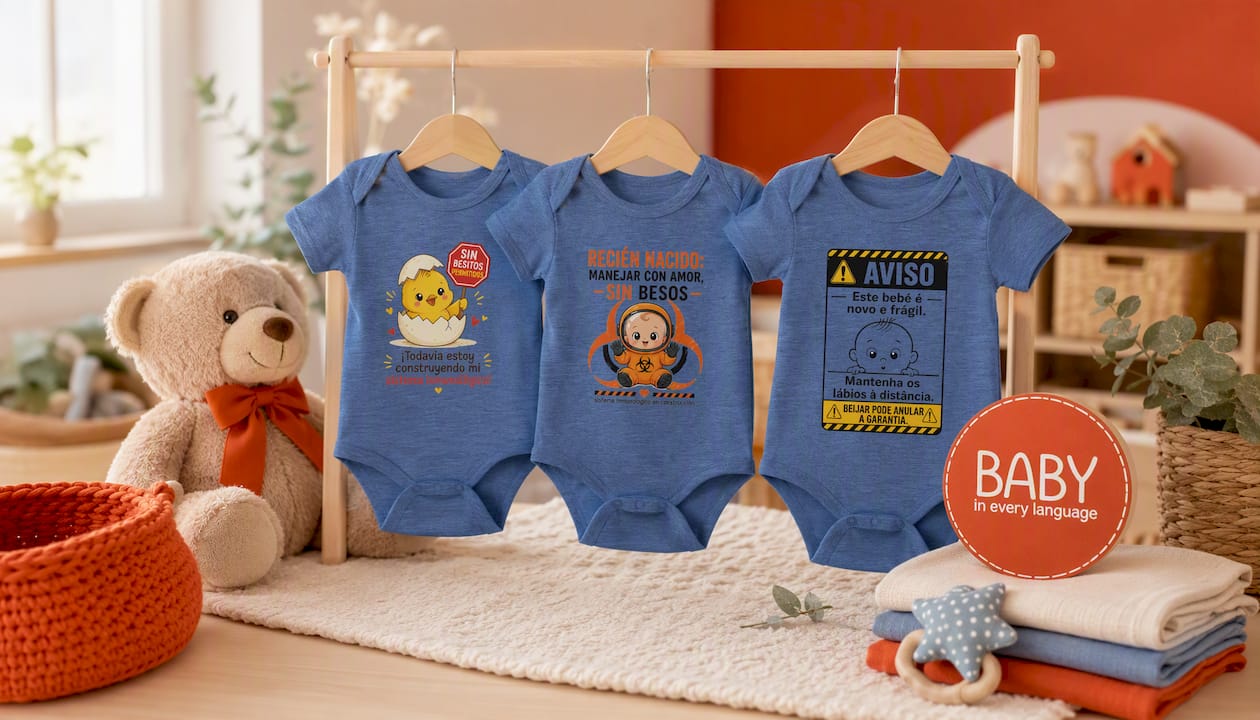
Three designs fit the “don’t touch the baby” need, each with a slightly different tone. The No Smooching Allowed Baby Bodysuit gives you a humorous but firm label, good for parents who want the boundary stated with a bit of personality. The Newborn Handle With Love No Kissing Baby Bodysuit leans softer, styled for the newborn stage where you want the message gentle but still clear. The Warning New And Fragile Baby Bodysuit takes the more emphatic route, suited to the earliest weeks when you want zero ambiguity.
Every design ships on baby-safe cotton with non-toxic inks, and native verification is standard, not an add-on. Browse the full Humorous Baby Bodysuits collection to find your fit and place an order.
Sources
Grammar and case-usage checks came from Finnish touch-related lexicon entries and koskea verb references. Etiquette context came from Finnish newborn visiting advice. Product options are listed above for direct purchase.
- Vastasyntyneen tapaaminen - 8 mielessä pidettävää asiaa - Äitiyden Ihme
- Oikeus kosketukseen ja koskemattomuuteen - Kiintymysvanhemmuus ry
- Learn Finnish: Älä koske poniin kotieläinpihalla. - Do not touch the pony at the petting zoo.
- Kieli
FAQ
Is “Älä Koske Vauvaan” the Correct Finnish Phrase?
Yes. It’s the native-verified, grammatically standard way to say “Don’t touch the baby” in Finnish, using the same imperative structure Finnish speakers use for other “do not touch” instructions, as shown in Finnish touch-related signage examples.
Should I Add a Hygiene Line Like “Wash Your Hands”?
It’s a good addition anytime strangers might actually hold the baby rather than just look. “Pese kätesi” pairs naturally with the main phrase and reflects common Finnish newborn advice about handwashing before contact.
Can I Shorten or Simplify the Finnish Phrase?
Shortening it risks breaking the grammar, since Finnish relies on case endings rather than extra words to carry meaning. Stick to the verified full phrase to avoid an unintentionally odd or incorrect variant.
Is This Phrase Too Blunt for Finnish Culture?
No. Finnish communication tends to favor direct, plain wording over indirect hints, especially around personal boundaries, so this phrasing reads as clear rather than rude to a native speaker.