

Protect Your Newborn: 3 Spanish Bodysuits That Say "Don't Touch Me
“Dont touch me spanish” points to a specific product: a Spanish-language baby bodysuit that politely tells visitors to keep their hands off a newborn. It’s built for new parents and gift-givers who want a lighthearted, native-verified way to set a physical boundary. The good ones use baby-safe cotton and non-toxic ink, so the message is clear without putting your baby’s skin or your family’s manners at risk.
TL;DR:
- Ensure the bodysuit uses native-verified Spanish phrasing to maintain social appropriateness and regional relevance.
- Select 100% organic cotton and certified non-toxic inks to protect sensitive newborn skin from irritation and harmful substances.
- Pair the bodysuit with rehearsed scripts and physical barriers like babywearing for more effective boundary-setting during visits.
- Choose a tone — direct, polite, or humorous — based on the occasion and the recipient’s personality, verifying regional language nuances.
- Use the bodysuit mainly as a health and social boundary marker, reducing verbal friction and supporting early consent education.
Table of Contents
- What This Bodysuit Is and Who It’s For
- Why Parents Set Boundaries Around Touching and Kissing
- Choosing the Right Spanish Phrase and Tone
- What to Check for Material and Print Safety
- Scripts and Tactics for Real-World Visits
- Why the Bodysuit Works Better Than a Lecture
- Shop the Spanish Designs Built for This Exact Job
- Sources
What This Bodysuit Is and Who It’s For
Picture a soft cotton onesie with a Spanish phrase like “no me toques” or a friendlier variation printed across the chest. That’s the whole product: apparel, not a translation lesson. Someone searching for a Spanish phrase for don’t touch me usually isn’t trying to learn the language. They’re trying to protect a newborn from a constant parade of hands at a family barbecue.
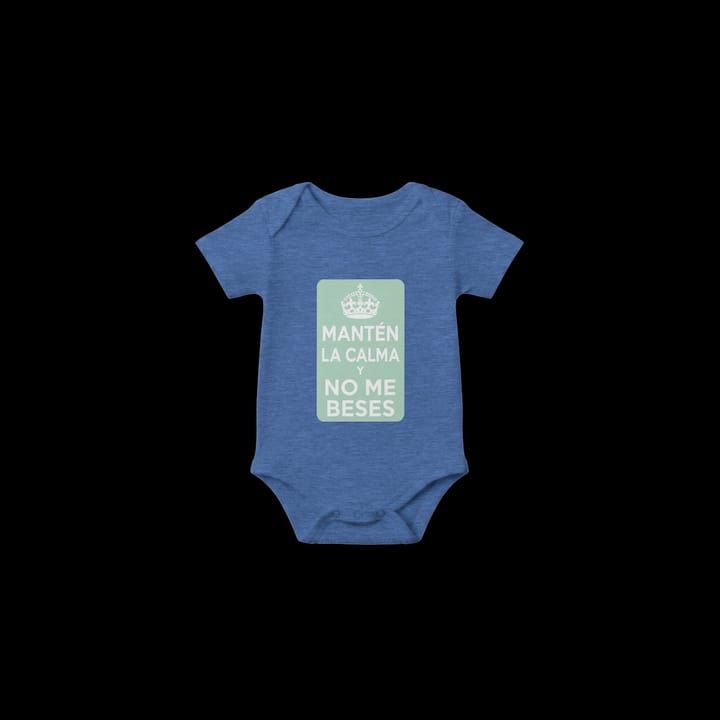
Two kinds of buyers show up for this. New parents buy it directly, often before a hospital discharge or a first big family gathering. Grandparents, aunts, and friends buy it as a shower gift for a bilingual or Spanish-speaking family, sometimes alongside a card explaining why the joke matters.
The benefits are practical, not just cute:
- It signals a boundary without forcing Mom or Dad to repeat themselves at every visit.
- It supports early lessons in consent and bodily autonomy, expressed on the baby’s own clothing.
- It works quietly during outings, doctor visits, or crowded holiday gatherings where verbal reminders get exhausting fast.
Why Parents Set Boundaries Around Touching and Kissing
Newborns have underdeveloped immune systems, which is the main health argument behind limiting contact in the first weeks of life. Pediatric resources point out that a simple, health-framed reason, something like “her immune system isn’t strong yet,” tends to land better with visitors than a purely personal preference, according to Children’s National. People rarely argue with a doctor’s logic, even secondhand.
There’s also a consent piece that starts earlier than most people expect. Child-development experts argue that teaching bodily autonomy should begin in infancy, and that adults, not the baby, carry the responsibility for enforcing those limits, per End Sexual Violence CT. A bodysuit that says “don’t touch me” is, in a small way, the baby’s first boundary statement, spoken by proxy.
Then there’s the social mechanics of it. A printed message does a job a hundred verbal reminders can’t:
- It removes the need to repeat yourself to every cousin, coworker, and stranger in the grocery line.
- It reads as playful rather than confrontational, which lowers the odds someone gets defensive.
- It keeps the tone light while the rule stays firm.
Choosing the Right Spanish Phrase and Tone
Not every Spanish phrase for personal space lands the same way, and word choice matters more than people expect. A phrase that sounds firm in one Spanish-speaking region can sound stiff or oddly formal in another. That’s why native-speaker verification matters more than a quick online translation. Machine translation tools routinely produce grammatically correct but socially awkward phrasing, the kind a native speaker would never actually say out loud.
Tone is a real decision, not an afterthought. A direct phrase works for families who prefer blunt humor. A polite version, something closer to “please don’t touch me,” suits situations where the baby will be around older relatives or more formal social circles. A playful, joke-forward phrase works well for baby showers, where the gift is meant to get a laugh before it gets read literally.
Here’s a simple way to pick the right one:
- Decide on tone first: direct, polite, or humorous.
- Confirm the phrase has been checked by an actual native speaker, not just a translation app.
- Match the design and wording to the recipient’s personality and the occasion.
Pro Tip: If the family has roots in a specific Spanish-speaking country, look for phrasing that reflects regional word choice rather than a generic, textbook-neutral translation. A phrase common in Mexico can sound slightly off to a family from Spain or Argentina, even if every word is technically correct.
What to Check for Material and Print Safety
Before buying, look past the joke and check the fabric tag. Newborn skin is thinner and more reactive than adult skin, so material choice isn’t cosmetic, it’s practical. Prioritize 100% cotton bodysuits that breathe well and won’t trap heat or irritate sensitive spots.
Certifications are worth a quick search before checkout:
- OEKO-TEX Standard 100 flags fabrics tested for harmful substances.
- GOTS (Global Organic Textile Standard) signals organic fiber content and cleaner processing.
Independent textile certifications like these are one of the clearest signals that a garment and its printing are free of substances that shouldn’t touch a baby’s skin, according to MA-MA NYC. Non-toxic, water-based inks are important alongside fabric choice, as low-quality inks may cause stiffness, cracking, or skin irritation over time.
On sizing, newborns grow fast, so a slightly loose fit beats a snug one that gets outgrown in two weeks. Check the seller’s return or exchange policy before buying, especially for gifts, since you often won’t know the baby’s exact size until closer to the shower or birth.
Scripts and Tactics for Real-World Visits
The bodysuit does a lot of the talking, but it works best paired with a few rehearsed lines and some physical setup. Short, simple scripts hold up better under stress than anything improvised on the spot, which is why pediatric guidance recommends having a few ready before you need them, according to Children’s National.
Here are four to keep in your back pocket:
- For close family: “We’re keeping contact limited until her shots are done, but you can wave and say hi!”
- For casual acquaintances: “She’s not a fan of new hands yet. Feel free to admire from right there.”
- For strangers at the store: “Thanks for saying hi. We’re keeping her germ-free for now.”
- For the overly persistent relative: “We agreed only immediate family holds her for now. It’s not personal.”
Pair those scripts with nonverbal barriers. Babywearing a newborn in a sling limits access far better than a stroller alone, and stepping toward a quiet room for a few minutes resets a chaotic gathering fast. Practical parenting guidance backs this combination, recommending physical barriers alongside clear communication before events even start, per Parents.
Pro Tip: Brief your partner and one or two key relatives before the party begins, not during it. When everyone repeats the same line, “we’re keeping contact limited for now,” visitors stop testing the boundary after the second attempt.
Why the Bodysuit Works Better Than a Lecture
The conventional advice on newborn boundaries leans heavily on scripts and stern conversations, and those have their place. What gets underestimated is how much friction a printed joke removes before a single word gets spoken. A shirt that says “no me toques” in a cheerful font does something a lecture can’t: it lets the parent look approachable while the message stays firm.
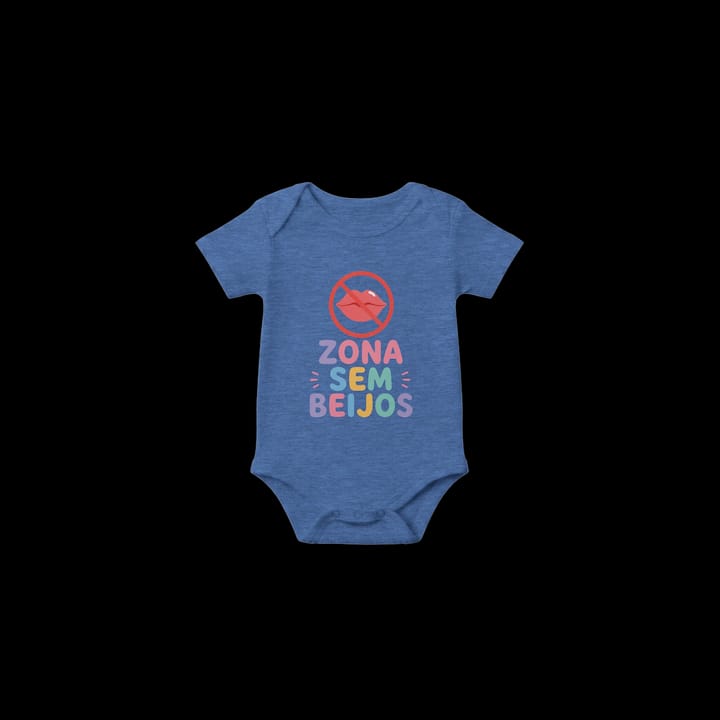
Where most guides fall short is treating this as either a health issue or an etiquette issue, when it’s really both at once. The immune-system argument gives the boundary legitimacy. The humor gives it social ease. Skip either half, and you’re either the paranoid new parent or the pushover who never says anything.
If you’re choosing between phrasing options, prioritize native accuracy over cleverness. A phrase that’s technically funny but grammatically off will get noticed by exactly the Spanish-speaking relatives you were hoping to charm. Get the wording right first, then let the design do the rest of the work.
— Bassem
Shop the Spanish Designs Built for This Exact Job
Some baby apparel brands offer phrasing checked by native speakers, so the joke lands the way it’s supposed to instead of sounding like a translation app wrote it.
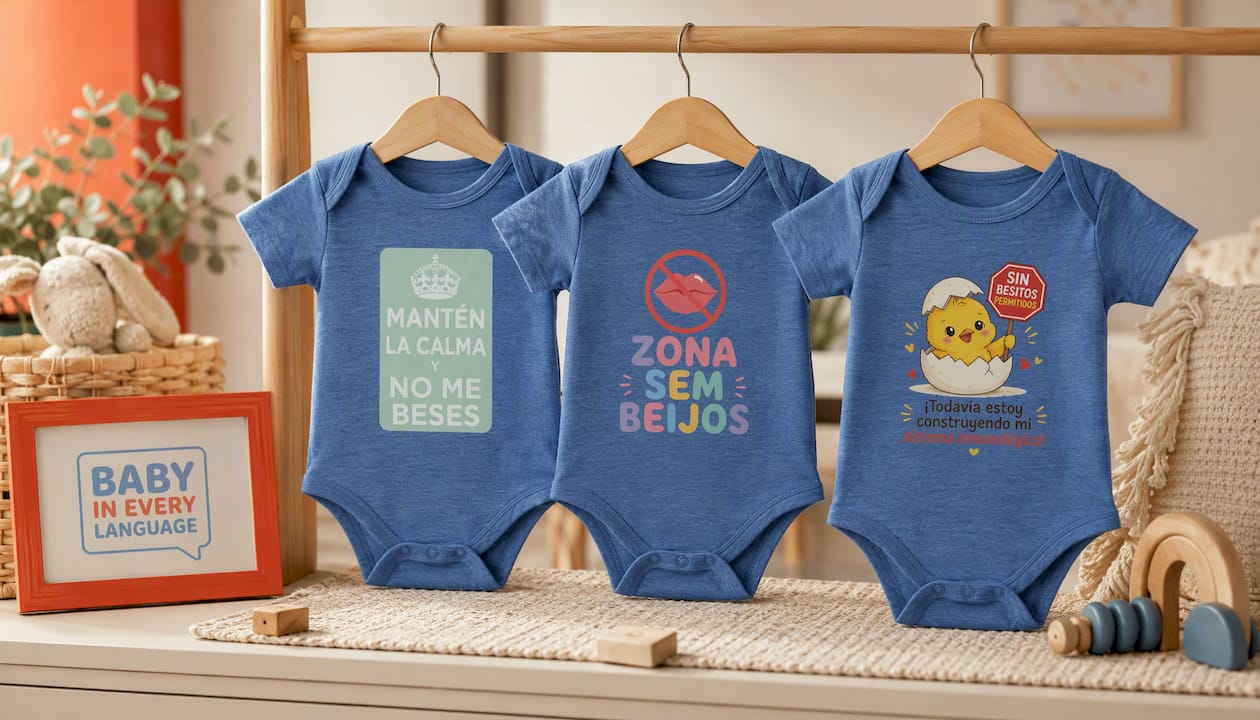
Three designs cover most situations. The Keep Calm And Dont Kiss Me Baby Bodysuit works best as a shower gift, since the playful tone gets a laugh before anyone reads it twice. The No Kiss Zone Baby Bodysuit suits early newborn visits, when the health message needs to come through clearly to a house full of relatives. The No Smooching Allowed Baby Bodysuit travels well for outings and errands, where a quick glance is all a stranger gets before backing off.
Many designs use soft cotton and non-toxic ink, and phrases may be checked by native speakers before they reach collections like the Spanish collection. Browse the full lineup, pick the tone that fits your family, and check out in a few minutes.
Sources
For deeper context on the ideas behind this guide, these sources cover the health and development reasoning in more detail:
- 8 ways to teach kids about consent and healthy boundaries — End Sexual Violence CT
- Please don’t touch my child: Setting boundaries to prevent the spread of illness — Children’s National
- New baby boundaries: How to set, tips, and strategies — Parents
- Baby clothes safety certifications — MA-MA NYC