

Measure Length and Weight: Baby Onesie Size Chart, Measurement First
The best way to choose a baby onesie is to match your baby’s measured length and weight to a size chart, not the age printed on the tag. Most parents start with a handful of newborn (NB) pieces and stock up heavier on 0-3M, since babies clear the smallest size fast. When you’re between two sizes, size up. The full chart and measuring steps are below.
TL;DR:
- Measure your baby’s length and weight to select the correct onesie size, rather than relying on age labels, which vary widely between brands.
- Size up if your baby’s measurements fall between two ranges, especially for footed styles or if they are near size boundaries to ensure comfort.
- Pay attention to fabric stretch and material type, as cotton blends and elastic fabrics can affect fit and shrinkage after washing.
- Buy only as many newborn-sized pieces as your baby is likely to outgrow in a few weeks, focusing more on 0-3M sizing for longer wear.
- Ensure the onesie fits properly by checking that snaps close without tension, sleeves and legs aren’t riding up, and there’s no red pressure marks or fussing during movement.
Table of Contents
- Baby Onesie Sizing Chart: Weight, Length, and Fit by Size
- How Do You Measure a Baby for a Onesie?
- How Should a Onesie Fit? Signs It’s Time to Size Up
- Sizing Preemies, Long Babies, Stocky Babies, and Footed Styles
- How Many Onesies Should You Buy, and What Goes in the Hospital Bag?
- Do Fabric and Stretch Change How a Onesie Fits?
- Why Measurement-First Sizing Should Be the Default
- Picking the Right Size for Baby in Every Language Bodysuits
- Sources
Baby Onesie Sizing Chart: Weight, Length, and Fit by Size
Age labels on baby clothes are a rough guess, not a promise. WhatToExpect points out that sizing varies enough between brands that two “0-3M” onesies from different companies can fit a full size apart. The chart below blends Gerber’s published size chart with figures from other major size guides to give you a dependable baseline.
| Size Label | Weight Range | Length/Height Range | Fit Notes |
|---|---|---|---|
| Preemie | Under 5 pounds | Under 17 inches | Snug through the trunk; often has extra room for medical monitors |
| Newborn (NB) | 5 to 8 pounds | 17 to 21 inches | Fits fast; many babies outgrow it quickly |
| 0-3M | 8 to 12 pounds | 21 to 24 inches | Roomiest of the early sizes; a solid default for gifting |
| 3-6M | 12 to 16 pounds | 24 to 26 inches | Sleeve and leg length start to matter more than trunk width |
| 6 months | 16 to 20 pounds | 26 to 28 inches | Footed styles get tight here on taller babies |
| 9 months | 20 to 24 pounds | 28 to 30 inches | Snap placement shifts; check crotch snaps for coverage |
| 12 months | 24 to 28 pounds | 30 to 32 inches | Some brands drop the onesie style for two-piece sets here |
| 18 months | 28 to 32 pounds | 32 to 34 inches | Bodysuits get scarce; toddler tops and bottoms take over |
Treat every row as a range, not a cutoff. A baby sitting right at the boundary between two rows almost always does better in the larger size, especially in footed styles where a cramped toe box is uncomfortable in a way loose fabric never is.
How Do You Measure a Baby for a Onesie?
Get two numbers before you shop: length and weight. Chest measurement is a useful third check for stockier or preemie babies.
- Lay your baby flat on their back on a firm surface, gently straighten one leg, and measure from the top of the head to the heel with a soft tape measure.
- If your baby won’t stay still, mark head and heel positions on a changing pad or wall with a pencil, then measure the distance between marks afterward.
- Weigh your baby on a home scale, or use their weight from the most recent pediatrician visit if you don’t have one.
- For chest fit, wrap the tape around the fullest part of the chest, under the arms, keeping it snug but not tight.
- Do a quick crotch check on anything they already own: snap it closed and see if it reaches without straining. That tells you how much runway is left in the current size.
Pro Tip: Measure right after a diaper change, not before. A full diaper adds bulk to the waist and throws off both the chest reading and how the onesie appears to fit around the middle.
How Should a Onesie Fit? Signs It’s Time to Size Up
A good fit lies flat against the shoulders, closes without tugging at the snaps, and leaves a little slack, not a lot, at the cuffs and ankles. Onesies that fit right also let your baby kick and stretch their arms overhead without the fabric pulling taut.
Watch for these signals during a diaper change or dress:
- Snaps gap open or look stretched instead of lying flat.
- Sleeves ride up past the wrist or pant legs stop above the ankle.
- The crotch snap won’t close over a full diaper, or it pops open during movement.
- Fabric leaves red pressure marks on the shoulders or thighs after wear.
- Your baby seems to strain or fuss more than usual while kicking, which can mean the armholes or legs are too tight.
Healthychildren that newborns need clothing loose enough for free movement and airflow, but sleepwear still needs to fit close enough that it can’t ride up over the face. That balance, snug enough to be safe, loose enough to move, is the whole game with infant sizing.
Sizing Preemies, Long Babies, Stocky Babies, and Footed Styles
Not every baby tracks the average curve, and the chart above works best as a starting point you adjust from.
- Preemies often need dedicated preemie or micro preemie collections built with extra room for feeding tubes or monitor leads, not just a smaller NB piece.
- Long or tall babies should shop by length first. Many skip newborn size entirely and go straight into 0-3M or even 3-6M for the extra inch of leg room.
- Stocky babies do better in a size that fits the chest and belly even if the length runs a little long. A roomier cut with cuffed sleeves solves the length problem without pinching the middle.
- Footed onesies deserve a size up whenever your baby is near the top of a range. Toes jam against seams faster than a torso outgrows a bodysuit.
- Seasonal layering changes what “roomy” means. A onesie under a sleep sack in winter needs a size that still lies flat, while summer wear can run truer to the chart.
How Many Onesies Should You Buy, and What Goes in the Hospital Bag?
Buying heavy in one size almost guarantees waste, since most babies pass through newborn size in under a month. Babysential’s guidance and similar shopping breakdowns point toward a lighter NB stack and a bigger 0-3M rotation.
- Buy 5 to 8 NB pieces, no more. Newborn size disappears fast, sometimes within two to four weeks.
- Stock 8 to 12 pieces in 0-3M, plus a few footed sleepers for overnight.
- Pack 2 to 3 NB onesies and 4 to 6 in 0-3M for the hospital bag, since you won’t know your baby’s exact size until after delivery.
- Spread your budget across two adjacent sizes rather than loading up on one, and confirm the retailer’s return window before buying in bulk.
- Adjust the mix for season. Summer babies need fewer footed styles and more short-sleeve pieces; winter babies need extra layering pieces in the 0-3M and 3-6M range.
Do Fabric and Stretch Change How a Onesie Fits?
Material affects fit as much as the tag does. 100% cotton runs true to size but can shrink slightly with hot washing and drying, so always follow the care label rather than guessing. Cotton blends with a touch of spandex or elastane hold their shape better wash after wash and forgive a slightly tight measurement better than pure cotton does.
- Stretch fabric gives you a buffer when your baby sits right between two sizes on the chart.
- Ribbed cotton and interlock knits tend to run snugger than jersey cotton in the same labeled size.
- Read “runs small” or “runs large” notes in product reviews before buying, especially across different brands.
- Wash new onesies once before the first wear to remove any residual shrinkage before you commit to a size.
Why Measurement-First Sizing Should Be the Default
Age-based labels create false confidence. Two babies born the same week can differ by four pounds and three inches, yet shop the same “Newborn” rack. That’s why Some bodysuit brands build their newborn cuts to be slightly roomier. A little extra ease at the shoulders and legs protects comfort without sacrificing the snug fit sleepwear guidance calls for. Soft, baby-safe fabric and non-toxic inks matter just as much as the number on the tag, especially on a garment meant to sit against skin for hours at a time.
— Bassem
Picking the Right Size for Baby in Every Language Bodysuits
Some companies aim to give new parents a funny, useful way to set boundaries around unsolicited kisses and cuddles, in multiple languages. That mission only works if the bodysuit actually fits, which is why every design follows the same measurement-first sizing as the chart above.
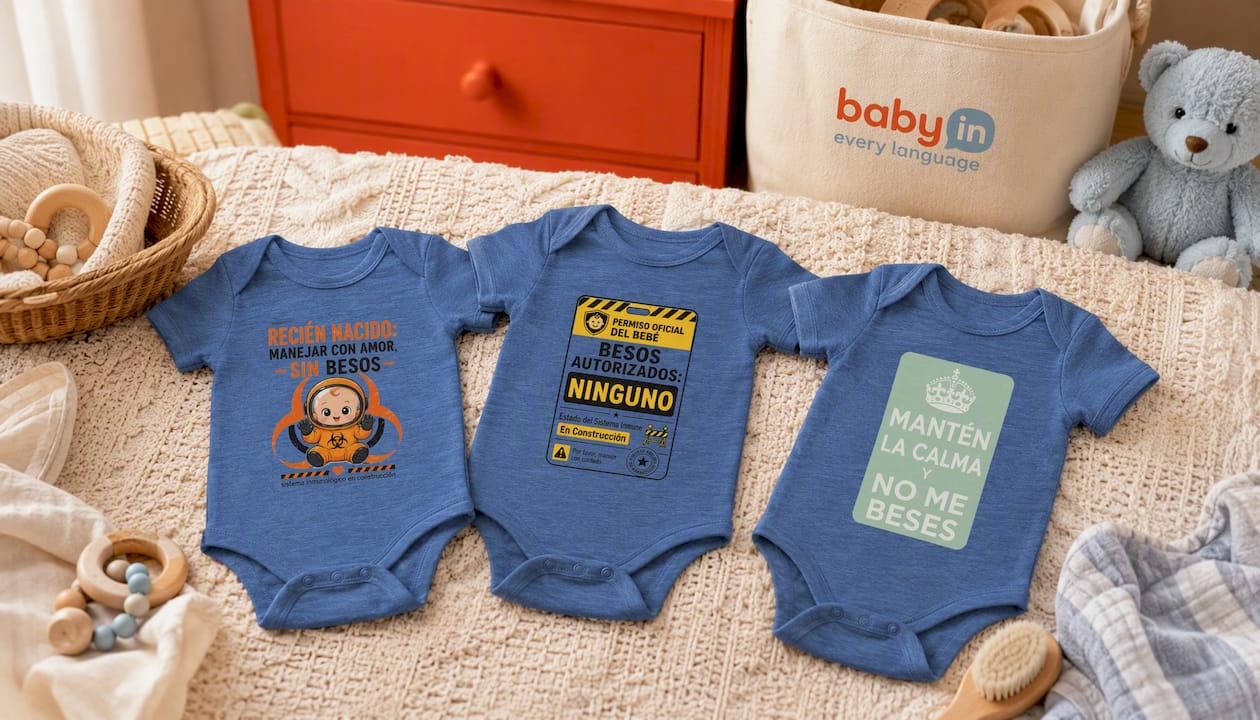
The Newborn Handle With Love No Kissing Baby Bodysuit runs true to the NB and 0-3M rows in the master chart above, so measure length and weight before you pick between the two. The Authorized Kisses None Baby Bodysuit works well as a size-up gift option if you’re buying before the baby arrives and want to hedge toward the roomier end. The Keep Calm And Dont Kiss Me Baby Bodysuit fits the same way, cut with a bit of extra ease through the shoulders for comfortable all-day wear.
Many baby bodysuits use soft, baby-safe cotton and non-toxic inks to maintain comfort against baby’s skin. Check the care instructions before the first wash, and confirm the exchange policy in case the size needs adjusting once your baby arrives. Ready to find the right fit and phrase? Browse the full bodysuit collection and match your baby’s measurements to the size chart before you check out.
Sources
- Size Chart | Gerber Childrenswear
- Baby Clothes Sizes Chart and Guide
- Healthychildren
- Baby Clothes Sizes. Complete Guide to Finding the Right Fit | Babysential